
November 4, 2026
Best 8 Family Game Idea Picks: Easy Fun for All Ages
Discover 8 easy family game ideas with rules, player counts, timings, and age adaptations, plus simple ways to track scores and progress.
It’s raining, the kids are restless, and the ambitious weekend plan has fizzled by lunchtime. Someone wants a screen, someone wants a snack, and nobody wants to listen to a complicated set of rules. You need something you can start with what’s already in the house.
A good family game idea doesn’t need elaborate equipment. It needs clear rules, visible progress, and a finish line everyone understands. When children can see what they’ve completed and what comes next, you don’t have to keep explaining the plan.
That progress might be a countdown to a holiday, stickers on a chore chart, or boxes checked during a scavenger hunt. Some games work as a quick afternoon activity; others give everyone a small reason to join in throughout the week. If your group wants an immediate party-style option, these indoor party games with quick rules offer another starting point.
- For anticipation: Try an event countdown or an activity calendar.
- For everyday routines: Make reading, chores, movement, or saving into a shared challenge.
- For an active afternoon: Set up a scavenger hunt with a clear route to completion.
Table of Contents
- 1. Countdown to a Family Event Challenge
- 2. Advent-Style Countdown Calendar Game
- 3. Family Chore Chart and Points Economy
- 4. Family Reading Challenge
- 5. Family Step and Fitness Challenge
- 6. Family Savings Goal Thermometer
- 7. 30-Day Family Habit Challenge
- 8. Family Scavenger Hunt with Progress Tracker
- How the 8 Family Games Compare at a Glance
- Pick One Game This Week and Start Tracking
1. Countdown to a Family Event Challenge
The holiday feels ages away to your child, but you’re already thinking about packing. Turn that waiting period into a shared mission with a countdown and preparation trail.
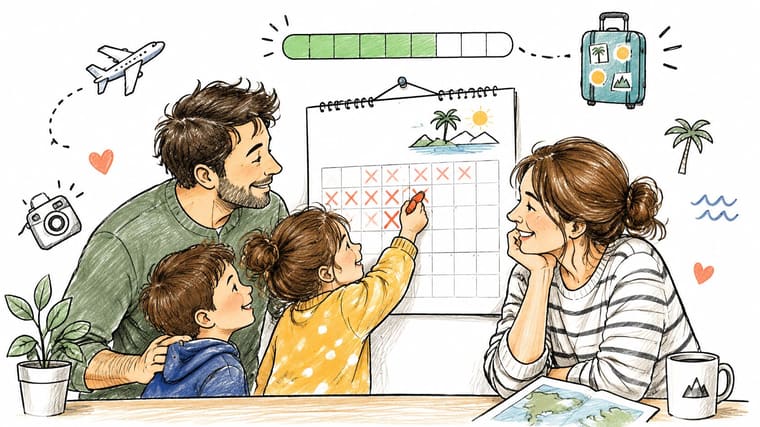
Choose an event with a dependable date, such as a school break, birthday, or planned road trip. Set the countdown’s start and end dates, then let the children choose its colors or theme. Keep it visible on a shared calendar, Home Screen, or Lock Screen.
Turn waiting into something playable
Add a trail of preparation cards beside the countdown. For a road trip, cards might ask everyone to nominate a song, draw something they hope to see, or choose a travel game. The family completes each card together and moves a paper car along the trail.
- Track time separately: The countdown advances with the calendar, whether anyone completes an activity or not.
- Mark participation: Add a sticker when the family finishes a preparation card.
- Finish together: End the challenge when the event arrives, not when someone earns the most stickers.
An event countdown timer can keep the approaching date visible without requiring you to redraw a chart.
Don’t make every milestone another job. Choosing a picnic snack counts as participation, and a silly destination drawing can be more enjoyable than packing socks. If the event changes, update the countdown openly rather than leaving children watching an inaccurate finish line.
2. Advent-Style Countdown Calendar Game
An envelope marked for today can turn an ordinary evening into a small occasion. This game uses an Advent-style reveal calendar, but you can build it around a birthday, school holiday, or family celebration.
Fill envelopes or folded cards with activities before the countdown begins. Keep the supplies nearby so opening a card doesn’t create an unexpected shopping trip.

For a birthday countdown, a card could invite everyone to invent a party dance, draw a cake, or tell a favorite memory about the birthday child. Completing the activity earns a stamp on the calendar. The revealed cards become a visible record of what you’ve done together.
Keep the surprise manageable
Prepare separate piles for quiet evenings and days with more time. You can select the right envelope before children open it, rather than discovering that tonight’s activity requires baking when everyone’s exhausted.
Practical rule: Make the surprise the activity, not an obligation to buy something.
Mix drawing, storytelling, music, and simple shared choices. Occasional treats are fine, but a calendar filled entirely with prizes can shift attention away from playing together.
For children who dislike surprises, display a picture of the upcoming activity in advance. They can still enjoy opening the envelope and marking it complete. A digital countdown can show the approaching celebration while the physical calendar records the family’s completed activities.
3. Family Chore Chart and Points Economy
A chore chart becomes a game when children can choose a mission, complete a clearly defined task, and see progress toward an agreed reward. It becomes an argument when adults change the rules after the work is done.
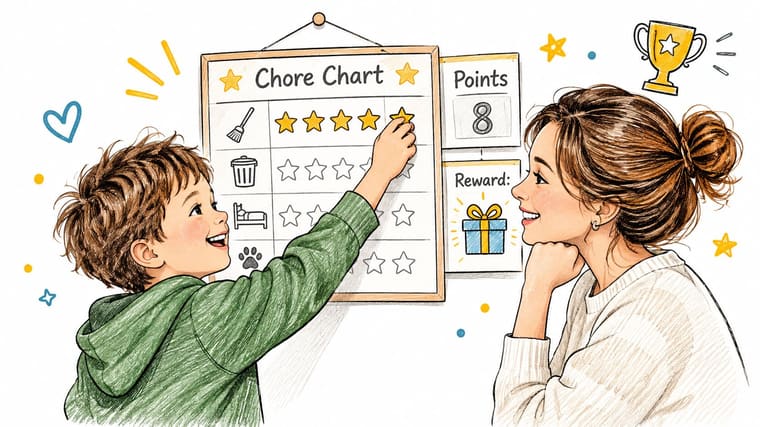
Start with familiar tasks such as putting shoes on the rack, matching socks, or setting out napkins. Write what finished means beside each task, using a picture where reading would get in the way.
Make the points predictable
Agree on points and rewards before starting. A reward might be choosing the family film, selecting dinner music, or picking the next playground.
- Show the task: Use a fridge chart with a picture and space for a completion sticker.
- Show the reward: Draw a progress bar that fills as earned points accumulate.
- Show adult participation: Give adults visible household missions too, without turning everything into paid work.
For example, a child working toward choosing a weekend game adds points after putting away their clean clothes. An adult checks the agreed task, then records the points immediately rather than promising to remember later.
The guide to an ADHD reward system offers a related framework for making expectations and rewards visible.
Keep necessary care, affection, food, and rest outside the points economy. Don’t remove already-earned points because of an unrelated disagreement. If a task repeatedly goes unfinished, make the task smaller or offer help before raising the reward.
4. Family Reading Challenge
Let the confident reader enjoy a novel while the beginning reader studies a picture book. A shared reading-time tracker gives both a meaningful way to contribute without comparing book lengths.
Choose a comfortable reading window and let everyone select their own material. Include shared reading, audiobooks, comics, and rereading a favorite story if those fit your family’s purpose.

Draw a bookshelf on paper and color part of a book spine after each reading session. Alternatively, record reading time on a shared chart and fill a progress bar toward a family-selected celebration.
Add a story mission
After reading, invite each person to contribute something small: a surprising fact, a drawing, or a prediction. Activities that help kids understand what they read can provide prompts when you want conversation beyond whether someone liked the book.
- For beginning readers: Ask them to find a favorite picture or describe a character.
- For independent readers: Invite a clue about the story without revealing its ending.
- For adults: Participate rather than only checking everyone else’s progress.
Say your family reads after dinner. A child listening while drawing can mark the session complete alongside a sibling reading independently. Each contributes to the same shelf.
Avoid making every session a comprehension test. Let children pass on sharing, and don’t interrupt a story to police the timer. The tracker should help everyone return to reading, not make books feel like another assignment.
5. Family Step and Fitness Challenge
Don’t ask a small child, a teenager, and a grandparent to compete on the same step leaderboard. Use a shared activity trail with personal participation goals instead.
Draw a route to an imaginary destination, such as a mountain campsite or moon base. Each person moves the family marker forward after completing their chosen activity. Walking, dancing, seated movement, and an adapted activity can all count under rules agreed beforehand.
Choose what the tracker measures
Use steps when everyone wants to measure steps and has a suitable device. Otherwise, track active time or completed activity sessions. Don’t combine unlike measurements into a supposedly precise fitness score.
- Device option: Apple Watch Activity Sharing can provide a personal reference for family members who already use it.
- Paper option: Color a section of the route after an agreed activity.
- Indoor option: Make a movement card deck with stretching, dancing, or a hallway walk.
For example, an adult takes a lunchtime walk, a child dances after school, and another relative completes seated movement. Everyone adds their contribution to the shared route at dinner.
Let the tracker record participation, not rank bodies or abilities.
A cooperative trail works well when schedules differ because nobody has to exercise at the same moment. The trade-off is that it needs honest, simple reporting. Skip proof photos and constant device checking, and never push someone through pain or illness to keep the family marker moving.
6. Family Savings Goal Thermometer
Draw a thermometer, write a shared goal above it, and color it as money is set aside. The satisfying part is watching an abstract total become visible progress toward something the family chose.
Pick a discretionary goal, such as a board game, outing, or donation. Explain what it costs using the amount you’ve checked, then agree on where the savings will be kept.
Make contributions a team decision
Children might contribute spare change voluntarily, while adults add money already allocated for the goal. Keep a simple ledger beside the chart so the colored amount matches the money saved.
- Mark the destination: Put a drawing or photograph of the goal above the thermometer.
- Add milestones: Divide the chart into manageable sections with small, free celebrations.
- Record reality: Update the tracker after a deposit, not when someone promises a contribution.
A family saving for a museum outing could color the chart after adding money previously reserved for takeaway food. Children can help choose a packed lunch for the outing without being expected to fund it.
The instructions for how to make a progress bar offer a digital alternative to the paper thermometer.
Don’t compare siblings’ contributions or make children responsible for essential household expenses. If you attach a deadline, explain what happens if the target isn’t reached. Choosing a cheaper outing or extending the plan is a budgeting decision, not a family failure.
7. 30-Day Family Habit Challenge
Choose a habit small enough to fit a tired evening. Sharing something you appreciated at dinner is a better starting point than committing everyone to an elaborate daily routine.
Use the 30-day format as a defined experiment, not a promise that a habit will become automatic. Draw a calendar, choose a start and finish date, and agree on what counts as participation before you begin.
Keep the rule accessible
For a gratitude challenge, someone can speak, draw, point to a picture, or write privately. Mark the day after the family has had the opportunity to participate, without forcing anyone to perform.
A review of game-accessibility research in Disabilities identifies customizable settings, multimodal feedback, and adaptive difficulty as recurring accessibility features. At home, that means offering different ways to join rather than assuming a short rule suits everyone.
- Track opportunities: Use a dated calendar so completed and missed days remain understandable.
- Allow a smaller version: On a difficult evening, a drawing or gesture can replace a longer conversation.
- Plan the ending: Celebrate with a family-selected activity and decide whether to continue.
A missed day is information about the routine, not a reason to erase the family’s progress.
Suppose evening reading keeps colliding with bedtime. Move it earlier or shorten the session instead of restarting the challenge. Keep the original finish date, then look together at which version fitted family life.
8. Family Scavenger Hunt with Progress Tracker
Hand the group a picture checklist and give them a shared mission: find the items, mark the boxes, and return to the meeting spot. A cooperative scavenger hunt provides an immediate finish line without needing a winner.
Indoors, choose familiar objects such as a soft toy, something round, and an item in a favorite color. Outdoors, ask players to spot rather than collect things, particularly plants, wildlife, and anything unfamiliar.
Give everyone a useful role
Let a younger child spot objects, an older child read clues, and an adult manage boundaries. Swap roles when people want a change.
- Track discoveries: Use large checkboxes or picture cards that children can turn over.
- Set the boundary: Name the permitted rooms or outdoor area before starting.
- Choose the pace: Add a visible timer only if everyone enjoys the pressure.
For a rainy afternoon, hide clue cards around the living room that eventually lead to a shared snack. Mark each completed clue on a trail so nobody has to remember the whole sequence.
Australia’s eSafety guidance on gaming and disability recommends open-ended play and intergenerational co-play. Apply that flexibility here: a shared phone checklist may suit your family better than paper, but it doesn’t need to become a speed contest.
For another visual starting point, watch the video together before choosing your hunt’s rules.
How the 8 Family Games Compare at a Glance
Each game pairs a family activity with a clear way to track progress. The right format depends on whether your family wants a shared goal, individual contributions, or a short activity with a finish line.
| Item | Time Frame | Tracking Format | Cooperation Style | Best For |
|---|---|---|---|---|
| Countdown to a Family Event Challenge | Until a fixed event date | Shared visual countdown or progress bar | Shared family activity | Building anticipation and helping children understand time |
| Advent-Style Countdown Calendar Game | Daily reveals until a special date | Numbered calendar with daily tasks or surprises | Shared family activity | Making the wait for an event fun and structured |
| Family Chore Chart and Points Economy | Weekly or monthly cycles | Chore chart with points and rewards | Individual contributions toward family-set rewards | Building responsibility and consistent household routines |
| Family Reading Challenge | Summer, school term, or year | Log or progress tracker for minutes, pages, or books | Individual or shared goals | Encouraging literacy and shared reading |
| Family Step and Fitness Challenge | Daily or weekly goals | Completed activity sessions or route markers | Cooperative | Motivating family physical activity |
| Family Savings Goal Thermometer | Until a savings deadline | Thermometer chart or progress bar | Shared contributions toward a common goal | Teaching saving and financial planning |
| 30-Day Family Habit Challenge | 30 days | Daily check-off tracker or progress bar | Shared accountability | Starting a manageable family habit |
| Family Scavenger Hunt with Progress Tracker | Until the list is complete | Checklist with checked-off items or clues | Teams or individual players | Encouraging exploration, teamwork, and problem-solving |
Pick One Game This Week and Start Tracking
Choose the game that fits the family you have tonight, not the family schedule you wish you had. A scavenger hunt suits restless children who need something immediate. A reading shelf, savings thermometer, or event countdown works better when you want a shared activity that continues between busy days.
Start with a clear action and a visible finish. Children should be able to explain what they’re doing, how progress gets recorded, and when the game ends. If the explanation becomes complicated, remove a rule before adding another reward.
Make the first round easy to join
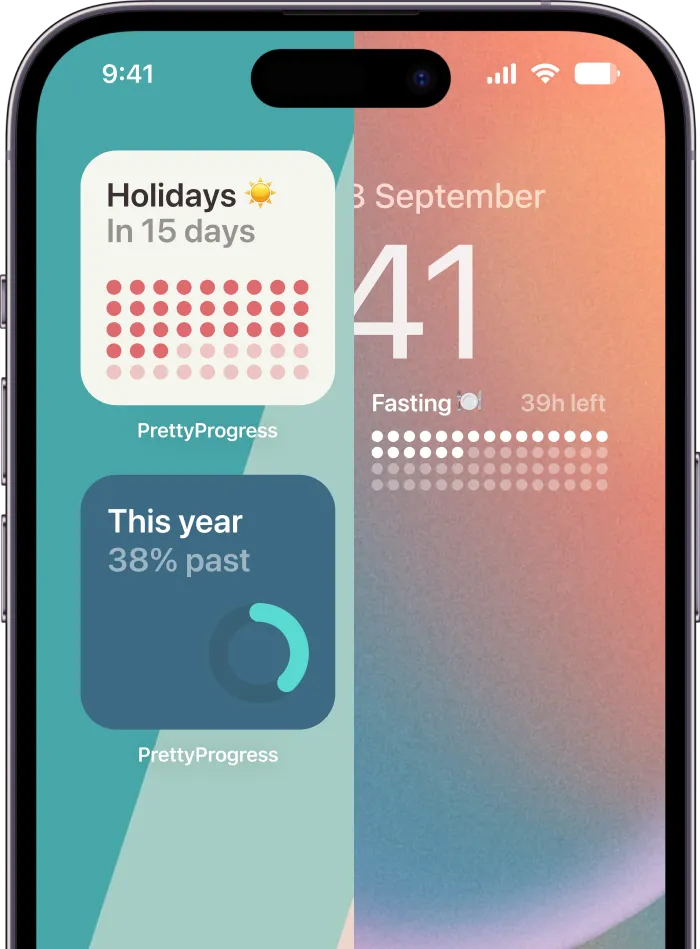
Put the tracker where participation happens. A chore chart belongs near the task, a reading tracker near the books, and an activity calendar somewhere everyone can reach. A simple widget, such as one from Pretty Progress, can keep a countdown or goal visible on the Home or Lock Screen.
- Agree on the dates: Set the beginning and end before the challenge starts.
- Define completion: Decide what earns a mark, point, or filled section.
- Choose a keeper: Name who updates the tracker, with children helping where practical.
- Plan a modest celebration: Let the family choose something enjoyable that doesn’t require another purchase.
Don’t assume everyone wants the same kind of progress display. A child may enjoy stickers but dislike a timer, while a teenager may prefer adding to a shared total. Keep individual scores private if public comparison causes friction, or switch to a cooperative goal.
The tracker also needs to be honest. A countdown measures passing time; a points chart measures agreed actions; a savings bar measures money already saved. Keeping those meanings separate prevents avoidable disagreements.
At the finish, ask what people enjoyed and what they’d change. You can repeat the game, simplify it, or choose something entirely different without declaring the attempt a failure. Pick a family game idea, make its progress visible, and start the first round tonight.
Pretty Progress offers customizable countdown and progress bar widgets that keep family events and goals visible on your screens. Visit Pretty Progress to choose a design, set your dates, and add a reminder for the family challenge you’re starting tonight.