
July 3, 2026
Planning 50th Birthday Party: Your Ultimate 2026 Guide
Make planning 50th birthday party stress-free with our ultimate guide. Get a step-by-step timeline, budget tips, a printable checklist, and 2026 ideas for a
You’re probably staring at a notes app, a few saved venue screenshots, a family group chat that won’t stop buzzing, and one big question: how do you plan a 50th birthday party that feels special without turning it into a full-time job?
That pressure is real. A 50th isn’t a casual pizza night, but it also shouldn’t become a generic “gold balloons and a slideshow” event that could be for anyone. The best milestone parties feel grounded, personal, and smooth behind the scenes. They have a clear plan, a realistic budget, and a few smart systems that keep deadlines visible before anything slips.
I’ve seen the same pattern again and again. People don’t get overwhelmed because they lack ideas. They get overwhelmed because all the decisions land at once. Venue, guest list, catering, music, speeches, timing, weather backup, dietary needs, transport, décor, RSVPs. Once those details live only in your head, planning 50th birthday party celebrations starts to feel heavier than it needs to.
That’s why a visible timeline matters so much. A checklist you can glance at daily changes the whole experience. If you want a simple framework for deadline-based planning, this overview of event planning best practices is a useful starting point. And if you’re looking for regional inspiration before you lock the concept, ABC Hire’s ideas can help you plan your Cape Town 50th party in a way that feels suited to the setting.
Table of Contents
- From Overwhelmed to Organized a 50th Birthday Plan
- Your 12 Week Party Planning Timeline and Checklist
- Setting the Scene with Venue Theme and Atmosphere
- The Heart of the Party Food Drinks and Entertainment
- Managing Guests Final Details and Contingency Plans
- Frequently Asked Questions About 50th Birthday Planning
From Overwhelmed to Organized a 50th Birthday Plan
The hardest moment is usually the beginning. Someone says, “Let’s do something really memorable,” and that sounds exciting for about ten minutes. Then the practical questions arrive. How many people? Where will they sit? What if relatives need easy access? What if the guest of honor hates cheesy milestone themes?
A good 50th starts by replacing pressure with structure. Not a giant spreadsheet nobody updates. Just a working plan with dates, decisions, and owners. That means naming the event style early, choosing the rough guest count, and deciding what kind of feeling the party should create.
What works first
Three decisions make everything easier:
- Pick the format: Dinner party, garden gathering, restaurant private room, hotel function, or weekend retreat.
- Name the mood: Elegant, relaxed, nostalgic, family-centered, music-led, food-led, or intimate.
- Define success: A packed dance floor isn’t always the goal. Sometimes success is long conversations, easy hosting, and a room that feels warm rather than loud.
Practical rule: Don’t start with decorations. Start with the experience you want people to remember the next day.
What usually fails is jumping straight into shopping. Once people buy signage, balloons, party favors, or themed props before choosing the venue and guest experience, they end up forcing the event into the wrong shape.
A calmer planning mindset
If you’re planning 50th birthday party details for a parent, partner, sibling, or friend, remember this: “perfect” is not the standard. Cohesive is. Guests forgive simple décor. They remember confused timing, cold food, nowhere to sit, or a party that doesn’t sound like the person being celebrated.
Use one central planning hub. Keep your tasks visible. Assign a few responsibilities to people you trust. That’s how the party stops feeling like a swirl of loose ends and starts feeling manageable.
Your 12 Week Party Planning Timeline and Checklist
A 12-week runway gives you breathing room, even though the ideal planning timeline for milestone parties begins 6 to 8 weeks before the event according to Mixily’s birthday party planning guide. Starting earlier helps you make better decisions instead of rushed ones.
A visual countdown helps here because party planning is deadline work. Date chosen. Venue booked. invites sent. Menu confirmed. Final headcount submitted. For a practical planning format, this guide to an event planning timeline is helpful.
Start with the non-negotiables
At 12 weeks out, lock these first:
-
Choose the date Check school breaks, public holidays, family travel, and local event congestion before you commit.
-
Set the budget Decide the ceiling before you browse venues. Otherwise, every later choice becomes emotional instead of practical.
-
Draft the guest list Split people into must-invite, nice-to-invite, and local-maybe categories.
-
Choose the event format Lunch, cocktail evening, formal dinner, backyard celebration, or overnight stay.
At 10 to 9 weeks out, start contacting venues and priority vendors. If the party needs a private room, caterer, or entertainment, this is the point where you stop “researching” and start booking.
A party feels expensive when you make big decisions late. Rush fees, limited choices, and panic upgrades push the budget up fast.
Build the middle weeks around decisions
At 8 weeks out, your guest estimate should become useful, not theoretical. Mixily recommends planning for a 70 to 80% attendance rate, so if you want 30 attendees, invite 35 to 40 people in the same source above. That one rule prevents the classic mistake of choosing a room that feels either cramped or empty.
Use this stage for:
- Venue confirmation: Sign, pay, and note every cutoff date.
- Invitation plan: Digital invite, printed invite, or both.
- Theme direction: Keep it light and personal, not costume-heavy unless the guest of honor would love that.
- Food style: Buffet, plated dinner, grazing table, cocktail bites, or mixed service.
At 7 to 6 weeks out, send invitations. People need notice for a milestone event, especially if travel, childcare, or overnight stays are involved.
A simple working checklist for this phase:
| Week | Priority | What to finalize |
|---|---|---|
| 8 | Core logistics | Venue, headcount estimate, invite draft |
| 7 | Guest communication | Send invitations and RSVP deadline |
| 6 | Guest experience | Food style, drinks direction, entertainment concept |
A lot of planners also benefit from seeing a walkthrough before they build their own schedule. This quick video is a useful reset if your list has gotten messy.
Use the final stretch for confirmation not creativity
At 5 to 4 weeks out, shift from dreaming to confirming.
- Menu tasting or menu lock: Decide what people will eat.
- Entertainment booking: DJ, live musician, trivia host, MC, or simple speaker playlist.
- Rentals: Chairs, tables, linen, glassware, heaters, lighting.
- Cake or dessert: Keep it aligned with the guest of honor, not just the theme.
At 3 to 2 weeks out, collect missing RSVPs, assign seating if needed, and create a simple run sheet. That run sheet should include vendor arrival times, food service windows, speeches, cake moment, and cleanup handoff.
At 1 week out, stop adding ideas. Confirm everything in writing.
- Reconfirm vendors
- Print or save contact numbers
- Pack décor and signage by zone
- Choose who handles gifts, photos, and late arrivals
Day of party:
- Eat before guests arrive.
- Put one person in charge of timeline.
- Put one person in charge of guest questions.
- Keep the host out of setup whenever possible.
That’s the hidden difference between a smooth event and a stressful one. The party should feel like a celebration, not a live troubleshooting session.
Setting the Scene with Venue Theme and Atmosphere
Venue choice shapes almost every later decision. It affects cost, guest comfort, timing, noise level, food service, and whether the party feels polished or chaotic. If you choose the wrong setting, even a good menu and nice décor won’t fully fix the experience.
According to the Party Genius AI birthday party statistics, Americans spend an average of $1,185 for adult milestone birthday parties, 33% of hosts overspend their initial budget, and 81% of adults want a specific theme. That combination is where people get into trouble. The theme starts driving custom décor, specialty drinks, signage, rentals, and food styling before the basics are secure.
How venue choice changes the whole event
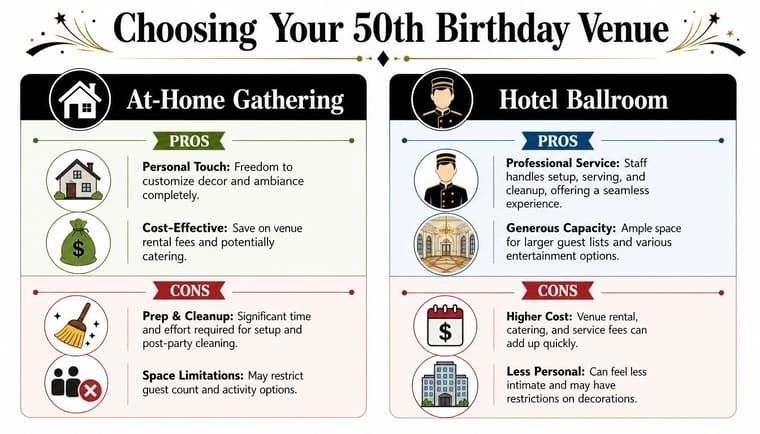
A practical comparison helps.
| Venue type | Usually works well for | Trade-off to watch |
|---|---|---|
| At home | Intimate gatherings, family-heavy groups, highly personal décor | Setup, storage, parking, cleanup, weather exposure |
| Restaurant private room | Smaller groups who care about food and easy service | Limited flexibility for speeches, décor, and timing |
| Hotel ballroom | Larger guest lists, formal dinners, accessibility needs | Can feel generic if you don’t personalize it |
| Garden or outdoor venue | Daytime celebrations, relaxed social atmosphere | Weather backup becomes critical |
| Private rental or compound | Extended family, immersive weekend events, overnight stays | More moving parts and stronger planning discipline required |
Home parties often feel warmest. They also ask the most from the host. If the house has awkward flow, limited bathrooms, or no shaded area, guests feel it quickly.
Hotel ballrooms solve labor. Staff handles setup, service, and cleanup. The risk is emotional flatness. Without personal details, the room can look polished but feel anonymous.
A venue should reduce friction, not create it. If older relatives struggle with stairs, parking, or long walks, the room is wrong even if the photos look beautiful.
Why a retreat format changes the mood
One of the most overlooked options is the multi-day celebration. The Stay at Hilltop guide notes that overnight formats can extend social cohesion by nearly threefold and eliminate transportation anxiety compared with a single-day event. That matters when the goal is connection, not just spectacle.
A retreat format works especially well when the guest of honor values family stories, slow meals, and time with people who don’t often gather in one place.
Good uses for this format include:
- Friday arrival and welcome drinks
- Saturday shared meal and signature activity
- Sunday breakfast and relaxed send-off
This style won’t fit every budget or personality. But when it fits, it creates a very different kind of memory. Less rushed. More layered. More personal.
Theme should come after venue, not before it. The strongest themes aren’t broad concepts like “disco” or “Hollywood.” They’re reflections of the person. A love of jazz, a hometown story, a favorite travel era, a garden table feel, or a menu built around family recipes will usually age better than a trend-heavy party package.
The Heart of the Party Food Drinks and Entertainment
Guests don’t experience your planning spreadsheet. They experience the menu, the pacing, the music, the conversations, and the small details that feel specific to the person turning 50. That’s why food, drinks, and entertainment have to work together rather than competing for attention.
The strongest guidance here is simple. The Peerspace resource on 50th birthday party ideas notes that the most memorable 50th birthday parties tie activities, food, and entertainment directly to the guest of honor’s personal journey, not generic tropes. That’s the difference between a celebration and a template.
Build the menu from memory not trend
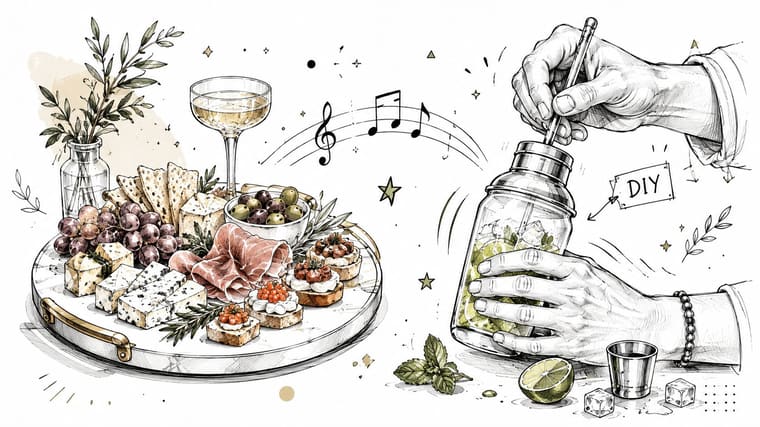
The easiest mistake is over-designing the food. A menu doesn’t need to impress strangers on social media. It needs to make your guests comfortable and make the guest of honor feel seen.
A better food planning lens:
- Start with meaning: Favorite dish, regional comfort food, family recipe, or travel-inspired menu.
- Match service to energy: Buffets encourage mingling. Plated meals slow the room down. Grazing tables keep the mood flexible.
- Plan for age range: Older relatives may prefer seating, clear labels, and easier-to-eat bites over novelty snacks.
- Keep dessert practical: A formal cake is optional. Mini desserts, tart slices, or an ice cream station can feel more relaxed.
If you’re doing a casual dessert station, serving details matter more than people think. Small items like spoons, sturdy cups, and easy grab-and-go presentation keep the line moving. That’s where a practical supplier page like Afida’s guide to ice cream cups can help you think through the setup.
Entertainment should reveal something personal
Entertainment doesn’t have to mean hiring a band. It means creating moments guests can step into.
Try a mix like this:
-
Arrival moment Use a photo display, memory table, or audio playlist built from meaningful eras of the guest of honor’s life.
-
Shared activity Custom trivia works because it invites stories. Keep it affectionate and specific.
-
Anchor moment This could be speeches, a slideshow, a short film, or a favorite song that draws the room together.
-
Loose social time Not every minute needs programming. Some of the best parts of a 50th are unstructured conversations.
If a detail could be swapped onto any other 50th birthday and still make sense, it probably isn’t personal enough.
A few combinations work especially well:
- For a food lover: Tasting stations, labeled favorite dishes, and a chef-led explanation of one signature course.
- For a music person: Playlist by decade, live acoustic set, and song request cards tied to memories.
- For a family-centered guest of honor: Recipe cards, story prompts on tables, and a timeline wall with milestone photos.
- For a low-key personality: Background jazz, seated meal, short toasts, and one intimate surprise rather than a packed program.
What doesn’t work is forcing nostalgia. Metallic “50” décor, broad decade themes, and obvious jokes about aging can flatten the mood if they don’t match the person. Hyper-personalization is quieter and more effective. It shows up in one signature drink named after an inside joke, a table of old travel photos, or a menu that instantly makes the guest of honor smile.
Managing Guests Final Details and Contingency Plans
The final stage is where good planning turns into a good event. This is also where many hosts lose control because they keep adding instead of tightening. By this point, your job is not to invent more. Your job is to make the existing plan easy to execute.
The timing matters. According to the Jump Centers planning guide, hosts who start planning milestone events at least a month in advance report 73% higher satisfaction rates, and early planning often begins by setting the vision and budget well ahead of the event. That tracks with what happens in real events. Earlier decisions create calmer final weeks.
Tight RSVP management solves half the stress
Invitations should answer the guest’s practical questions immediately:
- Who is invited
- Date and arrival time
- Venue and parking details
- Dress cue
- Whether food is full meal, snacks, or drinks only
- RSVP deadline
- If gifts are welcome, discouraged, or replaced with another gesture
Set one RSVP deadline that gives you time to chase stragglers before vendor cutoffs. If you need a quick way to calculate how many days remain until your response deadline or final payment date, a date countdown calculator is useful for working backward cleanly.
If you’re including a gift table or suggesting a refined keepsake, tasteful inspiration helps more than generic registry language. This guide to elegant gifts is a good example of the tone many milestone celebrations aim for.
Your final two week control list
Most final-week stress comes from tiny missing decisions. Use a control list.
Two weeks out
- Confirm every vendor: Arrival time, load-in instructions, balance due, and final contact person.
- Review seating and mobility: Make sure older guests and key family members have easy access.
- Assign support roles: One person for guest greeting, one for gifts, one for vendor questions.
One week out
- Build a run sheet: Include setup, catering arrival, welcome drinks, speeches, cake, and close.
- Pack by zone: Entrance table, memory table, bar, dining tables, bathroom basket, cake items.
- Check sound: Test microphone, speaker, playlist order, and extension needs if relevant.
Day before
- Print or save all confirmations
- Chill drinks and label serving pieces
- Walk through the guest path from arrival to departure
Hosts enjoy the party when they stop being the default answer to every question in the room.
Contingency plans that actually matter
You don’t need a disaster manual. You need a few sensible backups.
| Risk | Smart backup |
|---|---|
| Rain at an outdoor event | Tent, indoor reset plan, or simplified seating layout |
| Vendor delay | Emergency snacks, water station, and one contact person to reroute timing |
| Unexpected guests | A few extra place settings, flexible food items, spare chairs |
| Tech failure | Printed speech notes and offline playlist download |
| Guest fatigue | Quiet seating area away from speakers and crowding |
The most useful contingency plan is delegation. If nobody besides the host knows what’s happening, every hiccup lands on the host. That’s what makes a lovely party feel exhausting.
Frequently Asked Questions About 50th Birthday Planning
A few questions come up late, usually when the big pieces are already in place.
How do I make speeches feel warm instead of awkward
Keep them short and pre-selected. Ask two or three people in advance, give them a rough time limit, and tell them the tone you want. A short heartfelt toast usually lands better than an open mic.
What if the guest of honor hates being the center of attention
Don’t build the party around performance. Use a shared meal, soft background music, and subtle personal touches instead of grand entrances or surprise speeches. The event can still feel meaningful without making one person “work the room.”
Is a no-gifts request rude
No. It just needs clear wording. “Your presence is the gift” works best when the event already feels generous and organized. If guests will likely bring something anyway, suggest cards, favorite memories, or a small contribution to a meaningful cause if that suits the person.
Is an overnight celebration worth the extra effort
Sometimes yes, especially for close families or groups of longtime friends. The Stay at Hilltop article already cited earlier makes a strong case for the retreat format because longer stays allow more storytelling and less transport stress. In practice, it works best when the guest of honor values time together more than formal production.
How do I avoid a generic “turning 50” theme
Start with the person, not the age. Pull from their recipes, travels, music, hobbies, work milestones, family history, or sense of humor. If the party still makes sense after removing every “50” decoration, you’re on the right track.
If you want planning 50th birthday party deadlines to stay visible without clutter, Pretty Progress is a clean way to track the party date, RSVP cutoff, vendor booking deadlines, and final prep tasks with countdown and progress widgets across your devices. It’s especially useful when you need quick visual reminders instead of another long checklist buried in an app.