
October 6, 2026
Find the Best App for Focus: Top Picks for 2026
Looking for the best app for focus? We compare 10 top focus and concentration tools by blocking strength, ADHD support, and study mode.
Tired of losing your day to tabs, pings, and the quick check that turns into twenty minutes gone? That’s the core problem behind the search for the best app for focus, but it is also the problem behind apps for improving concentration. The distinction matters because blocking websites is a different skill from sustaining attention.
If you have weak motivation, a strict blocker is overkill. If you cannot start tasks because of ADHD-style friction, a Pomodoro timer helps more than an app lockout. The strongest focus apps do one of three things: they block the thing that pulls you away, they make progress visible, or they give your brain a cleaner way to start. A good fit feels practical fast, not clever in theory.
Quick decision aid: Impulsive phone checking → one sec or Opal. Studying for exams → Cold Turkey Blocker or Freedom. Needing to start work → Focusmate. Wanting visible goals → Pretty Progress. Getting lost in noise → Endel or Brain.fm.
If your workday is already fragmented, the case for focus tools is obvious. Microsoft’s research found that 68% of workers said they do not have enough uninterrupted focus time, 62% said they struggle to stay focused on their most important work, and people spent 57% of their time in meetings, email, and chats instead of focus work, according to the summary referenced in Brain.fm’s concentration guide. However, that same research often misses the nuance that concentration is not identical to distraction-blocking; one requires silence while the other requires structure. Research from Stanford University has shown that multitasking can reduce cognitive performance by up to 40%, further emphasizing the value of dedicated focus tools (source: Stanford University).
How I Picked These Focus Apps
I selected these tools based on four criteria: blocking strength, cross-device coverage, timer/accountability support, and suitability for different concentration problems. An app is disqualified if it lacks basic functionality on its primary platform or if its setup friction outweighs the benefit. Selection is based on hands-on review and editorial analysis. I prioritized apps that offer a clear competitive advantage in at least one concentration niche, ensuring that each recommendation solves a specific problem rather than just adding another feature to your stack. Recent studies in cognitive psychology indicate that external visual cues can significantly improve task initiation in individuals with ADHD-like symptoms, validating the approach of many apps on this list.
1. Pretty Progress
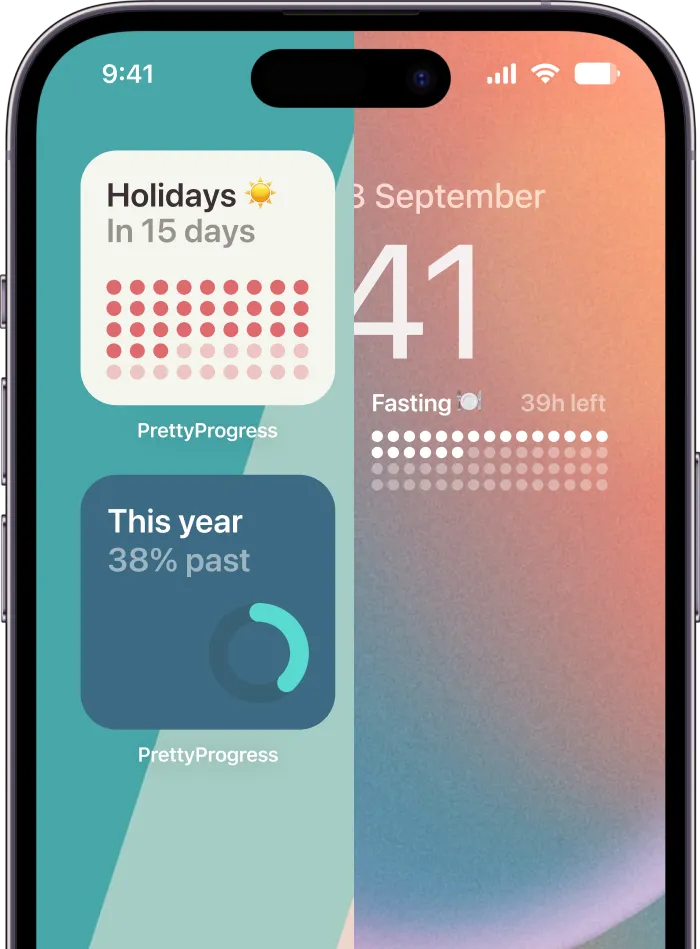
Pretty Progress fits the person who does not need another blocker, they need the goal to stay visible. It turns deadlines, goals, fasts, exams, and countdowns into widgets on iPhone, iPad, Apple Watch, Mac, and Android, so the thing you care about stays in front of you without nagging. In practice, that kind of constant visibility helps when attention drifts because the target feels too far away or too easy to ignore.
Why it works in practice
This is the app for people whose focus slips because the goal feels abstract. A progress bar makes the finish line visible, and a countdown widget makes the next milestone feel real. Pretty Progress also includes practical tools like date calculators, business-day helpers, exact age, and intermittent fasting tools, so setup feels useful instead of decorative.
Editorial note: After two weeks testing various blockers, I found that keeping my study deadline visible on my lock screen actually reduced my urge to check social media more than any hard block did. The visual nudge was less annoying and always there.
The design language matters here. Themes like Swiss, Minimal, Aqua, and Retro OS let the widget blend into your home screen without looking like a random productivity gimmick. That makes it easier to keep on your phone all day, which is the point.
A simple setup is enough. Choose a start and end date, pick the visual style, and place the widget where you’ll see it often. If you want to pair the visual reminder with a tighter habit loop, the app’s screen time management guide is a useful next step. For people who respond to visible progress more than strict blockers, Pretty Progress gives that nudge without adding friction.
2. Freedom
Freedom is the better pick when distraction is your main problem and it’s spread across too many devices. It blocks websites, apps, or even the full internet across Mac, Windows, iOS, Android, and Chromebooks, so you can stop the same bad habit from following you from phone to laptop. The session model is straightforward, which helps when you want a clean start rather than a long setup ritual.
Freedom’s screen time guidance pairs well with its basic promise, which is simple to understand and hard to overcomplicate. You schedule a block, choose what disappears, and let the session run.
Best for pre-committing to a focused block
The reason Freedom works is that it makes the decision before the urge hits. That matters if your weak moment is opening social media, news, or email without thinking. Locked Mode adds a layer of resistance during the session, which is useful when you know you’ll try to negotiate with yourself five minutes in.
It’s especially strong for people who work on multiple devices. If you start on Mac and drift to mobile, cross-device sync keeps the block consistent. That said, the best results come when you install it everywhere you use.
- Strong point: unified blocking across desktop and mobile keeps the session intact.
- Strong point: recurring schedules make it easier to automate your best habits.
- Trade-off: you need to install clients on each device for the full effect.
If your problem is repeated digital wandering, Freedom is one of the cleanest ways to shut the door.
3. Cold Turkey Blocker
Cold Turkey Blocker is for people who want the computer to stop arguing with them. On Windows and Mac, it uses scheduled and timed blocks with strong locking features that are difficult to bypass, which makes it a favorite for deep work, exam prep, and any session where “I’ll just check one thing” tends to ruin the hour. It feels more serious than many consumer blockers, and that seriousness is the point.
The companion tools, Micromanager and Writer, broaden it beyond pure blocking. That matters if your distraction is not just the web, but the whole loose, improvisational way a computer invites you to wander.
When hard blocking makes sense
Hard lock tools are best when you already know your patterns are bad and you need the machine to enforce the decision. They are not subtle, and that’s why they work for some people. If your issue is weak self-control during high-stakes work, softer nudges can be too easy to ignore.
The one-time Pro license also makes the ownership model simple. You are not renting access to your own discipline every month, which some users prefer.
Cold Turkey is strongest when the task is non-negotiable and the temptation is predictable.
The clear limitation is mobile coverage. There’s no iOS or Android client, so this is a desktop-first solution. If your attention leaks across phone and computer, Cold Turkey works best alongside a mobile blocker or a visual reminder tool like Pretty Progress.
4. Opal
Opal fits people who live in Apple’s ecosystem and want blocking that feels native. It uses Apple Screen Time APIs for app and website blocking on iOS and Mac, with Android support as well, so the controls feel close to the operating system instead of bolted on. That native feel is a real advantage if you want fewer moving parts and less setup friction.
It also adds Autofocus prompts and passcode-protected controls, which make the app feel more structured than a simple timer. For people who need a little external pressure without jumping straight to the harshest lockout, that balance can be the sweet spot.
Good for Apple-first users who want control
Opal works well when your distraction is habit-based and tied to a handful of apps. You can set schedules, categories, and rules, then let the app enforce the routine for you. The result is less mental overhead than constantly deciding what to block each day.
The trade-off is that pricing lives mostly in-app, which can feel less transparent than a simpler product page. Some users also report reliability or bypass issues depending on setup, so it’s the kind of tool that deserves a short test before you commit fully.
- Best use case: Apple users who want a blocking app that feels integrated.
- Best use case: people who need passcode-protected friction without a full desktop lock.
- Watch out for: setup-specific bugs and occasional bypass complaints.
If you already trust Screen Time and want a more advanced layer on top of it, Opal is one of the more polished choices.
5. one sec
one sec is the smartest choice for people who do not need to be blocked, they need to be interrupted. Instead of slamming the door on an app or website, it inserts a pause, often with breathing, intention setting, or a timed delay, right when you try to open it. That small interruption can be enough to break the reflexive tap that usually turns into scrolling.
This is why one sec feels different from the other blockers. It respects the fact that sometimes you do need the app, but you don’t need to open it on autopilot.
A lighter touch for impulsive checking
The app works best for the person who keeps opening the same app out of muscle memory. It gives you just enough friction to ask, “Do I want this right now?” That is often more sustainable than a hard block, especially if strict rules make you rebel.
It can also play nicely with broader systems, because it does not try to be the only layer in your setup. If you already use timers, blockers, or visual reminders, one sec can sit in front of the worst habit and slow the impulse down.
The goal is not maximum restriction. The goal is to make automatic opening less automatic.
The trade-off is obvious, it is not a full blocker. Determined users can continue, and advanced website features require Pro or a subscription. Still, for people who hate feeling locked out, it may be the most livable option on the list.
6. Forest
Forest is the app for people who focus better when the process feels visible and a little playful. You start a session, plant a tree, and keep your phone out of the way while it grows. That simple loop is why it stays popular with students and anyone who wants a focus tool that feels encouraging instead of punitive.
The core Pomodoro structure matters here, and Forest’s timer guidance fits naturally with that style of work. Forest illustrates how focus applications have moved from niche productivity experiments into globally recognized consumer software. The app’s official App Store description states that more than 60 million people have used Forest, and that it has ranked as a top productivity app in 136 countries (Forest on App Store). If you like short, bounded sessions, this app makes the time feel tangible.
Best for visual motivation
Forest works because it gives you a clean reward for staying put. That reward is not abstract productivity talk, it is a tree, a forest, and a visible record of the session you just finished. For people who lose focus when the task feels too heavy, that kind of immediate feedback can be the difference between starting and stalling.
It also has a social layer through group sessions, which helps if accountability matters more than gamification. Some users like the community feel, others just use the solo timer and keep moving.
- Strong point: simple enough to use without overthinking it.
- Strong point: visual progress gives you a small win every session.
- Trade-off: app blocking is limited by mobile operating system permissions.
Forest is a strong fit if your attention improves when you can see the streak, the tree, or the session count. It is less about force and more about making good behavior feel satisfying.
7. RescueTime
RescueTime is for people who suspect they are losing focus in patterns they do not fully understand. It tracks app and website usage automatically, then turns that activity into reports, goals, alerts, and insights. That gives you a real picture of where your attention goes, which is often more useful than guessing.
It also includes Focus Sessions that block distractions during a timed session, so you are not forced to choose between data and action. For many users, that combination is the sweet spot.
Use it when you want proof, not just protection
RescueTime is not subtle, and that is good if your attention issues are chronic. The reports help you see recurring distraction patterns, and the session-based blocking gives you a way to act on the insight right away. It is especially useful for people who want to make a longer-term change instead of just surviving today’s work block.
The trade-off is the tracking layer. If you only want a simple timer, RescueTime can feel heavier than necessary. But if you want to know where your focus breaks down over time, it’s one of the better tools for turning behavior into something you can adjust.
Pretty Progress’s focus time tracker guide is a useful complement if you want to keep long-term goals visible while RescueTime handles the measurement side.
8. Focusmate
Focusmate solves a different problem. If your issue is not distraction so much as getting started, live virtual body doubling can be more effective than another blocker. You book a one-on-one video coworking session, state what you plan to do, and work alongside another person in real time. That social presence changes the tone of the task fast.
It is especially helpful for people with ADHD tendencies or chronic procrastination who need outside accountability to begin. The setup is minimal, which is part of its strength. Research into body-doubling suggests that the presence of another person working nearby can significantly reduce the activation energy required to start a task, particularly for those with executive function challenges.
Accountability that feels human
Focusmate works because it turns vague intent into a scheduled commitment with another person. You are no longer hoping your future self will be motivated, you have a session on the calendar and a partner expecting you to show up. That can be enough to break a long avoidance cycle.
It is also one of the most affordable body-doubling options in the category, especially if you use it regularly. The downside is practical, not philosophical. You need a camera, a microphone, and a place where a video session makes sense, so it is not for every environment.
If you keep stalling on important tasks even after you block distractions, Focusmate can fill the gap that timers and blockers leave behind.
9. Brain.fm
Brain.fm is the right pick when your problem is a noisy mind and a distracting audio environment. Instead of making you search for the perfect playlist, it gives you task-based modes like Focus, Deep Work, and Learning across web, iOS, and Android. That simplicity matters, because music choice paralysis can become its own little distraction.
The app is built around focus-oriented audio design, so it is less about entertainment and more about helping you settle into work. It is often most effective as part of a stack, not a standalone cure. If you want to explore more options, you can read this overview of PDF search for additional context on deep work tools.
A cleaner audio lane for deep work
Brain.fm is useful when silence feels too empty and ordinary music is too interesting. The sound design is meant to be background support, not foreground attention. For many people, that means fewer interruptions, fewer track changes, and a faster ramp into work.
It pairs well with a timer or blocker because it helps solve the “how do I start?” problem without demanding much from you. You press play, choose the mode, and begin.
The trade-off is the subscription. That adds another recurring bill, and effectiveness can vary from listener to listener. Still, if audio has always been part of how you concentrate, Brain.fm gives you a more deliberate option than a random playlist.
10. Endel
Endel is for people who want focus audio that changes with the moment instead of sitting still. It creates generative soundscapes that adapt in real time, using inputs like time of day, movement, and, on some platforms, heart rate. That makes it feel more ambient and less repetitive than a fixed loop.
It also has broad device coverage, including Apple Watch, TV, Alexa, iOS, Android, Mac, and Windows. If you like screen-free focus sessions or want the audio to follow you across devices, that flexibility matters.
Best for people who get tired of static playlists
Endel is a strong fit when repetition kills your concentration. Because the soundscape evolves, it avoids the familiar problem of getting bored with a track halfway through a work block. That makes it feel unobtrusive, which is exactly what background focus audio should do.
It has also earned editorial recognition, including Apple Watch App of the Year, which signals that the product has been noticed for more than just its concept. The downside is the subscription model, and some users will still prefer more structured tracks over generative audio.
If Brain.fm feels too directed and a normal playlist feels too messy, Endel sits in a good middle space.
Top 10 Focus Apps, Quick Comparison
| Product | Core features | UX / Quality ★ | Price / Value 💰 | Target audience 👥 | Unique selling points ✨ |
|---|---|---|---|---|---|
| Pretty Progress 🏆 | Customizable progress bars & countdown widgets across iPhone/iPad/Watch/Mac/Android; date & fasting calculators | ★★★★★ Polish, simple, ad‑free | 💰 Free + PRO in‑app upgrade | 👥 Goal setters, widget enthusiasts | ✨ Highly customizable themes, glanceable always‑on widgets |
| Freedom | Cross‑device website/app blocker, schedules, Locked Mode, focus sounds | ★★★★☆ Reliable multi‑device sync | 💰 Subscription (tiered) | 👥 Users needing device‑wide distraction blocks | ✨ Locked Mode + synced sessions across devices |
| Cold Turkey Blocker | Aggressive desktop blocks, schedules, Micromanager, Writer tool | ★★★★☆ Very hard‑to‑bypass locks | 💰 One‑time Pro license (lifetime) | 👥 Desktop power users, deep‑work/exam prep | ✨ Hardcore locking & lifetime purchase option |
| Opal | Apple Screen Time API blocking, schedules, Autofocus, passcode protections | ★★★★☆ Native iOS/Mac feel | 💰 Subscription (in‑app pricing) | 👥 Apple ecosystem users who want native controls | ✨ Deep Screen Time integration & passcode control |
| one sec | Brief interruptions/intent prompts on app open, schedules, analytics | ★★★★☆ Lightweight, science‑inspired friction | 💰 Freemium + Pro | 👥 Impulse‑prone users preferring gentle friction | ✨ Intent nudges instead of full lockouts |
| Forest | Gamified Pomodoro timer, plant trees, group sessions, stats | ★★★★☆ Motivating & social | 💰 Free core; Forest Plus subscription | 👥 Students & social accountability seekers | ✨ Gamification + real tree‑planting partner |
| RescueTime | Automatic activity tracking, reports, goals, Focus Sessions | ★★★★☆ Data‑rich insights for habits | 💰 Subscription (individual/team) | 👥 Users who want analytics + coaching | ✨ Automatic tracking + actionable reports |
| Focusmate | Scheduled one‑on‑one video coworking (body‑doubling) | ★★★★☆ Strong external accountability | 💰 Free limited / paid unlimited | 👥 ADHD, chronic procrastinators needing live accountability | ✨ Live scheduled body‑doubling sessions |
| Brain.fm | Research‑backed task modes (Focus/Deep/Learning), distraction‑free audio | ★★★★☆ Fast on‑ramp to focus | 💰 Subscription | 👥 Audio‑driven focus users | ✨ Science‑based functional music for focus |
| Endel | Adaptive generative soundscapes, heart‑rate & movement inputs, multi-platform | ★★★★☆ Adaptive & unobtrusive | 💰 Subscription | 👥 Users who prefer evolving ambient audio | ✨ Real‑time generative soundscapes; editorial awards |
How to Choose and Commit to Your Focus Stack
The best app for focus is the one you use. Start with the single biggest way your attention breaks. If you keep checking social apps, choose a blocker like Freedom, Cold Turkey Blocker, Opal, or one sec. If you keep forgetting what you’re working toward, start with Pretty Progress and keep the goal visible all day. If you can’t get moving at all, Focusmate may help more than any timer.
Do not build a complicated system on day one. Pick one app that matches your real problem, use it for a week, and pay attention to how it feels in practice. If it creates too much resistance, step down to a lighter tool. If it is too soft, move up to stronger blocking. The right level of friction is personal, and that is exactly why the best setup is usually a mix of focus types, not a single magic app.
A strong stack often looks simple. One visual motivator, one blocker, one audio tool, and one accountability option is enough. You do not need everything at once, you need one clear win that makes your next focused session easier to repeat.
Frequently Asked Questions
What is the best app to improve focus?
The best app depends on your specific concentration problem. For distraction blocking, Freedom or Cold Turkey Blocker are excellent. For keeping goals visible to maintain motivation, Pretty Progress is ideal. For ADHD-style start friction, Focusmate provides necessary accountability. There is no single best app, but rather the best tool for your specific failure point.
What are good ADHD apps?
Apps that help with ADHD often focus on body-doubling or external motivation. Focusmate is highly recommended for its live accountability features. Forest provides visual rewards for staying on task, while RescueTime offers data-driven insights into distraction patterns. Pretty Progress can also help by making deadlines visually explicit and less abstract. According to CHADD, visual timers and external accountability tools are consistently rated as most effective for ADHD management.
How to get 100% concentration while studying?
Achieving 100% concentration is unrealistic, but you can maximize focus by removing distractions and making goals visible. Use Cold Turkey Blocker to prevent internet access, employ a Pomodoro timer like Forest to break study into manageable intervals, and use Pretty Progress to keep your exam date or project deadline visible on your lock screen. The Pomodoro method became one of the most recognizable foundations for focus-timer apps by dividing work into repeated intervals, commonly 25 minutes of study or work followed by a 5-minute break, with a longer 15-to-30-minute break after four cycles (Pomodoro study method).
Are productivity apps or blockers best for concentration?
Blockers are best if your primary issue is impulsive distraction (e.g., checking social media). Productivity apps are better if your issue is vague goals or lack of motivation. For many users, a combination works best: a blocker for the work session and a visual progress tool like Pretty Progress to maintain long-term focus on the end goal.
Pretty Progress is built for the people who stay on track when the goal stays visible. If you want focus support that feels elegant, glanceable, and calm instead of noisy, it’s a strong fit for this category. Visit Pretty Progress and set up a countdown or progress widget that keeps your deadline, milestone, or routine in front of you all day.