
April 21, 2026
How to Focus with ADHD: Practical Steps That Work
Struggling with how to focus with ADHD? Discover practical, evidence-informed methods from quick hacks to structured routines that help manage your attention.
You sit down to work, open the laptop, and within minutes your brain is juggling email, a half-finished assignment, a text you forgot to answer, a tab about meal prep, and the sudden urge to reorganize a drawer. The task in front of you isn’t impossible. It just feels hard to hold onto.
That’s the part people miss when they talk about how to focus with adhd. The problem usually isn’t caring. It’s starting, staying with the right thing, and getting back when attention slips.
The good news is that focus with ADHD gets better when you stop treating it like a character test. What helps is a layered approach. Use quick resets when your mind is scattered, build routines that reduce friction, and set up tools that keep important things visible without asking your brain to remember everything on its own.
Table of Contents
- Why “Just Focus” Is the Worst Advice for ADHD
- Immediate Fixes for a Wandering Mind
- Structured Routines for Sustained Concentration
- Turning Your Phone into a Focus Partner
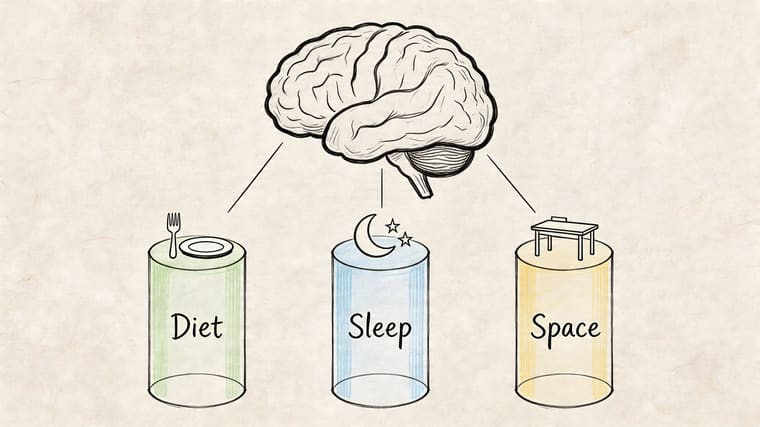
- Your Brain’s Support System Diet, Sleep, and Space
- When to Go Beyond Self-Help Strategies
- Frequently Asked Questions About ADHD Focus
Why “Just Focus” Is the Worst Advice for ADHD
If you have ADHD, you’ve probably heard some version of this advice your whole life. Try harder. Be disciplined. Stop getting distracted. It sounds simple, but it fails because it assumes focus is a moral choice.
For many people with ADHD, attention is inconsistent rather than absent. The same brain that can’t stay on a routine email can lock onto something interesting for hours. The National Institute of Mental Health notes that people with ADHD can experience hyperfocus, an intense, prolonged state of concentration on tasks of interest, and that it’s often reported as a positive trait that helps with demanding educational and professional work in NIMH ADHD statistics.
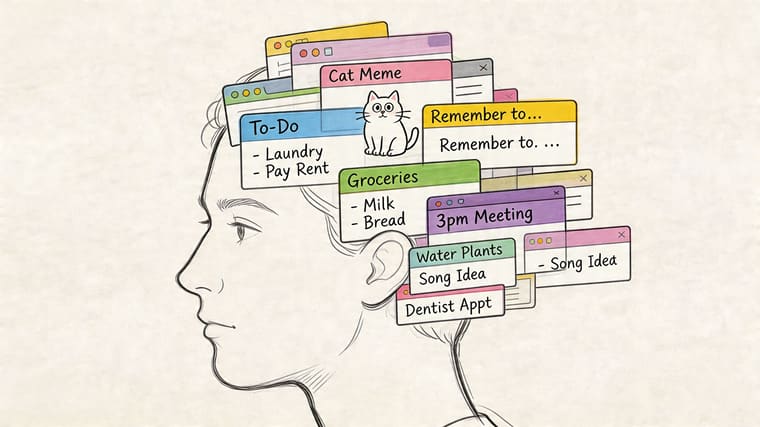
That matters because it changes the question. Instead of asking, “Why can’t I focus?” ask, “What conditions help my focus click on?”
Focus trouble is usually a setup problem
A lot of ADHD friction comes from hidden demands:
- Too many choices: You sit down and have to decide what to do first.
- Too much vagueness: “Work on project” doesn’t tell your brain where to begin.
- Too little feedback: Long tasks feel endless, so attention slides away.
- Too much to hold mentally: Deadlines, steps, and priorities all compete at once.
Practical rule: Don’t demand perfect concentration from an unsupported brain. Reduce the number of decisions between you and the first useful action.
That’s why systems matter more than pep talks. If you’re trying to track several moving pieces at once, a visible project system helps more than another promise to “be better this week.” A guide on how to keep track of multiple projects can be useful here because scattered attention gets worse when every task lives in your head.
The goal isn’t robotic consistency. The goal is to make focus easier to enter, easier to return to, and less dependent on willpower.
Immediate Fixes for a Wandering Mind
When your attention is gone, don’t start with a grand productivity plan. Start with first aid. You need something that lowers resistance in the next few minutes, not in the next month.
Use a fast reset instead of waiting to feel ready
The fastest rescue move is a brain dump. Grab paper or open a notes app and write down every open loop rattling around in your head. Tasks, worries, reminders, random thoughts. Don’t organize it yet.
Then pick one item and make it smaller.
Instead of:
- “Finish report”
Use:
- Open the file
- Read the last paragraph
- Write one rough bullet
That shift sounds minor, but it cuts through overwhelm because your brain no longer has to solve the whole project before moving.
A second reset is changing your physical state. Stand up. Get water. Walk to another room. Put on the same playlist you use for work. ADHD focus is state-dependent for a lot of people. A sensory cue can interrupt the drift.
Try the 5-Minute Rule the right way
The 5-Minute Rule works because it asks for a start, not a finish. Based on CBT, it means committing to work for just five minutes, and the technique is linked with a 50% reduction in impulsivity and noticeable gains in task initiation after 4 to 6 weeks in this CBT-focused overview.
Use it like this:
- Name one exact task. “Reply to Sarah’s email” works. “Get my life together” doesn’t.
- Set a timer for five minutes.
- Remove one obvious distraction. Silence the phone or close extra tabs.
- Stop after five if you need to. You’re still building the starting habit.
- If momentum shows up, keep going. That’s a bonus, not the requirement.
What doesn’t work is using the 5-Minute Rule on something foggy and emotionally loaded. If the task is “deal with finances,” your brain may still freeze. Make the first move mechanical instead. Open the bank app. Download one statement. Rename one file.
If a task feels impossible, the task is still too big.
Keep a short emergency list for bad focus days. Mine would include a brain dump, five-minute start, phone out of reach, one song on repeat, and a lap around the room. Simple beats clever when your brain is overloaded.
Structured Routines for Sustained Concentration
Quick fixes help you get unstuck. Routines help you stop getting stuck the same way every day. For ADHD, the best systems reduce decision fatigue, make time visible, and keep tasks from turning abstract.
Pomodoro when starting feels harder than doing
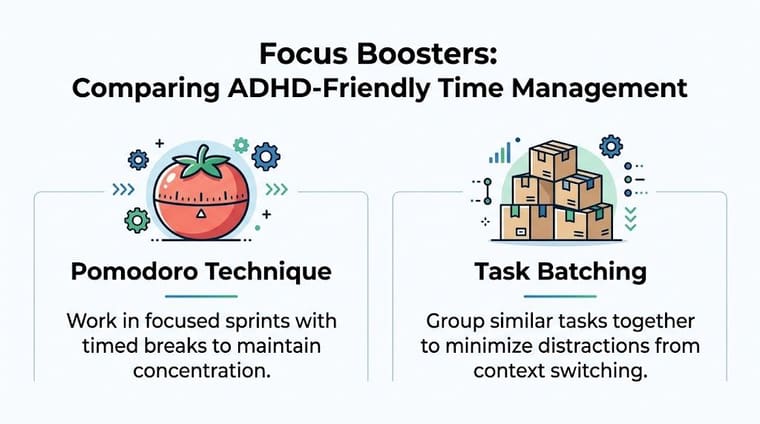
If task initiation is your biggest problem, start here. The ADHD-friendly version of Pomodoro uses shorter sprints. Clinical observations note that 70 to 80% of adults report better task initiation and focus after 2 to 4 weeks of consistent use with shorter 15 to 25 minute sprints in this overview of ADHD focus techniques.
What makes it work:
- The finish line is visible
- Breaks are built in
- You get frequent completion cues
- The task stays contained
What makes it fail:
- The task is vague
- The break turns into scrolling
- You set the sprint too long for your actual bandwidth
A good first sprint is not “write paper.” It’s “draft opening paragraph” or “find three sources.”
Task batching when context switching keeps wrecking your day
Task batching is less about time and more about type of effort. Group similar tasks together so your brain doesn’t have to switch gears every few minutes.
Try batches like:
- Admin batch: email, calendar, quick forms
- Thinking batch: writing, planning, studying
- Errands batch: calls, pickups, routine life tasks
This helps when your day gets shredded by small interruptions. If you answer messages all day as they arrive, each reply steals setup time from the work that needs depth.
Time blocking when the day disappears on you
Time blocking is useful when you keep underestimating how long things take or forgetting what the day was supposed to hold. Put tasks on the calendar as blocks, not just on a to-do list.
Here’s a simple comparison:
| Method | Best for | Watch out for |
|---|---|---|
| Pomodoro | Starting hard tasks | Overlong breaks |
| Task batching | Reducing context switching | Lumping too much into one batch |
| Time blocking | Planning realistic days | Building a schedule with no recovery room |
One of the most useful additions to these systems is support for working memory. If that’s a weak point for you, Orange Neurosciences has a helpful guide with practical strategies to boost focus by improving working memory and ADHD.
Use the lightest system that reliably gets you back to the task. More structure isn’t always better. Better fit is better.
If consistency is the problem, not knowledge, it helps to make the routine visible and repeatable. A simple read on how to stay consistent with goals can then help you tighten the follow-through piece without overcomplicating your setup.
Turning Your Phone into a Focus Partner
A phone can wreck your attention. It can also hold the structure your brain keeps dropping. The difference is whether the screen is asking things from you, or showing you what matters.
Make the phone show your next move
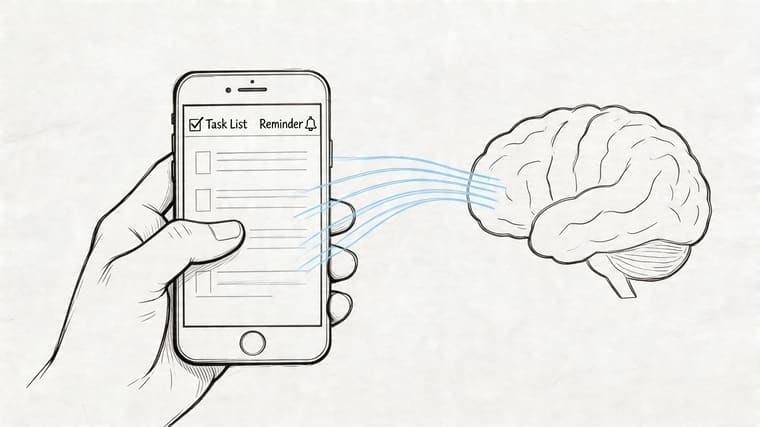
ADHD often improves when you externalize executive function. That means you stop depending on memory, internal urgency, and mental sorting for every step. Instead, you put cues outside your head.
A better phone setup does three things:
- Shows one priority at a glance
- Tracks time visually
- Reduces the need to reopen apps and re-decide
This works especially well for focus sprints, deadlines, and projects that unfold over days rather than minutes. If visual prompts help you reorient, these ideas for visual reminders for ADHD are worth stealing.
A simple widget setup for focus sprints
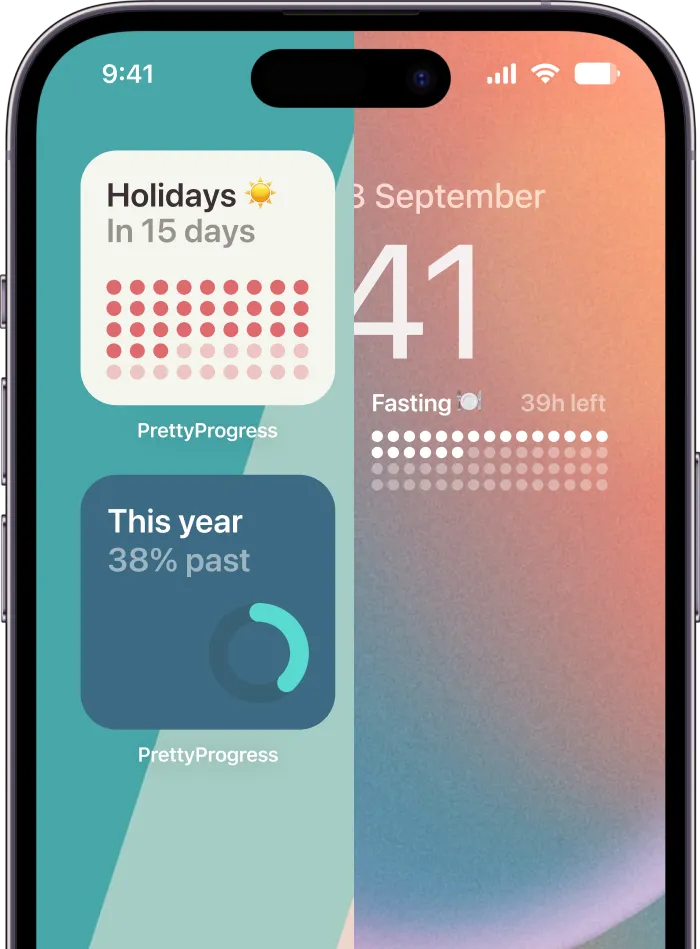
One practical option is Pretty Progress, which lets you create countdown and progress widgets on Home and Lock Screens. For ADHD, the value is straightforward. You can make time and progress visible without reopening your planner over and over.
Try this setup:
-
Create one focus sprint widget
- Label it with a single task, like “Read chapter notes”
- Set the end time for your work block
- Put it on the first home screen
-
Create one project progress bar
- Use it for something bigger, like “Portfolio update” or “Exam prep”
- Keep the title concrete so the widget means something on sight
-
Add one deadline widget to the lock screen
- Choose the nearest meaningful due date
- Avoid clutter. One visible countdown is better than six
-
Use one color for work and another for life admin
- Color coding cuts down on the second or two your brain spends decoding what you’re looking at
This is the kind of setup that helps when you know what to do but keep drifting before you do it.
A short demo makes the idea more concrete:
The key trade-off is this. Don’t turn your phone into a productivity scrapbook. If you add too many widgets, too many categories, or too many goals, the system starts demanding attention instead of supporting it. One current sprint, one active project, one important deadline is usually sufficient.
Your Brain’s Support System Diet, Sleep, and Space
You can have a solid timer and a clean task list and still struggle to focus because your body and environment are fighting you. ADHD tools work better when the basics are less chaotic.
Build a room that asks less from your attention
Your workspace doesn’t need to be minimalist. It needs to be legible.
A few useful rules:
- Keep the work surface visually quiet. Only today’s materials stay in reach.
- Store distraction objects out of sight. If you fidget with every nearby item, make that harder.
- Use one cue that signals focus. A lamp, headphones, or a certain playlist can become a start ritual.
- Separate work zones when possible. Even moving to one side of a table can help your brain register a shift.
The easiest distraction to manage is the one you never put within reach.
Support focus before you sit down to work
Sleep, food, and attention are tightly connected. If you’re under-slept and running on sugar spikes, your focus strategies have to work much harder.
There’s also growing interest in the gut-brain link. Emerging research described by Memorial Hermann notes that studies from 2025 found a diet low in processed foods and sugar and rich in fiber can lead to a 40% improvement in focus by reducing gut inflammation and supporting stable dopamine production in this article on staying focused with adult ADHD. Since that research is future-dated in the source, treat it as emerging rather than settled.
That doesn’t mean you need a perfect diet. It means boring basics matter:
- Eat consistently enough to avoid crashing
- Include fiber-rich meals when you can
- Notice whether heavy sugar intake makes afternoon focus worse
- Protect sleep like it’s part of your focus plan, because it is
If better sleep is one of your bottlenecks, this guide to sleep-promoting foods can give you a few practical ideas without turning bedtime into another project.
When to Go Beyond Self-Help Strategies
Sometimes the problem isn’t that you haven’t found the right tip. It’s that you’re trying to self-manage something that needs more support than hacks can provide.
Signs your system needs more support
Pay attention if any of this keeps happening:
- You can’t start even tiny tasks, even when they matter to you
- You’re missing deadlines repeatedly at work or school
- Your stress, shame, or anxiety spikes every time you try to organize yourself
- Your focus problems are hurting relationships, finances, or basic daily functioning
- Nothing sticks long enough to create relief
These aren’t signs that you’re lazy. They’re signs that the load may be bigger than a self-help system can carry alone.
Professional help is a tool not a verdict
There’s a real treatment gap here. In 2022, about 30% of diagnosed children received no treatment at all, and more than half of children with ADHD have a co-occurring condition such as anxiety, mood disorders, or behavioral problems, which is why a multi-modal approach matters according to CDC ADHD data.
That’s worth taking seriously. When ADHD overlaps with anxiety, depression, sleep problems, or emotional burnout, “just use a planner” won’t touch the full problem.
A therapist can help with avoidance, shame spirals, and emotional triggers. An ADHD coach can help you build practical routines and accountability. A psychiatrist or prescribing clinician can talk through medication options if that’s relevant. Many people use some combination of these.
Getting help earlier usually saves time, energy, and self-blame later.
Frequently Asked Questions About ADHD Focus
What if I hyperfocus on the wrong thing
Don’t treat hyperfocus like the enemy. Treat it like a strong current that needs steering. Put friction in front of common traps. Log out of the app that eats your evening, keep your “real task” visible on paper, and use alarms that say what to do next, not just when time is up.
How do I focus in boring meetings or lectures
Boring is hard for an ADHD brain because the task doesn’t generate enough pull on its own. Give your attention a job. Take notes in short bullets, listen for three key points, or write one question you want answered before the session ends. If movement helps, use a discreet fidget or sit where you can stand briefly without disruption.
How do I explain my focus problems to a boss or teacher
Keep it concrete and solution-focused. You don’t need to give your whole history. Try something like:
“I do my best work when tasks and deadlines are clearly defined. It helps me if priorities are written down and broken into smaller milestones.”
Or:
“I’m working on improving follow-through. A quick written recap after meetings would help me make sure I’m acting on the right next step.”
That frames the issue around support and performance, not excuses.
If you want a low-friction way to keep deadlines, focus blocks, and progress visible, Pretty Progress is a practical option. It lets you place countdowns and progress widgets on your devices so you don’t have to keep the whole plan in your head. For a lot of ADHD brains, that visual cue is the difference between “I meant to” and “I started.”