
July 17, 2026
Your Focus Time Tracker: A Step-by-Step Apple Guide
Learn to set up and use a focus time tracker on your iPhone, iPad, and Apple Watch. This guide covers Pomodoro, custom widgets, and ADHD-friendly tips.
You sit down to work, open your iPhone or iPad with a clear plan, and then the day slips sideways. A message comes in. You check one tab. Then another. You answer something small that turns into ten minutes. By lunch, you’ve been busy the whole time and still haven’t touched the task that matters.
That feeling isn’t a personal failure. It’s a workflow problem. A good focus time tracker helps, but not only by logging minutes. The bigger shift comes when your device shows two things at once: the session you’re in now, and the time remaining until the thing is due. For visual thinkers, students, and a lot of people with ADHD, that second layer matters more than most productivity advice admits.
Table of Contents
- Why Your Day Feels So Unfocused
- Choosing Your Focus Tracking Method
- Setting Up Timers on Your iPhone and iPad
- Designing Widgets for Glanceable Motivation
- How to Build a Lasting Focus Habit
- Your Focus Tracker Questions Answered
Why Your Day Feels So Unfocused
If your workday feels chopped into tiny pieces, that’s because it often is. According to Hubstaff’s January 2026 focus time research, the average worker globally gets only 2 to 3 hours of uninterrupted focus time per day, and 61% of the workday is fragmented by distractions.
That explains why you can feel tired without feeling finished. You may be putting in effort all day, but your attention keeps getting reset before it can build momentum. A focus time tracker gives that problem a shape. Once you can see the interruptions, the day stops feeling vague and starts feeling fixable.
For some people, distraction isn’t only about external noise. It’s also internal pressure. If your mind races before you even start, practical support like these mental health insights for racing thoughts can help you separate nervous system overload from ordinary procrastination.
Practical rule: Don’t use a tracker to prove you’re disciplined. Use it to reveal where your attention leaks.
A lot of people quit focus systems because they expect a timer to create concentration on its own. It won’t. What it does well is make your choices visible. You see which blocks were protected, which ones got broken, and which times of day are worth defending.
That’s why I treat a focus time tracker as a guardrail, not a scorecard. It helps you notice when you’re drifting early, before the whole afternoon disappears. And when that tracker is paired with a visible countdown to a deadline, the work feels connected to a real outcome instead of another abstract task on a list.
Choosing Your Focus Tracking Method
Picking a method matters more than picking an app. If the structure fights your natural rhythm, you’ll stop using it. The right setup should feel a little supportive, not like a punishment.

Pomodoro works when you need a clear container
Pomodoro is the easiest place to start. It uses 25-minute work blocks and 5-minute breaks, which gives distracted brains a defined finish line instead of an open-ended command to “focus.” It’s especially helpful when starting feels harder than continuing.
There’s also real structure behind it. According to Focus Keeper’s team analytics write-up, teams that adopt the Pomodoro technique and maintain a daily target-hit ratio above 0.7 show 25% higher project completion rates compared to untracked groups.
Use Pomodoro if:
- You freeze at the start: A short sprint lowers the mental barrier.
- You get pulled into side quests: The timer keeps you from wandering too far.
- You need visible wins: Four clean sessions feel concrete.
Custom intervals fit work that doesn’t break neatly
Some tasks need more runway. Writing, design, studying, coding, and strategic planning often suffer when you stop too soon. In that case, custom intervals are better. Think in terms of one meaningful block that matches the task.
A few examples:
- Short admin pass: 20 to 30 minutes
- Writing draft: 45 to 60 minutes
- Deep problem solving: Longer uninterrupted blocks, if your energy supports them
This style works well if you already have decent self-awareness and mainly need boundaries.
Flow tracking helps you learn your real rhythm
A third option is flow state tracking. Instead of forcing fixed intervals, you start work and stop when concentration clearly drops. This can be useful when your energy is inconsistent or when you want honest data about how long you can sustain attention.
A good method should match the task first, and your ideal self second.
Here’s the trade-off:
| Method | Best for | Main risk |
|---|---|---|
| Pomodoro | Starting, studying, repetitive tasks | Can feel too choppy for creative work |
| Custom intervals | Writing, analysis, planning | Easy to make blocks too ambitious |
| Flow tracking | Self-awareness, variable energy days | Harder to repeat if you need firm structure |
If you’re unsure, start with Pomodoro for one week. If it feels too tight, stretch the block. If it feels too loose, shorten it. The method should help you show up again tomorrow.
Setting Up Timers on Your iPhone and iPad
You sit down to work, access your phone to start a timer, and get pulled into three other things before the session even begins. Apple devices can solve part of that problem because the cue can live on the screen you already check. The setup works best when it reduces friction and keeps both the task and the deadline visible.

Older hardware is fine for this. If you want a lower-cost device dedicated to study, work, or widget-heavy routines, resources like cheap iPhones UK can be a practical option.
Start with one session you can actually finish
Set up one timer first. Skip the urge to build folders, labels, and a full color system before you have any proof that you will use it.
A simple first setup looks like this:
- Name the session by outcome: “Draft intro” beats “Writing.”
- Choose one work block: Use a short sprint or one custom interval.
- Tie it to one task: Mixed-task timers usually fall apart halfway through.
- Put it on-screen: A Home Screen or Lock Screen placement works better than a buried app tab.
If you want repeating timers at fixed times across the week, this guide to 7 day programmable timers shows one practical way to set that up.
I see the same mistake all the time. People build an impressive system they do not want to restart after one disrupted afternoon. A focus tracker should be easy to recover, not impressive to configure.
Pair the session timer with a time-remaining widget
This is the missing piece in many setups.
A session timer tracks input. It answers, “How long am I working right now?” A deadline widget tracks time remaining. It answers, “How much runway is left before this matters?” Those are different signals, and together they create better follow-through than either one alone.
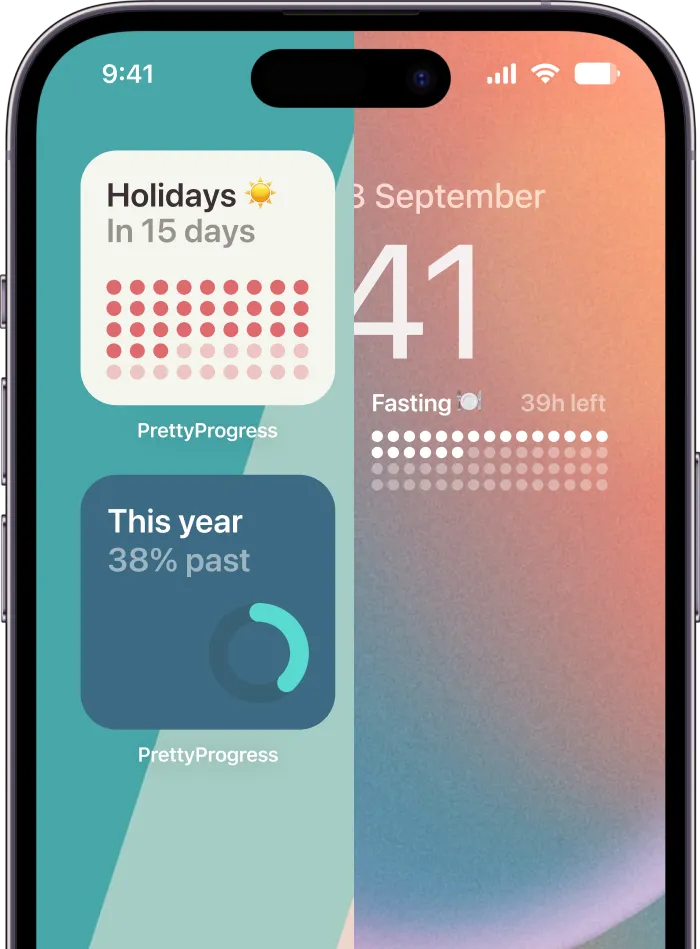
Pretty Progress is one example of a tool that adds countdowns and progress bar widgets to the Home and Lock Screen on Apple devices. That visual layer matters, especially for visually oriented people and many people with ADHD, because the deadline stays in view without needing another reminder or another app check.
Use a two-layer setup:
- Layer one: A live focus session such as “Revise chapter” or “Finish slides”
- Layer two: A visible countdown such as “Exam in 9 days” or “Proposal due Friday”
The trade-off is simple. More widgets can mean more motivation, but they can also create visual clutter. In practice, one session timer plus one deadline widget is usually enough. It keeps the screen readable and keeps the reason for the work close at hand.
After you create both, use them for a full day before changing anything.
Here’s a quick walkthrough if you want to see widget setup in action:
Keep the setup easy to restart
The test is not whether the system works on a perfect day. It is whether you can restart after getting interrupted, running late, or missing a block.
A repeatable layout usually includes:
- One task timer on the main screen
- One deadline widget on the Lock Screen
- One shortcut or tap path for restarting a missed session
If restarting takes too many taps, people stop restarting.
That is the standard I use with clients and in my own setup. Clear enough to glance at. Simple enough to recover. A useful focus time tracker is the one that still helps when the day gets messy.
Designing Widgets for Glanceable Motivation
A hidden tracker doesn’t change much. A visible one does. That difference is why widgets matter more than many people expect.

Why visual countdowns change behavior
Most focus tools are built around time spent. That’s useful, but it only answers one question. According to Mindful Suite’s review of focus timer apps, many focus apps fail to address the psychological need to visualize the remaining time to a deadline, while glanceable countdown widgets create urgency and ongoing motivation in a way simple duration trackers can’t.
That tracks with what happens in real use. A timer says, “stay with this task.” A countdown says, “this date is getting closer.” Those are different signals. One supports execution. The other supports consistency.
For visually oriented people, that second signal can be the thing that finally makes the goal feel real. For many people with ADHD, persistent visual cues work better than intentions stored in a notes app or repeated reminders that become wallpaper.
What to place on your Home and Lock Screens
A good widget setup doesn’t need to be crowded. It needs to be legible at a glance.
Try this layout:
- Lock Screen: One countdown tied to your nearest meaningful deadline
- Home Screen: One progress bar for the same deadline, plus a work session widget if you use one
- Secondary screen: Optional personal countdowns, habit markers, or routine timers
The design matters more than people admit. If the widget is ugly, cluttered, or hard to read, you’ll tune it out. Clean labels, contrast, and a progress bar that moves in an obvious direction work better than decorative complexity.
If you want examples of layouts that stay useful instead of noisy, this article on a home screen timer is worth a look.
The best widget is the one your brain notices without resisting.
That’s the true test. Not whether it looks productive. Whether it keeps pulling your attention back to the right thing gently, all day.
How to Build a Lasting Focus Habit
Tracking is easy for two days. Building a routine that survives stress, low energy, and interruptions is the harder part. That’s where review matters.

Read your numbers the right way
A focus time tracker should help you judge quality, not just duration. One of the clearest metrics is the focus-to-total time ratio. According to Pomodoronline’s guide to focus time versus total time, the optimal range for sustained productivity without burnout is 70 to 80%, and if your ratio stays below 60%, interruptions are probably undermining your deep work.
That means a longer workday isn’t always a better one. If your tracker shows lots of “active time” but poor focus ratio, you’re likely spending too much of the day switching, reacting, and restarting.
A few habits help:
- Review one pattern, not everything: Check what time of day your cleanest sessions happen.
- Tag interruptions accurately: If you broke concentration, count it.
- Watch for shallow inflation: A busy screen can still hide scattered attention.
Use a pre session routine
The best focus habits start before the timer begins. A short pre session checklist prevents avoidable breaks.
Mine is simple:
- Pick one task
- Silence notifications
- Close unrelated tabs
- Put water and notes nearby
- Start the timer immediately
That routine matters because your first few minutes decide the whole block. If you spend them hunting for files or answering “one quick thing,” the session is already leaking.
Sound also helps some people hold a steady rhythm. If you work better with a stable background, this guide to lofi study music is a useful way to think about using audio as an environmental cue rather than a distraction.
If you like visual reinforcement, a visual habit tracker can complement your session logs by keeping streaks and progress visible between work blocks.
Missing one session doesn’t break the habit. Failing to restart does.
That mindset keeps the system practical. A lasting focus habit isn’t built from perfect days. It’s built from quick recoveries.
Your Focus Tracker Questions Answered
What if I use Android, not iPhone
Android users usually need to be pickier here. Plenty of timer apps look fine in screenshots, then fall apart in daily use because the widget is cramped, the design is noisy, or the app interrupts you with ads.
Use three filters when you test one:
- Widget clarity: Can you read progress in one glance without opening the app?
- Low friction: Does the app stay out of your way while you work?
- Visual fit: Can you adjust colors, size, or style so the countdown stands out to your brain?
For visually oriented people, and especially for many people with ADHD, that glanceable cue matters more than another feature list. The right widget keeps time remaining visible before you drift, not after.
What should I do when I get interrupted mid session
Record it. Then make a quick call.
If the interruption needs attention, stop the session and restart with a shorter block once you return. If it can wait, write it down and get back to the task without checking messages, tabs, or inboxes.
That small reset protects the session from turning into 20 minutes of accidental task switching.
Should I stop early if I finish before the timer ends
Yes, if the task is done. Use the extra minutes on purpose. Reset your desk, capture the next step, or start the next small task if your energy is still good.
I would not force myself to sit there just to complete the countdown. Timers are for shaping attention, not for creating fake endurance.
Is a countdown widget really that different from a timer
It is. A timer tracks time spent. A countdown widget tracks time remaining.
Those are different signals, and they push behavior in different ways. Time spent helps you stay with the work right now. Time remaining helps you feel the deadline getting closer, which is often what breaks procrastination. A visual progress bar on your Home or Lock Screen can do something a standard timer cannot. It keeps the bigger target in view all day, even between focus blocks.
Pretty Progress is one example of a tool that puts countdown and progress bar widgets on Home and Lock Screens, so deadlines stay visible without adding another notification.