
October 8, 2026
Build a Habit Tracker Monthly That Actually Sticks
Learn how to design and run a habit tracker monthly system that goes beyond streaks. Practical layouts, review rituals, and fixes for stalled habits
You’ve started the month with a clean page, a fresh habit, and the quiet confidence that this time will be different. Then a busy weekend arrives. One box stays empty, another follows, and by the middle of the month you’re staring at the tracker as if it’s a report card you failed.
That cycle doesn’t mean you lack discipline. It often means your habit tracker monthly system is measuring perfection instead of learning. A better tracker acts like an evidence log. It records what happened, what made the behavior easier or harder, and how the routine changes over time.
Table of Contents
- Why Most Monthly Habit Trackers Fail by Week Three
- Picking Habits That Survive a Monthly Cycle
- Designing a Monthly Layout That You Will Actually Use
- The Daily and Weekly Tracking Workflow
- Running a Month-End Review Without Self-Blame
- Troubleshooting Plateaus and Missed Weeks
- Graduating Beyond Daily Tracking
Why Most Monthly Habit Trackers Fail by Week Three
A streak scoreboard gives every day the same message: complete the habit or lose your progress. That can feel motivating while life is predictable. Once work runs late, sleep is poor, or your weekend routine changes, the empty square becomes a verdict. Many people then stop logging altogether and plan to restart at day one.
The design creates the failure. A tracker that only rewards uninterrupted completion leaves no useful place for recovery, partial success, or context. It turns a missed opportunity into an identity statement, even though one missed opportunity need not materially damage habit formation, according to the foundational habit-formation study.

Automaticity takes longer than a calendar page
The 2010 study followed 96 volunteers for 12 weeks and found that the time needed to reach 95% of an individual’s eventual automaticity ranged from 18 to 254 days (study details). That range makes one promise especially unhelpful: “Do this for 30 days and it will become automatic.”
A month can show whether your behavior is getting repeated. It can reveal whether your cue is reliable, whether your target fits your life, and whether the action feels easier. It usually can’t prove that a habit is fully formed.
Practical rule: Treat each month as a small field study, not a final exam.
This shift changes what you do with an empty box. Instead of hiding it or restarting the entire page, you ask what happened. Was the cue missing? Was the target too large? Did the behavior happen outside the planned context? Did the month contain unusual demands?
Your tracker should preserve those answers with as little effort as possible. Mark completion accurately, add a brief context note when needed, and carry the information into the next cycle. The point isn’t to produce a beautiful month. It’s to create a clearer next month.
Picking Habits That Survive a Monthly Cycle
After burnout, I stopped treating an empty tracker square like a verdict. A useful monthly tracker is a 20-to-30-day evidence log: it records what happened, what got in the way, and which version of a habit fits your life. Start with an action you can see and mark. “Exercise more” is a direction. “Stretch for 10 minutes after lunch” names the behavior, duration, and cue.
Use a short triage process before adding anything to the grid.
Start with an existing cue
Choose a moment that already occurs most days, such as brushing your teeth, making coffee, finishing lunch, or shutting down your laptop. Attach the new action directly to that event, so the routine has a reliable place to begin.
“Read after breakfast” is easier to locate than “read sometime today.” “Prepare tomorrow’s medication after dinner” gives you a clearer instruction than “be more organized.” A named cue reduces daily negotiation and makes each planned opportunity easier to record. For more help pairing an action with a regular context, see this habit schedule guide.
A context-linked action can become easier through repetition, but people do not all adapt at the same pace. Treat the first cycle as a test of the cue, not proof that the behavior should already feel automatic. The research on context and automaticity supports patience with that process.
Set a frequency you can defend
Daily tracking suits an action that naturally belongs to each day. Strength training, meal preparation, and longer creative sessions may work better on selected days each week. Choose the rhythm you can repeat and recover from, rather than filling every date to create an impressive streak.
Write the target in observable terms:
- After breakfast: Take a short walk.
- After lunch: Stretch for 10 minutes.
- On planned training days: Complete the selected workout.
- Before bed: Put the next day’s materials in one visible place.
Record planned opportunities as well as completed actions. Completing a behavior on most of its planned days means something different from recording the same number of completions against an unrealistic daily target. Recovery also belongs in the evidence. A missed day can show that the cue failed, the action was too large, or the schedule needed adjustment.
Cap the active list
Begin with one to three habits, not a complete life overhaul. Each extra row adds decisions, reminders, and chances for guilt. A short list gives you enough evidence to adjust without turning the tracker into another job.
Before committing, ask:
- Is the behavior specific enough to mark?
- Does it have a named cue?
- Is the planned frequency realistic for this month?
- Can I explain what counts as complete?
If the last answer is unclear, shrink or clarify the habit. “Journal” might become “write three sentences after brushing my teeth.” “Eat better” might become “add one prepared vegetable to lunch.” Smaller definitions make the record more useful, not less honest.
Designing a Monthly Layout That You Will Actually Use
The best layout is the one you’ll open at the moment the behavior is supposed to happen. A beautiful printable page hidden in a drawer won’t compete with a simple spreadsheet you already check. An advanced app can still fail if marking a cell feels like administrative work.
Choose your format based on the point of friction.
Three formats, three kinds of support
A printable grid gives the habit a physical location. You can see the month at once, circle a missed day, and write a quick note in the margin. It suits people who think better away from screens and enjoy a tactile ritual.
A digital spreadsheet makes it easy to add columns for planned frequency, cues, notes, and weekly ratings. It’s useful when you want sorting, formulas, or a searchable record. Keep the sheet visually quiet, because excessive automation can turn a personal practice into a dashboard you avoid.
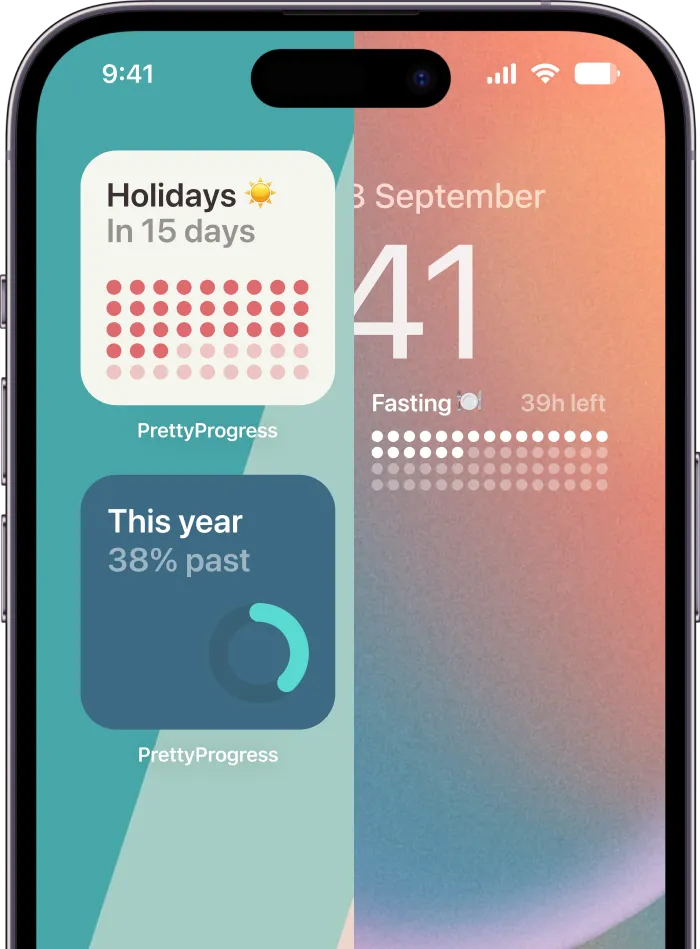
A Home Screen widget keeps a progress cue visible without requiring a full review. Pretty Progress can display customizable progress bars and countdown-style periods across supported devices, including iPhone, iPad, Apple Watch, Mac, and Android. Use that glanceable cue to remember the cycle, while keeping the actual evidence log somewhere you can record context.
If a tracker sits alongside broader wellbeing routines, an evidence-based mental health tool can offer a separate space for self-care reflection. It shouldn’t replace your habit record, but it may help you notice the emotional conditions around difficult days.

Build the evidence layer
Every habit row needs more than a checkmark. Include:
- Habit name: Use a concrete action.
- Cue: Name the event or routine that should start it.
- Planned frequency: Record how often you intended to act.
- Daily cells: Mark complete, missed, or not planned.
- Context note: Add one word when effort or circumstances matter.
- Ease rating: Add a brief weekly rating to show whether the action feels more natural.
A binary mark answers, “Did it happen?” It doesn’t answer, “Was it easy?” or “Did the cue work?” Keep those questions separate. Otherwise, a month can look successful while the behavior still requires intense effort, or look imperfect while the routine is becoming more manageable.
For design ideas focused on visual clarity, explore this visual habit tracker guide.
| Format | Best For | Strengths | Watch Out For |
|---|---|---|---|
| Printable grid | People who prefer paper | Visible, tactile, quick to annotate | Can be misplaced or hard to revise |
| Digital spreadsheet | People who want flexible records | Customizable columns, searchable notes | Can become overbuilt |
| Widget plus separate log | People who need a visible cue | Keeps the cycle in view at a glance | A widget alone won’t capture context |
Use the format that removes the biggest obstacle. If you forget the tracker exists, choose visibility. If you struggle to interpret patterns, choose flexible columns. If you avoid screens, choose paper.
The Daily and Weekly Tracking Workflow
After a long day, a tracker should take less time than brushing your teeth. The goal is to capture evidence, not create another task that drains your attention.
Attach the routine to its cue:
- Open the tracker when the habit cue appears.
- Mark the cell with a check or X.
- Add one word only if the day carried useful context, such as “travel,” “tired,” “late,” or “easy.”
That small note turns a mark into a clue. You are building a 20-to-30-day evidence log, not a streak scoreboard. A missed day shows where recovery is needed. Returning to the habit shows whether the routine can resume after disruption.

Review before the week disappears
Reserve 10 minutes on Friday while the week is still familiar. Use the time to adjust the next week, rather than judging the previous one. A Sunday review can work when it fits your schedule, and a weekly planning guide can help place it away from your busiest commitments.
Scan each habit and answer:
- Which day felt easiest?
- Which day required the most effort?
- Did the planned cue appear?
- Was the target too large?
- What single adjustment will I test next week?
Record a decision, not a speech. “Put walking shoes by the door” gives you an experiment. “Try harder” gives you nothing to change.
Leave uncertain cells uncertain. Reconstructing missed days from memory makes the month look cleaner while weakening the evidence. Honest gaps show where the cue, timing, or target needs work.
For health-related routines, this daily health tracking guide offers context for recording observations consistently without turning each entry into a lengthy task. Each weekly review should end with one practical adjustment and a clear chance to resume.
Running a Month-End Review Without Self-Blame
At the end of a demanding month, open your tracker with two questions:
- Did I do the behavior when I intended to?
- Is it becoming easier when the cue appears?
These measures can develop at different rates. You might complete a routine frequently while still using deliberate effort. You might also miss several opportunities and find that starting feels less difficult. The tracker is an evidence log for roughly 20 to 30 days, not a scoreboard that rewards an unbroken streak.
A 2024 systematic review and meta-analysis covering 20 studies and 2,601 participants found that health-related habits generally took 2 to 5 months to develop, while individual estimates ranged from 4 to 335 days. One month can show direction, but it rarely proves that a habit is automatic.
Count opportunities, not just green squares
Write the planned frequency beside the completion count. “Completed 20 times” has a different meaning when there were 20 planned opportunities than when there were 31. This comparison prevents a full calendar from becoming a misleading pass or fail.
Add a weekly ease rating using a simple 1 to 5 scale. Use 1 for “required a lot of effort” and 5 for “felt almost routine.” The rating is a personal signal, not a clinical assessment. Compare it with your own earlier weeks, looking for gradual change rather than a perfect upward line.
Use three plain categories:
- Execution success: The behavior happened for most planned opportunities, with enough context to interpret the result.
- Partial consistency: The behavior happened sometimes, but the cue, target, or schedule needs adjustment.
- Insufficient data: Too many days are unknown or unplanned to support a useful conclusion.
These labels describe the month’s evidence. They do not declare the habit formed or failed.
Turn the review into a decision
End with three notes:
- Keep: What helped?
- Change: What created friction?
- Test: What will you alter next month?
If the cue appeared but the action demanded too much, reduce the action. If the action was manageable but the cue disappeared, choose a steadier context. If the month included unusual pressure, record what you maintained and label the cycle accurately.
A partial month can still show what to repeat, what to adjust, and how to resume.
Troubleshooting Plateaus and Missed Weeks
When your tracker goes cold, treat the page as an evidence log, not a streak scoreboard. A missed week shows where the system stopped fitting. Diagnose the problem before judging yourself. Plateaus usually come from one of three causes.
The target is too ambitious
A full workout, long writing session, or complicated evening routine may exceed your energy on difficult days. Create a minimum version that can survive those days. Five minutes of movement, one paragraph, or putting away one item keeps the cue and action connected. Your 20-to-30-day record can then show whether the smaller version is workable.
The cue is too vague
“Do it in the morning” does not identify a clear starting point. Attach the behavior to something you can recognize, such as the kettle boiling or closing your work laptop. If your schedule has changed, replace the old cue. A tracker should follow your real day, like a map updated after the road changes.
Life has become genuinely harder
Illness, deadlines, travel, caregiving, and burnout can reduce available capacity. Mark a deliberate pause instead of forcing a target that no longer fits. Note when you will review it, then return with a smaller version.

Use this checklist when adherence stalls:
- Shrink it: What is the smallest useful version?
- Anchor it: Which existing routine can trigger it?
- Remove friction: What can you prepare beforehand?
- Record reality: What disrupted the behavior?
- Restart gently: What can you do at the next available cue?
Research found that missing one opportunity did not materially damage habit formation (study findings). Protect the return, not a perfect streak. A partial month can still reveal what to repeat, adjust, and resume.
Graduating Beyond Daily Tracking
Daily tracking shouldn’t become permanent surveillance. Once a behavior feels stable across several monthly cycles, test a lighter format. Replace daily marks with a weekly check-in, or use the tracker only to notice relapse, changes in workload, or a new season of goals.
Keep the old cycles rather than deleting them. They show how the behavior developed, which cues worked, and where recovery was necessary. Start a fresh page when your circumstances change, but carry forward the useful design decisions.
A simple graduation plan looks like this:
- Building mode: Record each planned opportunity and a brief context note.
- Maintenance mode: Review weekly and mark exceptions.
- Reactivation mode: Return to daily tracking when the habit weakens or the cue changes.
The tracker has done its job when it helps you act with less conscious effort, not when it keeps demanding attention. Let the format become quieter as the routine becomes steadier.
Pretty Progress gives you customizable progress bars and countdown-style widgets for defined periods, including monthly cycles, across devices such as iPhone, iPad, Apple Watch, Mac, and Android. Use a visible progress cue alongside your evidence log, then visit Pretty Progress to set up a monthly period that supports your next small, repeatable action.