
September 16, 2026
10 Habit Tracker App for Android Picks
Compare 10 habit tracker app for android options by features, pricing, use cases, widgets, limitations, setup, migration, and backup needs.
You’ve downloaded a habit tracker, added a few goals, and then stopped opening it because the reminders arrive at the wrong time, the widget is buried, or checking in feels like another chore. A feature-rich app can still fail when its tracking method and motivation style don’t match your routine.
This guide compares ten strong options for Android by the details that affect daily use: tracking method, ideal user, price tier, setup friction, platform coverage, widgets, privacy, and limitations. You’ll find a clear pick for visual reminders, offline privacy, coaching, gaming, routines, ADHD-friendly activation, low-pressure tracking, and cross-platform simplicity. Pretty Progress stands out for people who want glanceable countdowns and progress bars instead of another conventional checklist.
Android is a particularly important platform for habit tools. A 2025 market estimate placed Android at 43.7% of global habit-tracker-app revenue, or about US$3.76 billion, and projected Android habit-tracker growth at 12.8% CAGR from 2026 to 2034. The same estimate linked Android’s position to its roughly 72% global smartphone device share, with especially strong leadership in Asia Pacific and Latin America, where device penetration exceeds 85%. Read the Android habit-tracker market estimate for the underlying market context.
Table of Contents
- 1. Pretty Progress
- 2. Loop Habit Tracker
- 3. Atoms
- 4. Habitify
- 5. Habitica
- 6. Fabulous
- 7. HabitNow
- 8. Routinery
- 9. Avocation
- 10. Everyday
- Top 10 Android Habit Tracker Comparison
- Set Up Your Tracker Without Losing Momentum
1. Pretty Progress
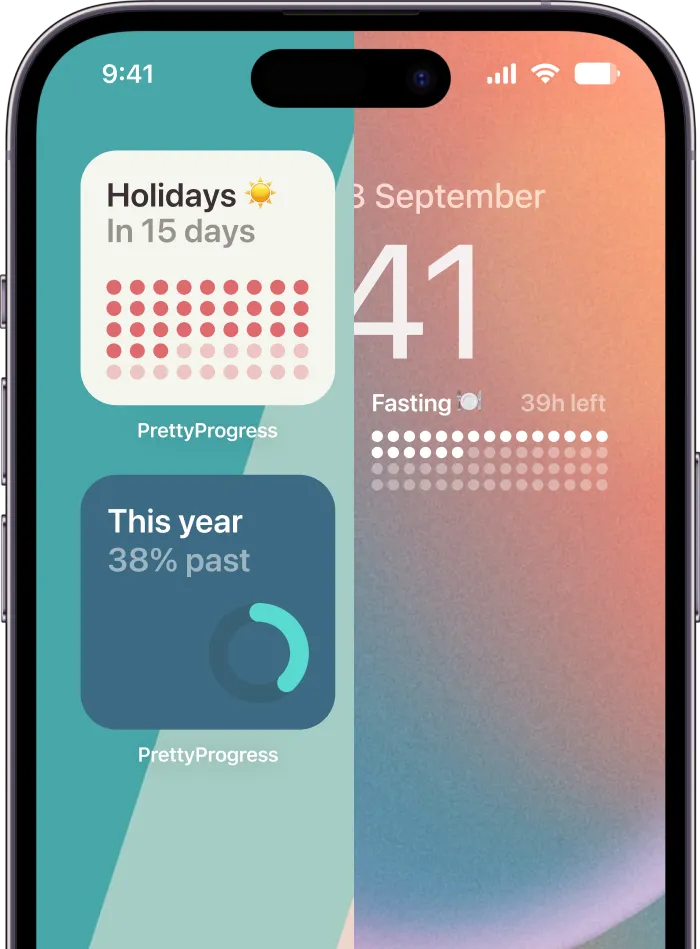
If you remember a goal more easily after seeing its progress, Pretty Progress fits that workflow. It turns the Android Home Screen into a persistent visual cue with customizable countdowns, count-up tracking, progress bars, and day-tracker widgets. This approach works well for reading, meditation, fasting windows, deadlines, study periods, and repeatable routines.
The Android app belongs to a wider ecosystem that includes iPhone, iPad, Apple Watch, and Mac. You can create a timer with a start and end date, import Calendar events and Reminders where supported, or use built-in calculators for dates, business days, exact age, and intermittent fasting. Widget behavior varies by Android device and operating-system version, so test the layout on your own Home Screen before depending on it for daily prompts.
Best for visual reminders
Pretty Progress includes themes such as Swiss Style, Minimal, Aqua, and Retro OS. You can also adjust colors, gradients, bar size, bar shape, layout, and icons. The practical benefit is fast recognition. A progress bar shows your position before you work through a list of overdue tasks.
It is free to download, with an optional PRO upgrade for deeper styling controls. The website does not list fixed PRO pricing, and in-app purchase details can differ by platform, so check the Android upgrade screen before paying. The app is ad-free, and the publisher reports use in 160+ countries by 2M+ users, with a 4.8 rating. Visit Pretty Progress to review the widget styles and Android setup.
Practical rule: Choose Pretty Progress when a visible progress cue helps you act. Skip it if you need complex habit analytics, social accountability, or a large task database.
Pros
- Glanceable widgets: Progress bars and countdowns keep goals visible on the Home and Lock Screens.
- Deep visual control: Themes, gradients, colors, shapes, layouts, and icons support different visual preferences.
- Cross-device coverage: Android users can also use the app across Apple devices and Mac.
- Useful templates: Common goals and built-in calculators reduce setup effort.
- No advertising: The interface stays focused, with advanced controls reserved for the optional PRO upgrade.
Cons
- PRO is required for deeper control: Full customization may require an in-app purchase.
- Operating systems differ: Widget features and sync behavior may not match across Android, iOS, and Mac.
- Not a full dashboard: Choose another app if you need extensive analytics, team features, or RPG mechanics.
2. Loop Habit Tracker
If you want to record habits on Android without creating an account, choose Loop Habit Tracker. It is free, open source, ad-free, and built for offline use. Your habit history stays on the device, so setup is quick and there is no subscription funnel to manage.
Loop covers the practical basics: streaks, habit scores, detailed charts, and Home Screen widgets for quick check-ins. Export and import tools let you move your records manually, which matters before replacing or resetting a phone. There is no built-in cloud sync and no full iOS, web, or desktop companion, so switching platforms requires more work. See Loop Habit Tracker for its Android-focused approach.
Best for privacy and reliability
Loop’s plain interface keeps attention on the daily check-in. It opens quickly and avoids content feeds, decorative distractions, and account prompts. The trade-off is a utilitarian look. Choose another app if visual styling, extensive integrations, or guided onboarding keeps you consistent. For help choosing an app around broader goals, see this guide to the best goal-setting app for Android.
The privacy benefit is clear. Loop uses local storage and avoids accounts and advertising, while many competing apps prioritize cloud sync and paid tiers. Compare the privacy case for an offline tracker before deciding whether automatic syncing justifies account access.
Offline tracking reduces dependence on network access and keeps your records under your control. It also makes backups your responsibility. Export the data regularly, especially before a phone reset or migration.
Who should use it
- Privacy-focused Android users: Ordinary tracking needs no account.
- People who want free software: The core app is free and ad-free.
- Simple routine builders: Streaks, charts, and widgets cover daily tracking.
- Careful phone switchers: Export your history before replacing or resetting a device.
Who should skip it
Skip Loop if automatic cloud sync is required, you need iOS access, or polished design drives your motivation. On Android, it is a dependable privacy tool. Choose a cloud-based tracker for easier multi-device access, and keep a manual export before migration.
3. Atoms
Atoms suits Android users who need James Clear’s Atomic Habits framework built into the app, rather than a blank habit form. Its guided creation process connects identity, context, reminders, and learning content, giving each habit a clearer reason and starting point.
A useful setup might turn “become a reader” into reading after breakfast or before bed. That structure helps users who understand the behavior they want but struggle to define a cue, routine, or manageable action. Atoms focuses on the link between daily behavior and the person you want to become, not only on maintaining a completion score.
Best for guided habit design
Choose Atoms when coaching and explanation are part of your motivation. The onboarding asks you to clarify why a habit matters and where it belongs in your day, so setup takes longer than a direct check-in app. That extra effort is useful for beginners, or for anyone rebuilding a routine after repeated false starts.
Atoms runs on Android and iOS, with cross-platform sync through its official hub. This makes it practical if your habit history needs to stay available beyond one Android phone. Explore Atoms.
The main trade-off is the free tier, which is commonly limited to a very small number of habits, often just one. Pro provides the fuller experience, so check the current Android offer before subscribing. Skip Atoms if you want to test many habits without paying, or if guided lessons slow down a system you already understand.
Choose Atoms if:
- You want instruction: Lessons and guided setup shape the experience.
- You like identity-based planning: The app links actions with the person you want to become.
- You use multiple platforms: Android and iOS support makes switching easier.
- You need activation help: Prompts turn vague intentions into specific actions and contexts.
Skip Atoms if:
- You want a free multi-habit tracker: The free tier is restrictive.
- You already have a routine system: Direct check-ins will be faster.
- You dislike subscriptions: The fuller framework and content require Pro.
- You want local-only storage: Its cross-platform approach depends on the official sync hub.
4. Habitify
Choose Habitify when your habits move between an Android phone, computer, and other devices. It supports Android, iOS, web, and desktop access, so you can complete a habit on your phone and review plans at a desk without rebuilding the list.
Its strongest use case is cross-platform simplicity with deeper reporting. Habits can be arranged by time of day, while checklists and progress views provide more context than a basic streak counter. Optional connections to calendars, Apple Health, and automation can support a more involved workflow. Open Habitify’s official site to confirm current feature names and pricing before subscribing.
The trade-off is setup effort. Reporting and integrations add value only if you will review the information. If you need quick one-tap check-ins, Habitify may feel heavier than a focused offline tracker.
What to check before subscribing
Habitify reduces device lock-in, but it also makes your account part of the system. Review how sign-in, exports, and restoration work before building years of personal history. Cloud storage is practical for multi-device access, yet it does not suit users who require local-only data.
Most advanced features require Pro, and plan details can change. Check the current Android offer and confirm which reporting, integration, and sync features your tier includes.
Choose Habitify if:
- You use multiple devices: Android, iOS, web, and desktop access keep the same habits available across your workflow.
- You review progress: Reporting helps you spot patterns beyond completed or missed check-ins.
- You want structured days: Time-of-day groups make morning, afternoon, evening, and flexible routines easier to scan.
- You plan to connect tools: Calendar, health, and automation options can support a more advanced system.
Skip Habitify if:
- You require local-only storage: Its cloud-based workflow depends on account access.
- You want a free full-featured tracker: Many useful functions sit behind Pro.
- You dislike recurring software costs: Subscription access is part of the fuller experience.
- You only need quick check-ins: A simpler tracker will take less time to set up and maintain.
5. Habitica
Habitica is the right pick for gamers who need rewards, quests, and social accountability. It turns habits, daily tasks, and to-dos into actions that affect an RPG character. Completing real-world tasks can advance your character, while parties, quests, guilds, and challenges add a social layer.
That system can make ordinary actions feel more engaging. It can also turn habit tracking into a second game to manage. The pixel-art style and RPG mechanics won’t suit users who want a calm, minimal interface. Visit Habitica to see whether the game layer matches your motivation.
Best for gaming and community
Habitica is more compelling when another person or group is involved. A party can create accountability that a private streak counter can’t provide, especially if shared quests make your daily actions feel connected to other people’s progress. The Android app also works alongside iOS and the web app, which helps users who log in from different devices.
The core experience is free, with optional subscriptions and cosmetic purchases. The important distinction is that you’re choosing to pay for extras rather than buying access to the basic idea of recording a habit. You will still need a cloud account, so Habitica is not appropriate for users whose first requirement is offline-only storage.
If you don’t enjoy games, don’t choose Habitica because it looks feature-rich. The mechanics are the product, not decoration around a minimalist tracker.
Use Habitica when
- Rewards motivate you: Experience, gear, quests, and character progression make repetition more engaging.
- Community helps you follow through: Parties and guilds create external accountability.
- You need one task system: Habits, dailies, and to-dos can live together.
- Cross-platform access matters: Android, iOS, and web clients are available.
Skip Habitica when
- You want low cognitive load: The game systems can distract from a simple routine.
- You dislike public or group features: Solo tracking is available, but social design is central.
- You need local privacy: A cloud account is part of the workflow.
For users with ADHD, the most useful question is whether the game helps you start or adds another layer to maintain. Compare that activation problem with the design principles in this ADHD habit tracker guide.
6. Fabulous
Fabulous fits people who need a guided routine rather than another blank checklist. Its coaching programs combine daily rituals, reminders, lessons, and well-being content, so the app helps decide what to do next and explains why the action belongs in the routine.
That guidance is useful during setup. Instead of building a complete morning or evening plan alone, you follow a staged sequence and add actions as the routine develops. Beginners get a clear starting point. Experienced users may find the prescribed pace restrictive, especially when their schedule already changes from day to day.
See Fabulous before downloading and review the current programs. The app’s polished presentation makes onboarding approachable, but the early paywall changes the value calculation. Treat the free access as an introduction, then confirm that the available programs and subscription cost fit your long-term plan before investing time in setup.
Choose Fabulous for coaching, not bare tracking
Fabulous is strongest when motivation comes from structure and explanation. Its routine builder links several actions into one daily flow, while reminders and educational material reinforce the sequence. That makes it a better match for users who want behavioral guidance than for users who only need to mark a habit complete.
Choose it if:
- You need coaching: Programs and lessons provide direction behind each routine.
- You are new to habit design: Guided onboarding removes the blank-page problem.
- You prefer connected routines: Several actions can form one morning or evening flow.
- Well-being content keeps you engaged: The app goes beyond simple checkboxes.
Skip it if:
- You dislike early upgrade prompts: The paywall can appear before the app earns your trust.
- Your schedule needs full control: Prescribed programs may not fit changing days.
- You only want a private logger: Fabulous adds content and coaching instead of focusing on minimal recording.
For Android users, choose Fabulous when activation comes from instruction and a planned sequence. Choose Loop or HabitNow when you want a more self-directed tracker with clearer local or Android-focused control.
7. HabitNow
HabitNow is the best Android-first hybrid for habits, routines, and to-dos. It combines habit tracking with categories, a calendar, timers, notes, dark themes, and rich Android widgets. If your routine includes both recurring behaviors and practical tasks, HabitNow keeps them in one place instead of forcing you to use a separate task manager.
The free tier is generous, and the app offers one-time in-app upgrade options rather than requiring a mandatory subscription. Premium users can access optional cloud backup, while the app remains strongly oriented toward Android. Visit HabitNow to review its current Android feature set.
Best for Android widgets and routines
HabitNow is a practical middle ground. It’s more flexible than a basic streak app, but less content-heavy than Fabulous and less game-driven than Habitica. Per-habit timers and routine support make it useful for actions that need a duration, while widgets reduce the number of steps required for a check-in.
The main platform limitation is decisive. HabitNow is Android-only, with no full iOS or web companion. That makes it a poor long-term choice if you may switch ecosystems. Reminder reliability may also depend on Android battery settings, and the documentation around optimization can be sparse, so check notification permissions and background restrictions during setup.
Pros
- Android-native widgets: Home Screen access makes routine check-ins fast.
- One app for tasks and habits: You can combine recurring behaviors with to-dos.
- Flexible payment model: A one-time upgrade option appeals to users avoiding subscriptions.
- Useful organization: Categories, calendars, notes, timers, and dark themes support detailed routines.
Cons
- Android-only: There’s no full iOS or web companion for cross-platform use.
- Reminder setup matters: Battery optimization can interfere with notifications.
- More configuration: Rich features can slow down a beginner’s first setup.
- Backup needs attention: Optional cloud backup is tied to Premium, so confirm restore behavior.
If your priority is a beautiful widget rather than an all-in-one Android dashboard, compare HabitNow with this guide to a habit tracker with a widget.
8. Routinery
Routinery is the strongest choice for ADHD-friendly activation and timed routines. It’s designed for people who don’t merely forget to mark a habit, but struggle to begin, sequence, and finish a series of actions. You build step-by-step routines with timers, focus aids, templates, optional voice prompts, and reminders.
That makes Routinery different from a streak counter. A “get ready for work” routine can be broken into actions with a defined time box, so the app provides momentum instead of waiting for you to decide what to do next. The Android Home Screen widget and Wear OS optimization add useful access points, although the watch experience is notification-first and spoken prompts may stay on the phone. Explore Routinery.
Best for activation and time boxing
Routinery works well for morning preparation, bedtime wind-downs, cleaning sequences, study starts, and other flows where the hardest step is activation. Voice prompts can keep you moving when looking at another checklist would create another decision point.
The free experience gives you a way to test the routine concept, while paid tiers provide broader access. Pricing tables and options can vary by store, so confirm the current Android offer in the app. Don’t choose Routinery if you only want to mark “meditate” as complete once a day. Choose it when the order and duration of the steps matter.
- Activation support: Timers turn an intention into a next action.
- Routine templates: You can start from a structured flow instead of designing every step.
- Android access: Home Screen and Wear OS support make the routine easier to reach.
- Voice options: Prompts can reduce the need to keep checking the phone.
The trade-off is that timed routines require more setup than one-tap habit logging. Build one routine first, test its timing, and adjust the sequence before adding more.
9. Avocation
Missing a day should not erase the effort that came before it. Avocation is built for users discouraged by broken streaks and failure-heavy dashboards. Its plant-growth metaphor gives progress a softer visual form: completing habits helps the plant develop, so the focus shifts from protecting a perfect chain to continuing the routine.
The friendly presentation suits beginners and anyone who abandons trackers after a lapse. Avocation supports offline-first use, habit-formation lessons, reminders, simple statistics, and time-travel editing for yesterday. Visit Avocation to see how its plant-based approach works.
A better fit for low-pressure tracking
Avocation changes how a missed check-in feels. You can correct yesterday’s entry or continue today without treating the lapse as a total reset. That recovery model suits users who need flexibility and encouragement more than competitive pressure.
Start with the free tier if you want a small, straightforward habit list. Advanced users should expect limits: analytics remain simple, integrations are limited, and some users have reported a slower Android update cadence. Choose another app if detailed reporting, automation, or rapid feature expansion matters more than a gentle experience.
Use Avocation when the main goal is to keep returning to a routine:
- Supportive motivation: The plant metaphor makes progress visible without demanding a perfect chain.
- Beginner-friendly setup: You can begin without learning a complex tracking system.
- Offline-first access: Basic logging works without continuous connectivity.
- Flexible recovery: Yesterday’s entries can be edited after a missed check-in.
Skip it if you need power analytics, deep integrations, or frequent Android changes. Its reporting is intentionally simple, and it does not match Habitify’s broader connection options. Set up a few habits first, test the reminder rhythm, and add more only after the system feels easy to maintain.
10. Everyday
Everyday is a strong choice for low-friction, cross-platform habit tracking. Its visual board puts streaks and daily status in one view, so you can check several habits without opening a dense analytics dashboard. Android, iOS, web access, sync, browser extensions, and color customization support one routine across devices.
The workflow stays deliberately narrow. Open the board, see what is due, and log the day without working through coaching lessons, social features, or a game system. Use Everyday if you want a visual calendar for repeatable check-ins rather than a guided behavior program.
Best for simple cross-platform check-ins
Everyday fits people who stay consistent when progress remains visible. Its board makes patterns quick to scan and keeps setup manageable, especially for several habits that follow a regular schedule. The browser option also helps if your Android phone is not always within reach.
The trade-off is limited depth. Analytics are lighter than Habitify or Loop, and automation is not the product’s focus. An annual Premium option adds features, while the core experience remains intentionally focused. Skip Everyday if you need flexible count-based goals, advanced routines, health integrations, or detailed recovery rules. For coaching alternatives, see Strawberry.me Alternatives.
- Low cognitive load: The board gives you a quick daily overview.
- Cross-platform sync: Android users can continue through iOS and the web.
- Simple customization: Colors separate habits without adding setup work.
- Browser access: Extensions support check-ins beyond the phone.
Use Everyday as a consistency tool, not a full behavior-design system. Set it up first on Android, confirm that sync works on your other devices, and export or preserve your records before switching apps. Choose it when visibility and continuity matter more than analytics, coaching, or automation.
Top 10 Android Habit Tracker Comparison
| App | Core features & USP ✨ | UX & Quality ★ | Target audience 👥 | Price & Value 💰 |
|---|---|---|---|---|
| Pretty Progress 🏆 | ✨ Customizable countdowns & progress widgets; curated themes; Calendar/Reminders import; built‑in calculators | ★4.8 · Polished, zero‑ads, widely used (2M+) | 👥 Students, professionals, habit builders, ADHD & goal‑trackers | 💰 Free + optional PRO IAP for advanced styling |
| Loop Habit Tracker | ✨ Streaks, charts, home widgets; fully offline & open‑source (GPLv3) | ★ Reliable, lightweight, utilitarian UI | 👥 Privacy‑focused Android users & OSS fans | 💰 Free, ad‑free |
| Atoms – Atomic Habits | ✨ Guided, identity‑first habit creation; lessons + cross‑platform sync | ★ Polished onboarding; educational focus | 👥 Readers of Atomic Habits; users wanting a guided system | 💰 Free limited tier; Pro subscription for more features |
| Habitify | ✨ Multi‑platform sync, time‑of‑day planning, analytics & integrations | ★ Modern, data‑rich progress views | 👥 Multi‑device users who want deeper reporting | 💰 Free + Pro subscription for power features |
| Habitica | ✨ Gamified habits (RPG leveling, parties, guilds) | ★ Fun & social; strong community | 👥 Gamers & users motivated by social/gamified systems | 💰 Free core; optional subscriptions / cosmetic purchases |
| Fabulous | ✨ Program‑style journeys, coaching content & routines | ★ Polished, content‑heavy onboarding | 👥 Users seeking guided behavior change & wellness coaching | 💰 Freemium with early paywall; subscription plans |
| HabitNow | ✨ Habits + tasks + timers; rich Android widgets; local‑first | ★ Android‑centric, responsive developer | 👥 Android users wanting one‑time IAP & strong widgets | 💰 Generous free tier; affordable one‑time Premium IAP |
| Routinery | ✨ Step‑timed routines, timers, voice prompts, Wear OS support | ★ Excellent for activation & time‑boxing | 👥 People who struggle to start tasks (incl. ADHD) | 💰 Free demo; clear tiered paid options |
| Avocation | ✨ Plant‑growth metaphor, offline‑first, habit lessons | ★ Supportive, low‑pressure UX for lapses | 👥 Beginners & users discouraged by streak pressure | 💰 Free tier (limited); paid upgrades available |
| Everyday | ✨ Minimal “don’t break the chain” board; cross‑platform sync | ★ Very low friction; clear overview of many habits | 👥 Users wanting a simple streak overview across devices | 💰 Free core; Annual Premium for extra features |
Set Up Your Tracker Without Losing Momentum
Choose the app by the behavior it supports, not by the longest feature list. Pick Pretty Progress for persistent visual cues and progress bars, Loop for privacy-first offline tracking, Atoms for guided identity-based habits, Habitify for multi-device reporting, Habitica for gaming and community, Fabulous for coaching, HabitNow for Android routines and widgets, Routinery for activation and time boxing, Avocation for gentler motivation, or Everyday for a simple cross-platform board.
Start with a small set of habits. Add only actions you can define clearly, such as “read before bed” or “start a ten-minute tidy routine,” rather than vague goals such as “be healthier.” Configure one reminder at a time you can realistically act, then add a Home Screen widget so the check-in doesn’t depend on remembering to open the app.
Test the complete flow for a week. Check whether the reminder fires, whether the widget updates, whether logging takes too many taps, and whether the app’s motivational language helps or irritates you. Android notification permissions, battery optimization, and manufacturer-specific background restrictions can affect reminders, so fix those settings before deciding that the app itself is unreliable.
Migration needs the same care as setup. Export data from the old app when an export option exists, then save the file somewhere you control. For history that cannot be exported, record each habit’s name, schedule, reminder time, start date, and meaningful past progress. Recreate recurrence rules carefully, because a daily habit, a weekday habit, and a flexible routine produce different records.
Keep the old app installed until the new setup is confirmed. Compare dates, habit names, completed entries, notes, and reminder behavior. Don’t delete the old tracker immediately, especially if it contains years of history or the new app uses a different definition of a missed, skipped, or completed day.
Backup depends on the app’s data model. Offline-only tools such as Loop require deliberate export and import. Local-first apps with optional backup, such as HabitNow, still require you to confirm that backup is enabled and that restoration works. Cloud-sync apps reduce manual transfer work, but you still need working account access, a remembered sign-in method, and a clear understanding of how the service restores data after a device change.
A retention benchmark makes this caution practical. One 2026 industry set places productivity and utility app Day-30 retention around 10–18%, while another benchmark places productivity at 3.2% on Day 30. A broad app benchmark reports approximately 26% Day 1, 13% Day 7, and 7% Day 30 retention. These figures come from different benchmark sets, so they shouldn’t be treated as a single universal prediction, but they support a clear product decision: reminders, widgets, streak feedback, and fast check-ins must make daily use easy. Review the 2026 app retention benchmarks.
Pretty Progress is the right final choice when you don’t want a feature-heavy habit dashboard. Its customizable Android widgets, countdowns, progress bars, and visual themes keep goals visible with minimal interface noise. Use it when a glance at your Home Screen can prompt the next action more effectively than another list of tasks.
Pretty Progress turns an Android Home Screen into an always-visible reminder with customizable countdowns, progress bars, themes, and habit-oriented day tracking. Visit Pretty Progress to set up a visual cue for your routines, deadlines, fasting windows, or long-term goals and keep your progress in view.