
July 19, 2026
Your Habit Schedule: A Guide to Lasting Change
Build a habit schedule that actually sticks. Learn to plan goals, stack habits, and use Pretty Progress to visualize your journey to consistency.
You probably have a habit you meant to keep this month.
Maybe it was a morning walk, reading before bed, stretching after work, or ten minutes of planning before the day starts. You did it for a few days. Maybe even a couple of weeks. Then one late night, one stressful day, one trip, or one skipped Monday knocked the whole thing sideways.
That’s where a lack of discipline is often assumed. In practice, the bigger problem is usually the habit schedule itself. If your routine depends on perfect energy, perfect timing, and perfect motivation, it won’t last very long. A habit schedule that works has to survive ordinary life. It has to handle tired mornings, messy workdays, and the occasional missed day without collapsing.
The good news is that habit building doesn’t require a harsher system. It requires a smarter one.
Table of Contents
- Why Your Current Habits Arent Sticking
- Before You Schedule Define Your Why
- How to Design an Unbreakable Daily Rhythm
- Four Practical Habit Schedule Templates
- Track Your Progress Visually with Pretty Progress
- What to Do When Your Habit Schedule Breaks
Why Your Current Habits Arent Sticking
A common pattern looks like this. You pick a habit that sounds like the person you want to become. You set an ambitious time, promise yourself you’ll stay consistent, miss a few days, and then stop.
That doesn’t mean you failed. It usually means your system asked for too much, too soon.

The biggest myth in this space is still the idea that a habit should lock in fast. Research summarized in this review of habit formation timelines found a median of 59 to 66 days for health-related behaviors to reach peak automaticity, with a wide range depending on the behavior’s complexity. That same body of research also challenges the old 21-day myth.
The problem isn’t willpower
If you’ve been treating consistency as a character test, that framing makes everything harder. People blame themselves for not being “disciplined enough” when the underlying issue is often one of these:
- The habit is too big: A long, high-friction routine asks for more energy than most weekdays can supply.
- The timing is wrong: You scheduled a demanding habit in a low-energy part of the day.
- The plan is vague: “Exercise more” doesn’t tell your brain what happens next.
- The recovery plan is missing: One disruption turns into a full reset.
Practical rule: Don’t judge a habit by how inspired you feel on day one. Judge it by whether you can still do it on a tired Wednesday.
A useful habit schedule is less like a strict timetable and more like a support structure. It tells you what to do, when to do it, and what counts as success when the day goes off script.
If you’ve struggled with consistency before, it helps to borrow practical systems for consistency instead of relying on motivation. That shift alone changes the conversation from “What’s wrong with me?” to “What system would make this easier?”
Before You Schedule Define Your Why
A habit schedule works better when the habit has a job.
People often choose habits because they sound healthy, productive, or impressive. That creates weak routines. A stronger approach is to connect each habit to a clear outcome you care about. “Exercise more” is fuzzy. “Walk after lunch so I have more energy in the afternoon” gives the habit a purpose and a place.

Stop choosing habits at random
Before you add anything to your calendar, ask two questions:
- What problem is this habit solving?
- What part of my day gives this habit the best chance to happen?
That first question keeps you from building decorative routines. A lot of habits look good on paper and do very little in real life because they aren’t tied to anything meaningful.
Here’s the difference:
- Vague wish: Exercise more
- Useful habit: Walk for 20 minutes after lunch to support energy and heart health
- Vague wish: Read more
- Useful habit: Read five pages before bed instead of scrolling
- Vague wish: Be less stressed
- Useful habit: Do a short breathing routine after shutting down work
A habit schedule gets much easier when each action connects to a reason you can explain in one sentence.
A good habit should answer this question clearly: “Why does this belong in my actual life?”
If you want a structured way to connect goals to routines, these goal-setting best practices are a useful companion to the planning process.
Schedule by energy, not just by clock time
This is the part most habit advice skips. People talk about time-blocking, but not enough about energy-based scheduling.
According to Huberman Lab’s discussion of habit timing and biological drive, placing high-friction habits in the first 0 to 8 hours after waking can dramatically improve success because that’s when biological drive is often highest. In plain language, difficult habits usually work better earlier in your biological day than later.
That doesn’t mean everyone should wake up at 5 AM. It means you should match the habit to the kind of energy it needs.
A simple energy map
Try sorting your habits into three groups:
- High-friction habits: Exercise, writing, studying, deep work, difficult admin
- Medium-friction habits: Meal prep, journaling, planning, inbox cleanup
- Low-friction habits: Vitamins, filling a water bottle, reading one page, laying out clothes
Then place them where they fit.
| Energy window | Best use | Example habits |
|---|---|---|
| Early high-energy period | Hard starts and focused effort | workout, writing, study block |
| Midday steady period | Repeatable maintenance habits | walk, planning, meal prep |
| Low-energy evening period | Small routines that close the day | reading, stretching, prep for tomorrow |
This matters even more if your focus fluctuates or you deal with start resistance. A habit schedule should lower friction, not create more of it.
How to Design an Unbreakable Daily Rhythm
Once you know why the habit matters and when your energy is strongest, the next step is turning that into a repeatable pattern. The most reliable schedules do two things well. They reduce decision-making, and they make the habit easy to start.

Use habit stacking to remove decision fatigue
Habit stacking works because it borrows momentum from something you already do. The formula is simple:
After [current habit], I will [new habit].
That might look like:
- After I make coffee, I’ll read one page.
- After I brush my teeth, I’ll stretch.
- After I finish lunch, I’ll walk.
- After I open my laptop, I’ll review my top task.
This becomes much stronger when you add a specific implementation plan. According to habit tracker statistics on implementation plans and completion, combining habit stacking with specific planning produced a 91% success rate for regular exercise, compared with 35 to 38% in control groups.
Here’s what that looks like in practice:
- Weak plan: I’ll work out more this week.
- Strong plan: After I change out of work clothes at 6 PM, I’ll do a 10-minute bodyweight session in the living room.
Keep the first version small
Habit schedules often break when the habit is made too ambitious. The same source notes that simple habits under 10 minutes have 80%+ completion, while more complex habits often fail more often.
That’s why “10 minutes of movement” usually beats “full workout plan” at the start.
Start with a version you can complete when you’re busy, distracted, or mildly annoyed. That version is the one that survives.
A useful test is this: if you miss sleep, get home late, or feel scattered, can you still complete the habit without negotiating with yourself for ten minutes? If not, shrink it.
A short planning video can help you visualize how these blocks fit into a real week:
Protect the habit with a real block
Stacking is great for micro-habits. Bigger habits need protected space.
That’s where time blocks help. Put your demanding habit in a time window that matches the energy work you did earlier. Then make the block specific enough that it can’t hide behind vague intentions.
Try this format:
- Block: 7:30 AM to 7:50 AM
- Habit: Walk outside
- Trigger: After coffee
- Backup version: 5-minute indoor walk if weather or time gets messy
For weekly planning, it helps to see these blocks in context with the rest of your commitments. This guide on how to plan your week is useful for that broader view.
Four Practical Habit Schedule Templates
A habit schedule becomes easier to use when you can see what it looks like in real life. These examples are meant to be copied, edited, and simplified.
Template table
| Template Type | Sample Stack / Block | Key Principle |
|---|---|---|
| Focused Morning | After coffee, review top task. Then a protected block for movement or deep work in your early high-energy period. | Put high-friction habits where start resistance is lowest. |
| Wind-Down Evening | After dinner, prep tomorrow’s clothes or bag. After brushing teeth, read a few pages or stretch. | Use low-friction habits at night to reduce screens and create closure. |
| Productive Workday | Start work with a short planning ritual, batch deep work in a protected block, and use lunch or post-lunch for a walk. | Build rhythm into the workday instead of relying on willpower between meetings. |
| ADHD-Friendly Flex-Block | Use shorter focus sprints, one visible next action, and a flexible block rather than one rigid start time. Pair hard tasks with an easy entry step and a small reward. | Reduce activation energy. The goal is easier starting, not stricter self-control. |
The Focused Morning template works well for habits that need clear attention. If exercise, writing, or studying matters to you, do it before the day starts collecting interruptions. Keep the opening tiny. One page, one paragraph, one round, one walk around the block.
The Wind-Down Evening template is different. Don’t ask for ambition at night. Ask for closure. Evening habits should make tomorrow easier or help your brain slow down.
When a schedule fails at night, it’s often because the routine still demands performance instead of recovery.
The Productive Workday template works best when you stop treating breaks as optional. A short reset after a meeting, a brief walk after lunch, or a two-minute plan before ending the day can hold the whole structure together.
The ADHD-Friendly Flex-Block matters because rigid schedules often look good and work badly. A softer block, such as “sometime in my first work window” instead of one exact minute, can be more realistic when attention and energy move around. The key is still clarity. Pick one target habit, one trigger, and one fallback version.
Track Your Progress Visually with Pretty Progress
Planning helps. Tracking keeps the plan alive.
A lot of people know what they want to do, but they lose contact with the habit after the first burst of enthusiasm. Visual tracking solves a practical problem. It keeps the habit visible without asking you to rethink the whole goal every day.

Why visual tracking works
Research discussed by the University of South Carolina notes that self-monitoring is one of the most effective strategies for achieving goals, and when combined with specific if-then plans, it can raise regular exercise rates from 35 to 38% up to 91% by making intentions explicit and progress visible, as described in this summary of habit research and self-monitoring.
That matters because habits often fail from invisibility. If your routine only exists in your head, it’s easy for busyness to crowd it out.
A visual tracker gives you three useful signals:
- What you’re building: The habit has a defined start and endpoint.
- Where you stand today: Progress is visible at a glance.
- What you don’t want to interrupt: Momentum becomes easier to protect.
A simple way to set it up
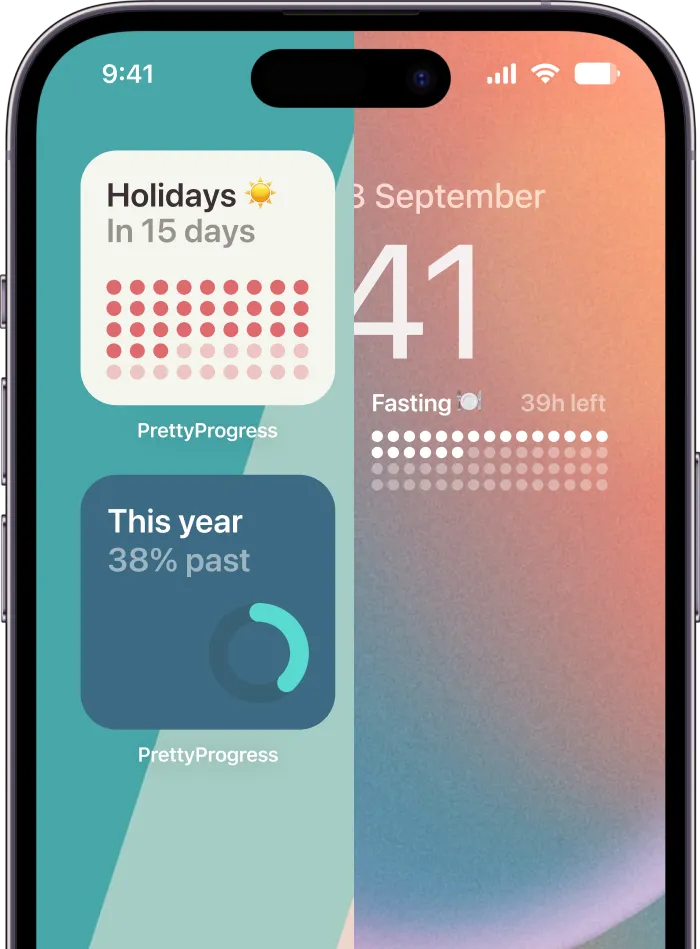
One option is Pretty Progress, which lets you create progress bars and countdown-style widgets for repeatable routines on iPhone, iPad, Apple Watch, Mac, and Android. The practical use here isn’t hype. It’s visibility. You can set a habit period, choose a design, and place the widget where you’ll see it.
A simple setup looks like this:
- Choose one habit period: Pick a routine you want to track consistently.
- Define the window: Use a clear start date and end date for the streak or build period.
- Name the habit clearly: “Walk after lunch” is better than “health.”
- Place the widget somewhere obvious: Home Screen or Lock Screen works better than hiding the habit inside an app folder.
- Review it daily: Not to judge yourself. To keep contact with the routine.
If you want more ideas for visible tracking methods, this guide to a visual habit tracker is a useful next read.
What to Do When Your Habit Schedule Breaks
Every solid habit schedule eventually runs into a bad week.
You get sick. Travel changes your routine. Work spills over. A family issue takes priority. The schedule breaks, and the dangerous thought shows up fast: “I’ve ruined it, so I might as well restart later.”
That reaction causes more damage than the missed day.
Build a minimum viable version
According to guidance discussed in Weber State’s article on forming habits and avoiding all-or-nothing collapse, consistency over 66+ repetitions matters more than daily perfection, and a better-than-nothing version helps the habit survive disruption.
That means every important habit should have two versions:
- Full version: the normal routine
- Minimum viable version: the smallest version that keeps the thread intact
Examples:
- Workout becomes five minutes of movement
- Reading becomes one page
- Journaling becomes one sentence
- Walk becomes one lap around the block or a few minutes indoors
Missing a day is a disruption. Turning one disruption into a new identity is the real problem.
The goal during chaotic periods isn’t improvement. It’s continuity.
Review the schedule, not your character
When a habit slips, don’t ask, “Why am I so inconsistent?” Ask better questions.
- Was the habit too large for the season I’m in?
- Did I place it in the wrong energy window?
- Did the trigger disappear when my routine changed?
- Do I need a smaller fallback version?
This turns habit building into design work instead of self-criticism.
A short weekly review is enough. Look at what happened, keep what worked, trim what created friction, and tighten the cue for next week. A habit schedule isn’t a contract you either obey or break. It’s a living system. The people who stay consistent are usually the people who adjust faster, not the people who never miss.
If you want a simple way to keep your habit schedule visible every day, try Pretty Progress. It lets you turn a routine into a clear progress bar or countdown widget, so your goal stays in sight on the devices you already check.