
May 27, 2026
10 Goal Setting Best Practices for Success in 2026
Master these 10 goal setting best practices for 2026. From SMART goals to visual tracking, learn actionable methods to achieve your biggest ambitions.
You start January with a clean note in your app, a fresh planner, and a short list of goals that feels completely reasonable. Get stronger. Finish the portfolio. Save for the trip. Study consistently. Then real life shows up. Work gets busy, notifications pile up, and the goals that felt vivid a few weeks ago slide out of view.
That’s usually the failure point. Not lack of ambition. Not lack of discipline. Lack of visibility.
Research on goal-setting theory has found that high and specific goals are one of the most established tools for improving performance and motivation, with over 1,000 studies showing better task performance, persistence, and motivation than vague or easy goals, according to a 2021 review in Frontiers in Psychology. But even strong goals fall apart when people can’t see progress, can’t tell what matters now, or try to chase too many priorities at once.
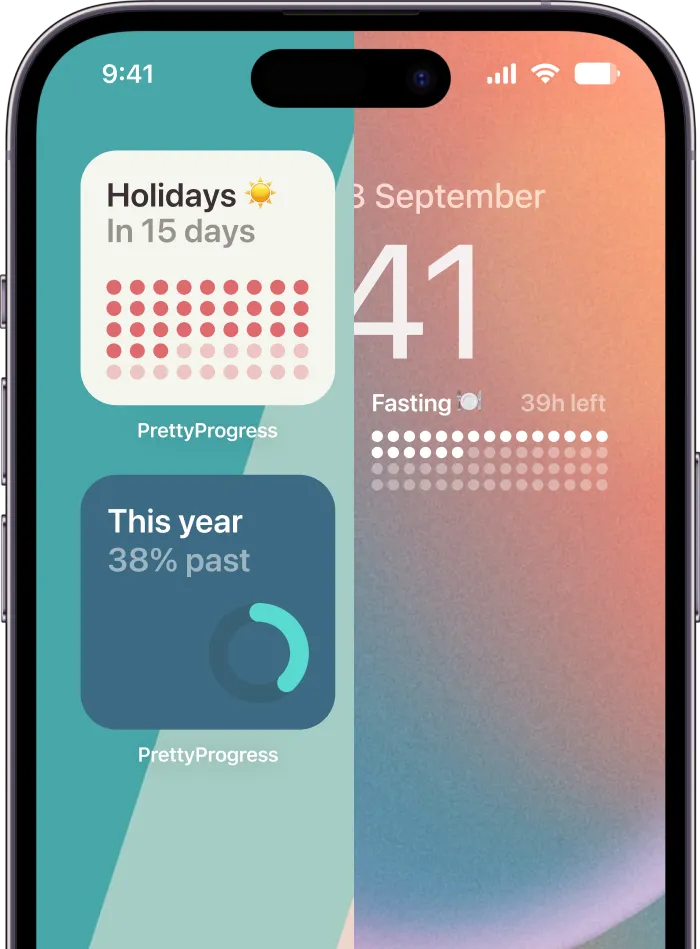
The best goal setting best practices fix that. They make the target clear, reduce overload, and keep progress visible enough that you can’t forget it. That’s where digital tools, especially progress widgets and countdowns, become more than decoration. They turn a distant intention into something you notice every day.
Table of Contents
- 1. SMART Goals Framework
- 2. The 80/20 Rule in Goal Setting
- 3. Visual Progress Tracking and Monitoring
- 4. Breaking Goals into Milestones and Sub-goals
- 5. Regular Goal Review, Adjustment, and Antifragility
- 6. Accountability Systems and Goal Sharing
- 7. Time Blocking and Deadline-Driven Planning
- 8. Habit Stacking and Goal Linkage
- 9. Alignment with Values and Purpose
- 10. Motivation Through Celebration and Recognition
- 10-Point Goal-Setting Best Practices Comparison
- Your System for Unstoppable Progress
1. SMART Goals Framework
Many individuals don’t need more motivation. They need a goal that can survive contact with a calendar.
That’s why SMART still works. The strongest benchmark is to make goals Specific, Measurable, Achievable, Relevant, and Time-bound, and to define the measurement system up front, including what data you’ll use, where it lives, how you’ll verify it, and which milestones show progress, as explained in Tableau’s SMART goals criteria guide. MIT HR also recommends goals be created jointly, written in measurable language, and revisited with coaching rather than written once and forgotten.

“Get fit” sounds motivating for a day. “Run a 5K by March 31 and track three runs per week” gives you something to act on. “Learn Spanish” is nice. “Complete 30 hours of lessons by June 30” gives you a scoreboard.
Write the measurement system before the goal feels exciting
Many SMART goals fail. People write the target but skip the tracking method, so progress becomes fuzzy by week two.
A practical setup looks like this:
- Specific outcome: Name the result, not the wish.
- Measurable proof: Decide what counts. Sessions completed, pages written, workouts logged, money transferred.
- Time boundary: Give it an end date and visible checkpoints.
- Visible display: Put the countdown or progress bar where you’ll see it without opening three apps.
If you want a visual way to do that, Pretty Progress explains how SMART goals work with visible tracking.
Practical rule: If someone else can’t tell whether your goal is on track in under thirty seconds, it’s still too vague.
2. The 80/20 Rule in Goal Setting
Monday starts with good intentions. By Thursday, the goal list has turned into ten half-finished efforts, three tabs of planning, and one nagging sense that you worked hard without moving anything important.
That pattern is usually a prioritization problem, not a discipline problem.
The 80/20 rule helps you choose the small set of goals that produces the majority of meaningful progress. In practice, that means asking a tougher question than “What do I want to do this quarter?” Ask, “Which one or two outcomes would make several other goals easier, less urgent, or unnecessary?”
I see this constantly. A student piles on color-coded notes, extra reading, study groups, flashcards, and practice tests. Often, timed practice and error review do more for results than the rest combined. A professional does the same with certifications, networking, side projects, process fixes, and personal branding. Usually, one skill upgrade and one visible work deliverable carry far more weight than five parallel projects.
Cut active goals to protect follow-through
A shorter goal list feels restrictive at first. It also works better.
The trade-off is real. Fewer active goals means saying no to attractive ideas, at least for now. But scattered effort has a cost: more switching, weaker attention, slower feedback, and less visible progress. If your goals live in too many places, they become easy to ignore and even easier to postpone.
Use a simple filter before you commit:
- High impact: Which goal creates the biggest practical change if completed?
- High urgency: Which goal becomes more expensive, stressful, or time-sensitive if delayed?
- High alignment: Which goal fits your current season, capacity, and responsibilities?
- High visibility: Which goal should stay in front of you so it does not slip into “I’ll get to it later”?
That last filter matters more than people expect. Priority works better when it stays visible. If you want a practical example of keeping goals present instead of buried, this guide to visual goals that stay top of mind shows the basic setup well.
A good 80/20 goal list usually looks a little sparse. That is a feature. If every goal claims to be top priority, none of them is.
Practical rule: If you cannot explain why a goal made the cut over another good option, your list is still too crowded.
3. Visual Progress Tracking and Monitoring
Out of sight becomes out of mind fast. That’s why visual tracking matters more than people think.
A progress bar, countdown, or completion ring gives immediate feedback. It turns a vague intention into something concrete. That’s especially useful for long goals where the payoff is delayed, like exam prep, body recomposition, debt payoff, writing projects, or product launches.
Start with one visible tracker for the goal you’re most likely to avoid.

A fitness tracker showing daily movement, a reading app showing chapters completed, or a savings tracker showing progress toward a target all do the same thing. They reduce ambiguity. You know whether you moved forward today or not.
Make progress impossible to ignore
The biggest mistake here is hiding the tracker inside the same app you already forget to open. If you use visual tools, put them on the lock screen, home screen, desktop, or watch face.
Good visual tracking has a few traits:
- Fast to read: You should understand status at a glance.
- Fast to update: If logging progress feels annoying, you’ll stop.
- Separated by category: Health, work, study, and personal goals shouldn’t blur together.
- Designed for attention: Use clean themes so the goal stands out instead of blending into clutter.
If you want examples of visual goal design, this visual goals guide from Pretty Progress is a practical reference.
A quick demo helps show the concept in action.
4. Breaking Goals into Milestones and Sub-goals
Big goals don’t usually fail because they’re impossible. They fail because they stay abstract for too long.
“Write a book” is too large to work on today. “Finish the outline by Friday” is workable. “Complete section two before lunch” is even better. The more distant the goal, the more you need intermediate targets that create momentum and let you correct course early.

A degree can be broken into semesters, courses, assignments, and weekly study blocks. A marathon becomes phases, weekly mileage, long runs, and recovery sessions. A business launch becomes planning, MVP, feedback, revision, and release.
Shrink the psychological distance
Milestones work because they pull the future closer. They also make progress feel earned more often, which matters when motivation dips.
I like one master tracker for the whole goal and a separate visible tracker for the current milestone. That prevents a common problem. You see “12 percent complete” on the big goal and feel discouraged, even though you’re doing exactly what you should this week.
Use sub-goals to answer these questions:
- What must happen next: Not eventually. Next.
- What will prove this stage is done: A draft, a submission, a completed phase, a logged session.
- What can be ignored for now: Future phases shouldn’t compete with this week’s milestone.
When the milestone is visible, the goal stops feeling distant and starts feeling operational.
5. Regular Goal Review, Adjustment, and Antifragility
Monday looks clear on the calendar. By Thursday, a client issue, a sick kid, or a bad week has blown up the plan. Goals rarely fail because the original idea was bad. They fail because the system had no way to absorb real life and keep progress visible.
Good goal systems bend. They do not depend on perfect weeks.
As noted earlier, ambitious and specific goals can hurt motivation when people miss them and treat the miss as personal failure. The fix is not softer goals. The fix is a review process that catches problems early, adjusts the plan, and keeps one setback from turning into disengagement.
A weekly review is enough for tactical changes. A monthly review works for bigger decisions about pace, scope, or timing. Both matter because goals drift when nobody is looking at them.
Review the system, not just the score
A weak review asks, “Did I hit the target?” A useful review asks why progress did or did not happen, and what should change before next week starts.
Focus on a few questions:
- What produced progress: Which sessions, tools, time blocks, or conditions helped?
- What created drag: Interruptions, vague tasks, bad estimates, low energy, missing resources.
- What should change next: The method, the schedule, the scope, or the environment.
- What needs to stay visible: The next milestone, the current streak, or a progress widget that keeps the goal in sight every day.
That last point gets missed.
If the goal disappears between review sessions, people default to urgency. A visible tracker on your phone, desktop, or daily workspace keeps the goal present enough to survive a chaotic week. I have seen clients recover faster from missed days when they can still see the plan, the next target, and the recent trend without opening three apps and reconstructing what happened.
Adjustment is not retreat. It is skill.
If a runner gets injured, the right review may replace speed work with rehab and easy cross-training. If a product launch slips, the right move may be cutting one feature and protecting the release date. If a writing goal keeps failing, the issue may be the time slot, not the ambition.
Antifragile goal setting means stress improves the system. A missed week reveals that the timeline was too tight, the milestone was too large, or the environment was full of friction. Use that information. Add buffer. Shrink the next step. Put the metric somewhere you cannot ignore it. The goal becomes stronger because the plan got more honest.
6. Accountability Systems and Goal Sharing
Some goals need privacy. Most goals benefit from witness.
Accountability works best when it creates a rhythm. A weekly message to a friend, a standing check-in with a coach, a monthly mastermind update, or a shared screenshot of progress all create light pressure to keep moving. The pressure matters less than the cadence. If nobody will ask, it’s easy to drift.
The best accountability systems are specific. “Keep me accountable” is too vague. “I’ll send you my writing progress every Friday at 4 PM” is useful.
Use accountability that creates action
A lot of accountability setups fail because they focus on confession instead of execution. The conversation becomes “I didn’t do it again,” which helps nobody.
Make it concrete:
- Share the metric: Send the word count, workout log, study hours, or milestone completion.
- Share the next action: End every check-in with the next scheduled step.
- Share the visual: A screenshot of a progress widget is often clearer than a paragraph of explanation.
If you’re using a visible tracker on your phone, it becomes easier to talk about the goal openly. You can point to where you are instead of giving a vague summary. That keeps accountability grounded in behavior, not just intention.
7. Time Blocking and Deadline-Driven Planning
Monday starts with good intentions. By Thursday, the goal is still sitting on a to-do list while your calendar is full of everyone else’s priorities.
That pattern is common because unscheduled work rarely survives the week. A goal needs reserved time, a visible deadline, and a place in your daily view. Otherwise it slips out of sight, and then out of mind.
A calendar block turns priority into visible work
Time blocking works because it answers one practical question in advance: when will this happen? That removes daily negotiation. Instead of deciding over and over whether to work on the goal, you follow a plan that already has a time attached to it.
The trade-off is real. If you block time for meaningful work, something else cannot go there. That is the point. A calendar full of open-ended intentions usually gets eaten by shallow tasks, reactive messages, and errands that feel urgent because they are in front of you.
What tends to work:
- Recurring blocks: Reserve the same slots each week for the goal so the work becomes part of your normal rhythm.
- Backward planning: Start with the deadline, then count backward to place the work sessions you will need.
- Visible countdowns: Keep the due date on screen with a progress widget or pinned view so the timeline stays hard to ignore.
- Block by energy, not just availability: Put writing, planning, or study work where your attention is strongest, not only where the calendar looks empty.
This matters even more for goals with a physical component. If training is one of your priorities, schedule the session like any other commitment and keep the plan visible. A resource like fitness exercises can help you decide what to do inside that block so you do not waste the first ten minutes choosing.
One warning from practice: people often overblock. They schedule two perfect hours for a task that realistically needs 45 focused minutes, or they stack deep work across a day already crowded with meetings. A better plan is tighter and more honest. Protect fewer blocks, make them specific, and leave buffer space for spillover.
If you want a stronger system for turning priorities into scheduled work, these time management best practices pair well with deadline-driven planning.
8. Habit Stacking and Goal Linkage
If a goal depends on remembering from scratch every day, consistency gets shaky fast. Habit stacking gives the new action a stable trigger.
You attach the desired behavior to something that already happens. After coffee, review the day’s top goal. After brushing your teeth, do five minutes of language study. When you get home, change into workout clothes before sitting down. The old habit carries the new one.

This works well for fitness, study, and self-care routines. If movement is one of your priorities, pairing your workout cue with a reliable daily event can help you stay more consistent. If you need exercise ideas to support that kind of routine, a broad library like fitness exercises can help you choose movements that fit your level and schedule.
Attach the new behavior to something stable
The anchor habit matters more than the new habit at first. Pick something that already happens without effort.
A simple pattern:
- Existing trigger: Morning coffee, commute end, lunch break, bedtime.
- New behavior: Journal, stretch, review goals, read, practice, prep.
- Visible prompt: Place both items near each other on your screen so the cue stays obvious.
Don’t stack five new habits at once. One good link is enough to change the day.
9. Alignment with Values and Purpose
A goal can be clear, measurable, and well scheduled and still fail if you don’t care about it.
This is the quiet problem behind many abandoned goals. They sound good on paper or look impressive socially, but they don’t match the person’s values, season of life, or current responsibilities. The goal becomes performative. When friction appears, there’s no deeper reason to continue.
The goal has to mean something on a bad day
When values and goals line up, the work feels cleaner. Not easier, but less conflicted.
McKinsey’s recent guidance on objectives emphasizes narrowing focus, alignment, and ongoing review rather than adding more goals, which is one reason the practical question is often not “What else should I pursue?” but “What should I stop doing?” in an overloaded season, as discussed in McKinsey’s article on setting 2024 objectives.
A useful filter is simple:
- Does this goal reflect who I want to be, or just what sounds impressive?
- Does it support this season of life?
- Would I still choose it if nobody saw the result?
If family is central right now, a goal that protects time and energy at home may matter more than one more professional milestone. If growth matters most, then study and skill-building deserve visible priority. Values don’t remove hard choices. They make the right trade-offs easier to recognize.
10. Motivation Through Celebration and Recognition
Many rush past progress. They complete a milestone, barely acknowledge it, and immediately load the next target. That’s a missed opportunity.
Recognition helps close the loop. It tells your brain that effort led somewhere. For long goals, that matters because the finish line can stay far away for months. Small wins keep the process emotionally sustainable.
Mark the win while it still feels real
Celebration doesn’t need to be dramatic. It needs to be deliberate.
A few ways to do it well:
- Capture the finish: Save a screenshot when a progress bar reaches complete.
- Name the milestone: Don’t just say “done.” Say what you finished.
- Pair progress with reward: A meal out, a rest day, new gear, or a quiet evening can work if it reinforces the effort.
Completion should look different from active pursuit. Change the visual. Archive the finished goal. Let the win be visible.
If your goals live on your home screen, the design shift itself can become part of the reward. “In progress” turning into “complete” sounds minor, but it creates a satisfying sense of closure. And closure matters. It keeps effort from feeling endless.
10-Point Goal-Setting Best Practices Comparison
| Method | 🔄 Implementation Complexity | ⚡ Resource Requirements | 📊 Expected Outcomes (⭐) | Ideal Use Cases | 💡 Key Advantages / Tips |
|---|---|---|---|---|---|
| SMART Goals Framework | Moderate, requires upfront planning and specific criteria | Low–Moderate, time to define metrics and deadlines; basic tracking tools | Clear, measurable progress and accountability, ⭐⭐⭐⭐ | Deadline-driven projects, finance, fitness, skill acquisition | Write goals down, review weekly, break into sub-milestones |
| The 80/20 Rule (Pareto) | Low–Moderate, needs honest prioritization analysis | Low, mainly time to evaluate and rank goals | Higher impact with fewer efforts when applied correctly, ⭐⭐⭐⭐ | Resource-constrained situations, portfolio prioritization, career moves | Rank goals by impact, display top 3–5 prominently, review quarterly |
| Visual Progress Tracking | Low, simple setup but requires regular updates | Moderate, visual tools/apps and routine updates | Strong motivation and immediate feedback; high visibility, ⭐⭐⭐⭐⭐ | Habit tracking, fitness, savings, ADHD support, daily routines | Use lock‑screen widgets, color-code, update frequently |
| Breaking into Milestones & Sub-goals | Moderate, planning to decompose goals into hierarchy | Moderate, planning time and multiple checkpoints to track | Makes large goals manageable; builds momentum, ⭐⭐⭐⭐ | Large projects (books, degrees, launches, training plans) | Create main + milestone widgets, limit visible milestones to 4–6 |
| Regular Review, Adjustment & Antifragility | Moderate–High, requires scheduled discipline and reflection | Moderate, recurring time for reviews, documentation, contingency plans | Increased adaptability and resilience to change, ⭐⭐⭐⭐ | Uncertain environments, long-term plans, iterative projects | Schedule recurring reviews, add buffer time, document learnings |
| Accountability Systems & Goal Sharing | Low–Moderate, need partners or communities and structure | Low–Moderate, social time, check-ins, possible coaching fees | Higher follow-through due to external accountability, ⭐⭐⭐⭐ | Behavior change, public commitments, coaching, group challenges | Choose supportive partners, share widget screenshots, set structured check-ins |
| Time Blocking & Deadline-Driven Planning | Moderate, requires calendar discipline and backward planning | Moderate, calendar tools and protected time | Ensures dedicated focus and prevents postponement, ⭐⭐⭐⭐ | Deep work, routine tasks, deadline-heavy projects, scheduling routines | Block time, protect slots, use countdowns and backward planning |
| Habit Stacking & Goal Linkage | Low–Moderate, identify reliable anchors and link small actions | Low, relies on existing habits and consistency over time | Strong habit formation over time; scalable, ⭐⭐⭐⭐ | Building daily habits, lifestyle changes, routines | Start with one stack, anchor to stable habits, aim for gradual scaling (e.g., 66 days) |
| Alignment with Values & Purpose | Moderate–High, requires deep self-reflection and mapping | Low–Moderate, reflection time; possible life changes | Greater intrinsic motivation and sustained commitment, ⭐⭐⭐⭐ | Major life goals, long-term fulfillment, values-driven planning | Map goals to values, periodically reassess, use value-themed widgets |
| Motivation Through Celebration & Recognition | Low, set reward rituals and recognition practices | Low, time for rituals or small rewards | Reinforces behavior and maintains morale, ⭐⭐⭐⭐ | Sustaining engagement, team wins, habit reinforcement | Celebrate visually, mark COMPLETE on widgets, keep a wins journal |
Your System for Unstoppable Progress
Most goal advice breaks down because it treats success like a personality trait. It assumes that if you care enough, you’ll keep going. In real life, follow-through depends much more on structure. You need a goal that’s clear enough to measure, focused enough to matter, and visible enough to stay present when the week gets noisy.
That’s the underlying theme behind these goal setting best practices. SMART goals give shape to the target. Prioritization keeps you from drowning in too many objectives. Milestones reduce overwhelm. Reviews help you adapt before a setback turns into disengagement. Accountability adds rhythm. Time blocking protects the work. Habit stacking lowers friction. Values keep the goal honest. Celebration helps you stay in the game long enough to finish.
The visual layer matters more than generally realized. When progress stays hidden, goals feel theoretical. When progress is visible, the goal starts influencing daily behavior. A countdown on your lock screen can remind you that the deadline is real. A progress bar on your home screen can make avoidance harder. A milestone widget can keep the current phase from getting lost inside a bigger ambition.
That’s especially useful if you’re managing multiple responsibilities or you tend to forget goals once they leave your immediate field of view. In those cases, the problem usually isn’t motivation. It’s that the goal has no persistent presence in your day. A visible system solves that.
Start smaller than you think. Pick one goal, not five. Define what success looks like. Decide how you’ll measure it. Break it into the next milestone. Put that milestone somewhere you’ll see it several times a day. Then review it on a regular cadence and adjust without drama when reality changes.
If a digital tracker helps, Pretty Progress is one option for creating visible countdowns and progress widgets across your devices. Used well, tools like that don’t replace discipline. They reduce forgetfulness, lower friction, and keep attention on what matters now.
And if one of your goals is health-related, pairing training with nutrition and recovery can matter just as much as the plan itself. A practical guide to losing fat and gaining muscle can help you think through that side of the process.
The best system is the one you’ll keep using after the initial excitement fades. Make progress visible. Keep goals few. Review often. Finish more.
If you want a simple way to keep goals in view, Pretty Progress lets you create countdowns and progress widgets for deadlines, habits, and long-term milestones, then place them on your Home or Lock Screen so your priorities stay visible throughout the day.