
August 3, 2026
8 Resilience Building Techniques: A Practical Guide
Discover 8 resilience building techniques to boost mental toughness. Track progress, set milestones, and thrive in 2026. Ideal for students and professionals.
You’re staring at a deadline, a messy inbox, or a goal that’s starting to feel bigger than your energy. The work hasn’t disappeared, the exam date hasn’t moved, and the setback still happened. That’s exactly where resilience gets real. It isn’t about pretending things are fine, it’s about using repeatable resilience building techniques that help you stay steady, recover faster, and keep moving when pressure builds.
The good news is that resilience is not just an inborn trait. A systematic review and meta-analysis mapped resilience to teachable factors like meaning, social support, cognitive flexibility, self-efficacy, optimism, active coping, and self-esteem, and linked those factors to practical training methods such as goal-setting, identifying values, and positive reappraisal (systematic review on resilience factors and training methods). Other guidance from the Mayo Clinic points to concrete habits like building strong relationships, setting clear goals, learning from past difficulties, taking action on problems, and using stress-management practices such as exercise, sleep routines, yoga, meditation, deep breathing, or prayer.
Table of Contents
- 1. Visual Progress Tracking
- 2. Goal Decomposition & Milestone Setting
- 3. Habit Stacking & Consistency Streaks
- 4. Deadline Visualization & Time Awareness
- 6. Social Accountability & Shared Progress
- 6. Social Accountability & Shared Progress
- 7. Adaptive Resilience & Flexible Response to Setbacks
- 8. Neurobiological Recovery & Sustainable Pace
- 8-Point Resilience-Building Techniques Comparison
- Start Building Your Resilience Today
1. Visual Progress Tracking
A goal feels less intimidating when you can see it moving. That’s why visual progress tracking works so well for resilience, it turns abstract effort into something glanceable, concrete, and motivating. Students can watch exam prep move across a progress bar week by week, freelancers can keep an eye on a deadline countdown, and habit builders can see a meditation streak grow instead of relying on memory alone.
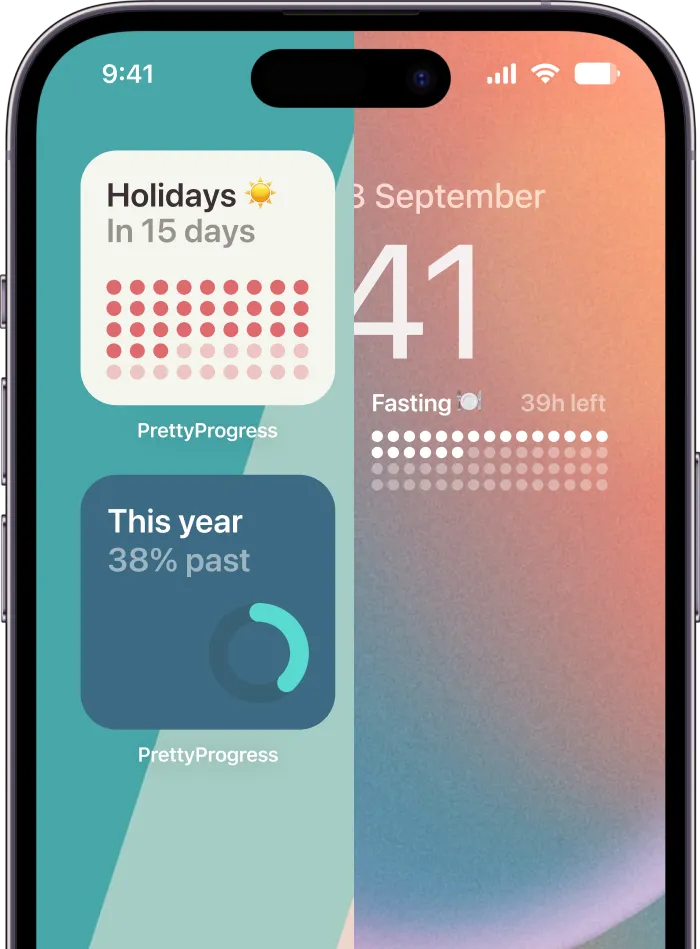
For practical setup, keep the visual cue where your attention already goes. A Home Screen or Lock Screen widget works better than a buried note app because it gives you feedback before motivation fades. If you use an app like Pretty Progress, the point isn’t decoration, it’s making progress visible enough that you keep returning to the plan.

Make the feedback small enough to reward effort
Big goals need smaller visual segments. A semester project, a client launch, or a fitness routine becomes easier to sustain when each part has its own indicator, because progress shows up more often. That gives you more chances to notice, “I’m not stuck, I’m advancing.”
Practical rule: if you can’t tell whether you’ve made progress in 10 seconds, the system is too vague.
Use colors that fit the state you want to feel. Calm tones can reduce pressure for recovery periods, while brighter colors can help when you need energy and urgency. If you want a concrete setup guide for pacing milestones, the app’s progress schedule guide is a useful starting point.
The trade-off is simple. Visual tracking helps when it stays honest and minimal, but it becomes noise if you track everything. Pick the one or two goals that matter most right now, and make those impossible to ignore.
2. Goal Decomposition & Milestone Setting
Large goals usually fail for one reason, they stay too abstract for too long. Splitting them into milestones makes the next step obvious, and that lowers the mental drag that often leads to avoidance. Instead of “finish the project,” you get “draft outline,” “complete research,” “revise section two,” and each step becomes a point of progress you can reach.
That structure matters because resilience grows through repeated success experiences. A milestone does more than move the work forward, it gives your brain evidence that effort leads somewhere. For students, that might mean weekly deliverables across a term. For professionals, it might mean phase-based targets on a multi-month project. For habit builders, it can be as simple as a daily target and a weekly review.
Turn distant goals into dates you can trust
A milestone needs to be specific enough that you know when it’s done. “Make progress on presentation” is too loose. “Finalize slides and rehearse once by Thursday evening” gives your brain a finish line.
Use Pretty Progress to separate major milestones from daily targets, then assign dates to each one so the timeline stays visible. You can also use its calculator features to work out exact gaps between milestones, which helps when you’re planning around school terms, work cycles, or personal commitments. If the dates change, adjust them. Flexibility is part of resilience, not a sign that you failed.
What works: milestones that are clear, visible, and slightly challenging.
What doesn’t: goals so broad that you can’t tell whether today mattered.
A good milestone system should create multiple moments of acknowledgment. That doesn’t mean a huge reward every time, it means pausing long enough to notice completion before racing to the next task. That small pause helps you stay engaged instead of feeling like progress disappears the second you earn it. To reinforce those checkpoints, pair them with spaced repetition using MasteryMind revision methods, so progress is reviewed often enough to stick.
For habits that need daily contact, connect the milestone system to a visual habit tracker. A clear streak marker makes it easier to see whether you kept the habit alive, and that visible record matters on low-motivation days. The trade-off is simple, keep the streak visible without turning it into pressure that makes you abandon it after one slip.
3. Habit Stacking & Consistency Streaks
Resilience isn’t built only in big moments. It’s built in the small repeats, the five minutes after coffee, the stretch before bed, the study block after lunch. Habit stacking works because it attaches a new behavior to something you already do, which lowers friction and makes follow-through easier on low-energy days.
Consistency streaks add another layer. When you can see the streak, you’re less likely to let one missed day turn into a missed week. That’s especially useful for habits tied to resilience, like meditation, journaling, exercise, or project planning. The goal isn’t perfection, it’s reliable contact with the habit.

Keep the habit small at the start
If the habit feels too ambitious, the streak will collapse under ordinary life. Start with a 2-minute version if needed. Read one page, breathe for two minutes, write one sentence, or review tomorrow’s plan before bed.
Use a Lock Screen widget so the habit stays in sight. Pretty Progress can keep the streak visible without forcing you to open another app, making it easier to build a repeatable routine around the habit itself.
A missed day doesn’t erase the value of the system. The streak is there to support consistency, not to shame you into quitting.
The trade-off is important. A rigid streak mindset can push people into all-or-nothing thinking, which hurts resilience. A better standard is strong consistency with room for real life, especially if you’re balancing work, caregiving, exams, or travel. Aim for repeatability first, intensity second.
4. Deadline Visualization & Time Awareness
A deadline feels different when it stays visible. The work stops living in the back of your mind and starts taking its place in your day. Keeping the due date in view helps you pace effort earlier, which is a better use of energy than waiting for pressure to do the organizing for you.
That matters for students, project managers, content creators, and anyone balancing overlapping commitments. A clear countdown for an exam, proposal, or launch date turns vague anxiety into a concrete signal. Instead of treating the deadline like something far off, you can see how close it is and adjust what gets attention today.
Use urgency without creating alert fatigue
Different deadlines need different levels of attention. A hard submission date deserves a stronger visual cue than a soft target, and a long-term milestone should not look like an emergency. If every date feels equally urgent, your brain stops treating any of them with care.
Place the most important countdown where you will see it, especially on the Lock Screen. Color cues help, too. Use calmer tones for steady pacing and stronger colors for the final stretch. A morning review works well because it gives the day a clear point of focus before other tasks crowd in.
Set reminders before the final deadline so you still have room to change course. That gives you time to correct slow progress, break a task into smaller steps, or ask for help before the pressure peaks. Deadline visibility is not about keeping you tense, it protects your energy by spreading effort across time. For a practical setup that pairs progress views with accountability, see how to build accountability with Pretty Progress.
6. Social Accountability & Shared Progress
Resilience often holds better when the effort is visible to someone else. Social support is one of the modifiable factors linked to resilience, and that matches day-to-day experience, people stay more consistent when another person knows what they are working on. A partner, coworker, coach, or friend can make a goal feel real by checking in on it, asking what changed, and noticing when progress slows.
Shared progress works well for exam prep, team deadlines, and habit changes for a simple reason, it makes the work public enough to matter without turning it into pressure. When you send a screenshot of a streak or a milestone, you are not just reporting a number. You are showing effort in a way another person can respond to, which often makes follow-through easier because the goal is no longer carried alone.
Make accountability light, not heavy
If accountability starts to feel like surveillance, people pull away. The better setup is mutual support. A weekly check-in, a shared calendar, or a simple message like “what is your next milestone?” can keep momentum without adding stress.
Pretty Progress fits naturally here because the widgets are easy to screenshot and share with an accountability buddy or group. The accountability guide gives a simple routine for turning private progress into shared follow-through. Use one visible system for yourself and the people supporting you, so the same tracker can remind you where you are, what changed, and what needs attention next.
6. Social Accountability & Shared Progress
Resilience gets stronger when it isn’t private all the time. Social support is one of the modifiable factors linked to resilience, and that fits everyday experience, people stay more consistent when someone else knows what they’re working on (systematic review on resilience factors and training methods). Accountability doesn’t have to be formal. A study partner, workout buddy, manager, or friend can make a goal feel more real just by checking in on it.
This is one reason shared progress works so well for exam prep, team deadlines, and habit changes. When you send a screenshot of a streak or a milestone, you’re not just reporting a number, you’re making the effort socially visible. That often strengthens follow-through because you’re no longer carrying the goal alone.
Make accountability light, not heavy
If accountability feels like surveillance, people resist it. The better model is mutual support. A weekly check-in, a shared calendar, or a simple “what’s your next milestone?” message can be enough to keep momentum going.
Pretty Progress fits naturally here because the widgets are easy to screenshot and share with an accountability buddy or group. The accountability guide is useful if you want a simple routine for turning private progress into shared follow-through. Use the same visible system for yourself and the people who support you.
Group accountability works best when it’s encouraging, not performative.
The trade-off is privacy. Not every goal should be public, and not every person wants a group involved. Choose one trusted person if a larger group feels like too much. Support should lower stress, not add social pressure.
7. Adaptive Resilience & Flexible Response to Setbacks
A setback doesn’t have to become a stoppage. Adaptive resilience means you treat obstacles as information, then adjust the plan without abandoning the goal. That mindset matters because resilience is not perfect execution, it’s persistent movement with intelligent course correction.
This approach is especially useful when the first method doesn’t work. A student may need to switch study tactics. A professional may need to shift timelines after a new constraint appears. A habit builder may need to accept partial consistency instead of quitting entirely. The point is to stay engaged with the goal while responding to reality.
Adjust the plan without turning every change into a retreat
Journaling can help here because it separates genuine adjustment from avoidance. If your schedule changed, your energy changed, or your workload changed, the milestone may need to move. That’s not weakness. It’s planning with current information.
Use visual tracking tools to update dates and milestones when circumstances really do change. If a goal no longer fits the season you’re in, the system should adapt with you. That kind of flexibility keeps progress alive, even when the original script no longer works.
The strongest plan is the one you can revise without guilt.
A practical rule is to protect the objective, not the exact method. If your original approach fails, keep the direction and change the route. That’s what resilient people usually do, they don’t cling to a broken setup, they keep the end goal and make the path workable again.
8. Neurobiological Recovery & Sustainable Pace
Resilience doesn’t come from constant grinding. It comes from being able to alternate effort with recovery so your body and mind can keep functioning under pressure. Sleep, rest, movement, and quiet time aren’t extras, they’re part of the system that makes the other techniques usable.
A common pitfall occurs when people build a strong goal system but run it at an unsustainable pace. Eventually, focus drops, emotions get sharper, and motivation becomes harder to trust. A sustainable rhythm protects long-term consistency by preventing burnout before it takes over.
Track rest with the same seriousness as effort
Recovery only works when you can see it and respect it. If your calendar highlights work but hides rest, you’ll keep choosing exertion by default. That’s why it helps to create recovery widgets alongside effort widgets, such as sleep routines, rest days, or recovery blocks.
The Mayo Clinic’s guidance supports this practical mix of relationship-building, action, and stress management, including exercise, sleep routines, yoga, meditation, deep breathing, and prayer. Those aren’t just calming activities, they’re ways to regulate the system that effort depends on. The most resilient pace is usually not the fastest one, it’s the one you can repeat.
Sustainable pacing beats heroic bursts.
If you’re managing a project or a semester, plan a sprint, then plan recovery on purpose. Put both on the screen. That makes rest a commitment instead of a guilty afterthought, and it keeps you from confusing burnout with dedication.
8-Point Resilience-Building Techniques Comparison
| Technique | 🔄 Implementation complexity | ⚡ Resource requirements | ⭐ Expected outcomes | 📊 Key advantages / Impact | 💡 Ideal use cases / Tips |
|---|---|---|---|---|---|
| Visual Progress Tracking | 🔄 Low–Medium, simple setup; widget design choices | ⚡ Low, widgets/apps, occasional updates | ⭐⭐⭐⭐, high immediate motivation & visibility | 📊 Quick motivation boosts, lower cognitive load, frequent small wins | 💡 Best for visual learners, habit maintainers; place widgets on Home/Lock screens |
| Goal Decomposition & Milestone Setting | 🔄 Medium, requires upfront planning and structure | ⚡ Medium, time for mapping milestones and tracking | ⭐⭐⭐⭐, greater manageability and sustained momentum | 📊 Reduces overwhelm, improves planning accuracy, enables course correction | 💡 Ideal for long-term projects and semester plans; set clear dates per milestone |
| Habit Stacking & Consistency Streaks | 🔄 Low, anchor new habits to existing routines | ⚡ Low, small daily actions, streak counters | ⭐⭐⭐⭐, strong adherence for small repeatable behaviors | 📊 Builds momentum via loss aversion; rapid habit formation for micro-habits | 💡 Use for daily rituals (after coffee/bed); start very small (2-min rule) |
| Deadline Visualization & Time Awareness | 🔄 Low, set countdowns and urgency cues | ⚡ Low–Medium, ongoing visibility and occasional updates | ⭐⭐⭐, improves urgency and pacing, reduces procrastination | 📊 Better time allocation, fewer last-minute crises, clearer prioritization | 💡 Place countdowns on Lock Screen; distinguish hard vs soft deadlines |
| Emotional Resilience (Mindfulness & Reflection) | 🔄 Medium, requires regular practice and ritual | ⚡ Low–Medium, time for meditation/journaling, possible app support | ⭐⭐⭐⭐, improved emotional regulation and learning from setbacks | 📊 Reduces reactivity, increases self-compassion and sustainable well‑being | 💡 Pair short reflections with progress widgets; schedule 5-min daily ritual |
| Social Accountability & Shared Progress | 🔄 Medium, set up partners/groups and sharing norms | ⚡ Medium, time for communication and group check‑ins | ⭐⭐⭐⭐, strong external motivation and increased follow-through | 📊 Higher adherence, social support, collective problem solving | 💡 Use screenshotable widgets in groups; schedule weekly accountability check‑ins |
| Adaptive Resilience & Flexible Response | 🔄 Medium–High, requires self‑awareness and regular reassessment | ⚡ Low–Medium, time for reflection, contingency planning | ⭐⭐⭐⭐, maintains progress through obstacles via course correction | 📊 Preserves momentum, prevents catastrophizing, builds problem‑solving skills | 💡 Build backup milestone dates; journal to distinguish legit adjustments vs avoidance |
| Neurobiological Recovery & Sustainable Pace | 🔄 Low–Medium, schedule rest into plans | ⚡ Medium, sleep/recovery tracking and discipline to rest | ⭐⭐⭐⭐, long‑term sustainability; reduced burnout and better cognition | 📊 Improved recovery, creativity, consistent long‑term performance | 💡 Create recovery widgets (sleep/rest days) and treat breaks as non‑negotiable |
Start Building Your Resilience Today
Resilience is a dynamic skill, not a fixed personality trait. You don’t need to use every technique at once, and you don’t need to get it perfect before it helps. Start with the one that feels most practical right now, maybe a countdown for your next deadline, a small habit streak, or a milestone tracker that turns a vague goal into visible progress.
The most useful resilience building techniques share one feature, they create repeated proof that you can act under pressure. That proof matters on hard days, because it’s stronger than motivation alone. When you can see what you’ve done, what’s next, and what still needs attention, your brain has less room to spiral and more room to solve.
Pretty Progress fits this approach well because it turns deadlines, goals, and routines into always-on visual cues. Used well, a tracker like that doesn’t replace discipline, it supports it by making progress easier to notice and easier to continue. The key is consistency, not intensity, and that starts with one visible system you’ll use.
If you want a simple way to keep your goals visible, Pretty Progress gives you customizable countdowns, progress bars, and widgets for your Home Screen, Lock Screen, Apple Watch, Mac, and Android. It can help you turn the resilience habits in this guide into a daily system, so you’re not just hoping to stay on track, you’re seeing it happen in front of you.