
August 2, 2026
10 Healthy Habits for Life That Actually Stick
Discover 10 evidence-backed healthy habits for life. Learn practical steps, tracking tips, and how to build routines that last a lifetime for better health.
You’ve probably had this moment already. The new workout app is open, the grocery cart is full of “clean” ingredients, and the first Monday of the plan looks perfect. Then work gets messy, sleep slips, you miss one workout, and the whole system starts to wobble. The problem usually isn’t motivation, it’s that the habits aren’t visible enough to survive real life. If you want healthy habits for life, you need a setup that reminds you what matters while you’re busy living.
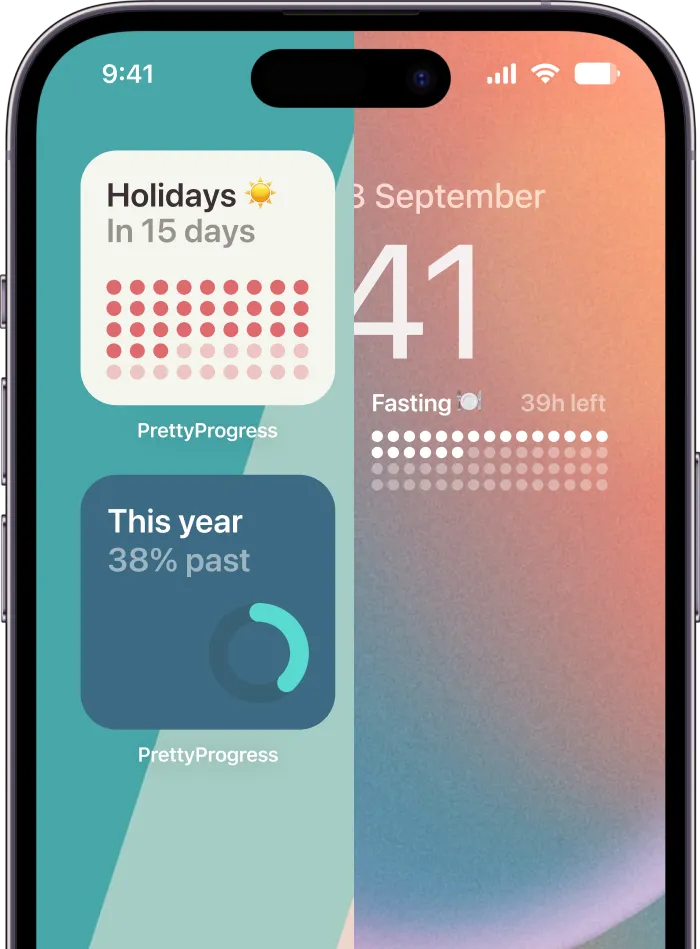
That’s where simple, glanceable tracking helps. A home-screen widget, lock-screen countdown, or Apple Watch reminder turns a vague intention into something you can see all day. It’s the same reason people keep exam dates, race days, and deadlines visible, the brain responds better to progress it can inspect often. Use the ideas below with a system that stays in front of you, not buried in a note you forget to open. For a practical example of that approach, see sustainable healthy habits.
Table of Contents
- 1. Daily Goal Visualization and Tracking
- 3. Consistent Sleep Schedule and Sleep Hygiene
- 3. Consistent Sleep Schedule and Sleep Hygiene
- 5. Mindfulness and Daily Meditation Practice
- 5. Mindfulness and Daily Meditation Practice
- 6. Hydration and Nutrition Optimization
- 7. Stress Management and Digital Detox
- 8. Learning and Intellectual Stimulation
- 9. Meaningful Relationships and Community Connection
- 10. Financial Planning and Long-term Security
- 10 Healthy Habits Comparison
- Your Journey to Consistent Health Starts Now
1. Daily Goal Visualization and Tracking

The strongest habits usually start as visible targets, not private intentions. If the goal lives on your lock screen, home screen, or watch face, you check it without making a decision first. That tiny reduction in friction matters when you’re tired, distracted, or already halfway through another task.
I like this approach because it works for more than health. A student can track days until finals, a job seeker can keep an interview date front and center, and a founder can watch a product launch tick closer. The key is restraint, though. Too many goals create visual noise, and visual noise gets ignored.
Make the goal small enough to notice
Start with two or three major goals, not ten. Give each one a clear visual identity, so your brain can separate “work deadline” from “fitness streak” from “personal milestone.” A clean design matters because you’re more likely to glance at something you enjoy looking at.
Practical rule: if you can’t explain the goal in one sentence, it’s too broad to track well.
One useful habit is a weekly review. Spend a few minutes checking what moved forward, what stalled, and what needs a smaller next step. If you want a practical setup for visual goal tracking, this guide on visual goals shows how countdowns and progress bars fit into daily life.
3. Consistent Sleep Schedule and Sleep Hygiene
A steady sleep routine is one of the few habits that makes the rest of life easier to manage. When bedtime shifts around, appetite, mood, and focus often shift too, and the next day starts with more friction than it should. A consistent schedule reduces that drift.
You do not need an elaborate routine to sleep better. A dark room, a cooler sleep environment, and a predictable wind-down sequence usually do more than people expect. If you work nights, have children waking at odd hours, or spend late evenings on screens, the goal is a routine you can repeat in real life, not a perfect setup that only works on paper.
Protect the last 30 minutes
A bedtime countdown keeps the evening from getting swallowed by scrolling. A visual timer helps because it turns “I should stop soon” into a clear cutoff you can see at a glance. If you want help mapping sleep and wake timing around the hours you need, the sleep calculator gives you a practical place to start.
The last half hour works best when it is simple. Keep the room dark and cool, since light and heat can make it harder to fall asleep. Use a short wind-down ritual such as reading, stretching, or writing tomorrow’s priorities. Move caffeine earlier in the day if sleep has been running shallow or uneven.
Screen use deserves its own boundary. The pull of notifications and short-form content can keep your brain active long after you meant to rest, so set a firm stop point and make it visible on your phone or widget. For evidence-based strategies on managing evening screen exposure, see data-backed sleep protocols from The Sleep Consultant.
A few simple habits do most of the work:
- Keep the room dark and cool: Light and heat make falling asleep harder for many people.
- Create a short wind-down ritual: Read, stretch, or write tomorrow’s priorities before bed.
- Move caffeine earlier: A late dose can leave sleep lighter and less reliable.
The point is consistency, not perfection. A sleep routine that fits your real schedule will usually hold up better than a strict plan you abandon after a few nights.
3. Consistent Sleep Schedule and Sleep Hygiene
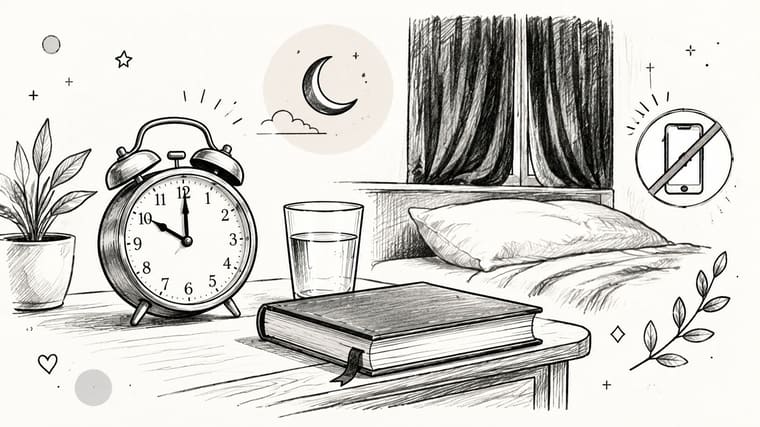
A steady sleep schedule does more than help you feel rested. It shapes appetite, mood, and focus the next day, which is why sleep deserves the same attention you give meals or exercise. When bedtime shifts constantly, the rest of the day usually feels less stable too.
The practical answer is usually simpler than people expect. A dark room, a cooler sleep environment, and a predictable wind-down sequence can all improve the chances of sleeping well. If you work nights, have a child who wakes up at odd hours, or still end up staring at a screen late in the evening, aim for a repeatable routine that fits the life you live.
A visual countdown can make the evening easier to protect. Instead of letting the last half hour disappear into scrolling, use a clear cutoff that shows you when it is time to start winding down. If you want a quick planning tool, the sleep calculator can help you map out bedtime and wake-up timing around the hours you need.
Small changes do most of the work here, and they are easier to maintain than a complicated plan.
- Keep the room dark and cool: Light and heat make falling asleep harder for many people.
- Create a short wind-down ritual: Read, stretch, or write tomorrow’s priorities before bed.
- Move caffeine earlier: Late caffeine is a common reason sleep gets thinner than it should.
- Track patterns, not just feelings: A simple journal can show which nights leave you rested and which ones do not.
If screens are the problem, put the phone outside the bedroom or set a firm stop point that you can see. The strongest sleep habit is often the one that removes the easiest interruption and makes the next evening easier to repeat.
5. Mindfulness and Daily Meditation Practice
Mindfulness helps create a pause before stress turns into a habit break. That pause matters on busy days, when your mind is scattered, when pressure is high, or when you are about to react on autopilot. A few minutes of quiet breathing can make the rest of the day feel less jagged.
The routine works best when it stays small enough to fit real life. Five minutes is enough to begin, and consistency matters more than trying to sit for a long stretch. People who wait for the perfect room, the perfect app, or the perfect mood often never start, while a simple routine is easier to repeat on an ordinary Tuesday.
A visual cue can keep the practice from slipping out of view. A glanceable widget, a streak tracker, or a calm reminder on your home screen turns meditation into something you can see before the day gets away from you. Pretty Progress can also track daily meditation habits, which helps if you want a clear prompt without extra clutter.
Keep the practice ordinary
Attach meditation to something you already do, like brushing your teeth, making coffee, or closing your laptop for the night. That kind of cue is easier to sustain than waiting for motivation to appear. I find that simple routines hold up better because they ask less of a tired mind.
Different styles fit different days:
- Guided meditation: Helpful when you want structure and less mental drift.
- Breath focus: Useful when you need a quick reset between tasks.
- Body scan: Helpful at night when tension sits in the shoulders or jaw.
- Loving-kindness practice: A calm option when your inner self-talk is harsh.
Mind-wandering is part of the process. Notice it, return attention, and continue. That return is the practice, and it is usually what builds steadiness over time.
The people who stick with mindfulness usually do not treat it like a special event. They make it ordinary enough to repeat, and visible enough to remember.
5. Mindfulness and Daily Meditation Practice
Mindfulness gives you a pause before a habit breaks. That pause matters when stress is high, your thoughts are scattered, or you’re about to react automatically. A few minutes of breathing or quiet attention can make the rest of the day feel more manageable.
The habit itself should be small enough to fit into a normal day. Five minutes is enough to start, and consistency matters more than duration. People who wait for the perfect quiet room or the ideal app often never begin, while people who keep it simple build a routine they can repeat without much friction.
Keep the practice ordinary
Use the same cue each day, such as after brushing your teeth or before opening email. A glanceable streak helps because it turns the practice into something you can see before the day pulls you elsewhere. Pretty Progress can also track daily meditation habits, which is useful when you want a clear reminder without extra noise.
I’ve found that a visible tracker helps more than motivation alone. On busy days, the goal is not to create a perfect session, it is to make the next session easy to start. That is where a simple widget or home screen reminder pays off, because it keeps the habit in view instead of leaving it to memory.
A few styles work well for beginners:
- Guided meditation: Good when you want structure and less mental drift.
- Breath focus: Useful when you need a fast reset between tasks.
- Body scan: Helpful at night when tension sits in the shoulders or jaw.
- Loving-kindness practice: A calm option when your inner self-talk is harsh.
Mind-wandering isn’t failure. Notice it, return attention, and keep going. That simple return is the practice, and it is usually what builds steadiness over time.
The people who stick with mindfulness usually don’t make it ceremonial. They keep it accessible. A chair, a timer, and a repeatable slot in the day are enough.
6. Hydration and Nutrition Optimization
Food and water habits work best when they are visible, not theoretical. If your bottle stays out of sight, you will forget it. If meals default to convenience food, nutrition becomes harder than it needs to be. Structure usually solves more than willpower does.
The wellness market reflects that habit, because people keep looking for tools that make everyday choices easier to repeat. A Global Wellness Institute report shows how large the healthy eating and hydration space has become, and Morgan Stanley also reports that many consumers either use a wearable or are interested in buying one, with a sizable share saying they change behavior from device insights while others do so sometimes. That pattern matters here. Glanceable feedback helps people act sooner, before hunger, dehydration, or autopilot choices take over (Global Wellness Institute report).
Build meals and hydration around friction, not guilt
Start with one meal a day that is built around whole foods. That is easier to sustain than trying to overhaul every meal at once, especially if you cook for a family or work long hours. A weekend meal prep session also lowers the odds that hunger turns into random snacking, because the next meal is already partly decided.
A few practical moves usually help:
- Keep water visible: A bottle on the desk beats a bottle in a cabinet.
- Use reminders, not guesses: Hydration widgets are more reliable than memory.
- Add before you subtract: Put more vegetables, fruit, and protein on the plate first.
- Read labels when it matters: Ingredient lists often tell you more than front-of-package promises.
Meal prep feels less abstract when it is tied to a visual cue. A countdown to prep day, a hydration widget on the home screen, or a simple meal tracker can keep the habit in view while the week gets busy. That kind of visibility matters on stressful days, because it reduces the number of decisions you have to make when energy is low.
The best nutrition plan is the one you can live with on a stressful Tuesday, not only on a calm Sunday.
7. Stress Management and Digital Detox
Stress management works better when you stop treating recovery as something you earn after a crash. Short, scheduled breaks are easier to keep than a vague promise to rest later. That might mean a walk, a quiet meal, a phone-free hour, or a longer digital detox when screens start crowding out everything else.
Harvard Health notes that habit change depends on triggers, setbacks, and real-world barriers like travel, injury, bad weather, and limited support, because “just be disciplined” advice misses how people live (Harvard Health on healthy habits). The same logic applies here. If your environment keeps pulling you toward notifications, your recovery plan has to account for the environment, not just your mindset.
If your phone stays within reach, rest has to compete with constant interruption.
Reduce the pull of screens
Start with one phone-free hour or one no-phone meal each day. If that feels manageable, build from there. Fill that time with something specific, reading, cooking, a hobby, or a walk outside, because empty time often turns into scrolling by default.
A few guardrails do more than willpower alone:
- Use app timers: They will not solve everything, but they make limits visible.
- Charge the phone away from the bed: This reduces bedtime drift.
- Set family rules: “No phones at dinner” is simple enough to keep.
- Track mood after screen breaks: Some people only notice the difference after they compare days.
Visual countdowns also help with planned digital sabbaths, since the anticipation itself can make the break feel deliberate instead of restrictive. The goal is not to hate screens, it is to stop letting them take over the margins of your day.
8. Learning and Intellectual Stimulation
A healthy life is not only about keeping up maintenance. It also needs growth. Reading, courses, creative projects, and skill building keep your brain engaged and give your days a sense of forward motion.
People often treat learning as optional, then wonder why the week feels flat. The habit does not need to be dramatic. A language lesson on the commute, a coding module after dinner, or a weekend workshop can keep the routine alive without crowding out everything else. Consistency matters more than intensity.
Make progress visible
If a course has a deadline, track the completion date. If you are reading a book, keep the finish point on screen. Visual tracking helps because it turns “someday” into “this month,” which makes follow-through much more likely. A glanceable widget such as Pretty Progress can keep that target in view without adding extra friction.
Learning habits last longer when they connect to real interest. If you force yourself through material you do not care about, the system usually falls apart fast. If the topic matters, even a short session becomes easier to repeat. A book club, online cohort, or community class often works better than isolated self-study because other people give the habit a schedule and a little accountability.
The practical model is straightforward, and it works because it reduces decision fatigue:
- Pick one main skill: Split attention drains momentum.
- Attach it to a routine: After lunch, after work, or before bed.
- Use the skill quickly: Application sticks better than passive intake.
- Track completion visibly: A finished course, chapter, or project gives you proof that the effort is adding up.
- Celebrate completion: Finishing matters more than starting.
I have seen this work best when the visual cue is always available. A progress bar on a phone, a widget on the home screen, or a calendar block with a clear end point makes the next step easier to see. When the goal stays visible, people are less likely to let it drift.
The people who keep learning for years usually do not rely on bursts of inspiration. They build a visible path from interest to progress.
9. Meaningful Relationships and Community Connection
A healthy routine is easier to keep when other people are part of it. Relationships affect long-term health because isolation wears people down, while steady connection gives daily life more structure. Research on healthy habits has also treated social connection as part of the wider pattern of living well, and Harvard Health highlights social engagement as a way to reduce loneliness and support wellbeing.
The hard part is that connection rarely happens on its own. Remote work, parenting, caregiving, and full calendars can narrow social life until it becomes a stream of texts and missed calls. I treat relationships like any other habit that matters, which means putting them on the calendar instead of hoping they happen by accident.
A glanceable widget helps here because it keeps the plan visible on ordinary days. Pretty Progress can count down to a family dinner, a weekend visit, or a standing catch-up call, which makes the event feel real before it arrives. That small visual cue matters when time is tight, because the reminder can turn a vague intention into an actual conversation.
Make connection specific
Recurring plans work better than loose promises to “catch up soon.” A weekly dinner, a monthly phone call, or a standing walk with a friend gives the relationship a shape you can keep. If you are introverted, one-on-one time often works better than large gatherings, and that trade-off is worth accepting instead of forcing a format that drains you.
A few habits make connection stronger:
- Choose depth over volume: One honest conversation usually does more than a stack of short check-ins.
- Offer help first: Relationships hold up better when support runs both ways.
- Join around a shared interest: Running clubs, book groups, and volunteer teams are easier to keep going because the activity gives people a reason to return.
- Protect recurring rituals: Repetition builds trust and makes the connection easier to sustain.
People usually do not regret making room for the right relationships. They regret letting them drift.
10. Financial Planning and Long-term Security
Money habits affect health more than people admit. Financial stress spills into sleep, mood, relationships, and decision-making, so a basic money system supports the rest of life. Planning doesn’t need to be glamorous, but it does need to be visible enough to stay active.
A healthy financial habit is the same kind of habit as a fitness habit, it works when it’s tracked and repeated. A simple budget, automatic savings, and specific milestones turn vague worry into measurable progress. If you’re paying down debt, saving for a move, or building a buffer for emergencies, the timeline matters because it keeps the goal from floating forever.
Make the money plan concrete
Start with one clean target. That might be a debt payoff date, a first emergency fund goal, or a retirement contribution you can automate without thinking about it. Visual trackers help because they make the finish line easier to remember on ordinary days.
If the plan feels too big, cut it into smaller milestones:
- Automate savings first: Paying yourself before you spend reduces friction.
- Track only the key numbers: Too much detail creates avoidance.
- Reduce expenses before chasing more income: That’s often the quicker first move.
- Learn the basics steadily: A book or course is enough to start.
Financial security doesn’t remove all stress, but it does reduce the panic that comes from uncertainty. That makes every other habit easier to keep, because your energy isn’t constantly being drained by money decisions.
10 Healthy Habits Comparison
| Practice | 🔄 Implementation Complexity | ⚡ Resource Requirements | 📊 Expected Outcomes | 💡 Ideal Use Cases | ⭐ Key Advantages |
|---|---|---|---|---|---|
| Daily Goal Visualization and Tracking | Low–Medium: initial setup, simple maintenance | Low: widget/app, device sync | Better motivation & consistency; improved goal completion ⭐⭐⭐⭐ | Habit building, deadlines, study/race countdowns | Persistent visibility, reduces decision fatigue, frequent micro-wins |
| Intermittent Fasting with Scheduled Tracking | Medium: protocol selection and schedule adherence | Low–Medium: tracking app, hydration, planning meals | Potential metabolic and cognitive benefits; weight management (variable) ⭐⭐⭐ | Weight loss, metabolic health, mental clarity, timed training | Simplifies meal timing, flexible protocols, measurable fasting windows |
| Consistent Sleep Schedule and Sleep Hygiene | Medium: routine changes, environment optimization | Low: blackout curtains, sleep tracker, habit changes | Large benefits for mood, immunity, cognition and recovery ⭐⭐⭐⭐ | Shift workers (with adjustments), students, high-performance individuals | Broad systemic benefits, improves recovery and cognitive function |
| Regular Physical Movement and Exercise | Medium–High: scheduling, progressive planning | Medium: time commitment, possible equipment or gym | Strong reductions in chronic disease risk; better mood & fitness ⭐⭐⭐⭐ | General health, training for events, mobility & longevity | Wide-ranging health impact, scalable intensity, measurable progress |
| Mindfulness and Daily Meditation Practice | Low–Medium: daily consistency required | Low: time, optional guided apps | Reduced stress, improved focus and emotional regulation ⭐⭐⭐⭐ | Stress management, concentration improvement, therapy adjunct | Low cost, portable practice, strong mental-health benefits |
| Hydration and Nutrition Optimization | Medium: meal planning and habit change | Medium–High: grocery budget, meal prep time | Improved energy, digestion, disease risk reduction ⭐⭐⭐⭐ | Athletes, weight management, chronic disease prevention | Direct physiological benefits, supports performance and appearance |
| Stress Management and Digital Detox | Medium: boundary-setting and habit shifts | Low: intentional scheduling, alternative activities | Reduced anxiety, better sleep and presence ⭐⭐⭐⭐ | Burnout prevention, focus blocks, family routines | Restores attention, reduces notification fatigue, improves relationships |
| Learning and Intellectual Stimulation | Medium: time allocation and goal setting | Low–Medium: courses/books, possible fees | Increased cognitive reserve, skills, career growth ⭐⭐⭐⭐ | Career transitions, lifelong learning, skill acquisition | Enhances adaptability, opportunity creation, mental engagement |
| Meaningful Relationships and Community Connection | Medium–High: time and emotional investment | Low–Medium: time, sometimes travel or group fees | Strong improvements in mental health and longevity ⭐⭐⭐⭐⭐ | Longevity-focused health, emotional support, life satisfaction | Major protective effect on health; increases belonging and resilience |
| Financial Planning and Long-term Security | Medium–High: learning, ongoing tracking | Medium: savings/investment capacity, advisory costs | Reduced stress, greater security and options over time ⭐⭐⭐⭐ | Debt reduction, retirement planning, major life goals | Produces stability and freedom; enables other life goals |
Your Journey to Consistent Health Starts Now
These ten habits are not a checklist to finish, they’re a framework for a healthier, more intentional life. The biggest mistake people make is trying to change everything at once, then assuming the problem is lack of discipline when the system gets too heavy. A better approach is quieter and more durable, start with one habit, make it visible, and let repetition do the work.
The NIH research is a strong reminder that healthy living adds up over time. People who maintained five healthy lifestyle factors lived more than a decade longer than those with none, and each factor independently lowered the risk of total death, cancer death, and heart disease death (NIH research summary). That’s not a reason to chase perfection, it’s a reason to keep showing up in small ways that you can repeat across ordinary weeks.
Visual tracking helps because it keeps the habit in your line of sight. A countdown, streak, or progress bar makes the next step feel concrete instead of abstract, which is exactly what you need when life gets crowded. If you’re building a routine around fasting windows, sleep timing, workouts, meditation, or any other long-term goal, that visible cue can be the difference between drifting and staying on course.
Choose one habit from this list and make it visible today. Put the reminder where you’ll see it, then give yourself credit for the small win that follows.
Pretty Progress can help you keep health routines visible with glanceable countdowns and progress widgets on iPhone, iPad, Apple Watch, Mac, and Android. If you want a simple way to track habits like sleep, fasting, workouts, or meditation, visit Pretty Progress and set up one routine you can see every day.