
July 11, 2026
Pretty Progress: Apple Watch Goal Tracker for 2026
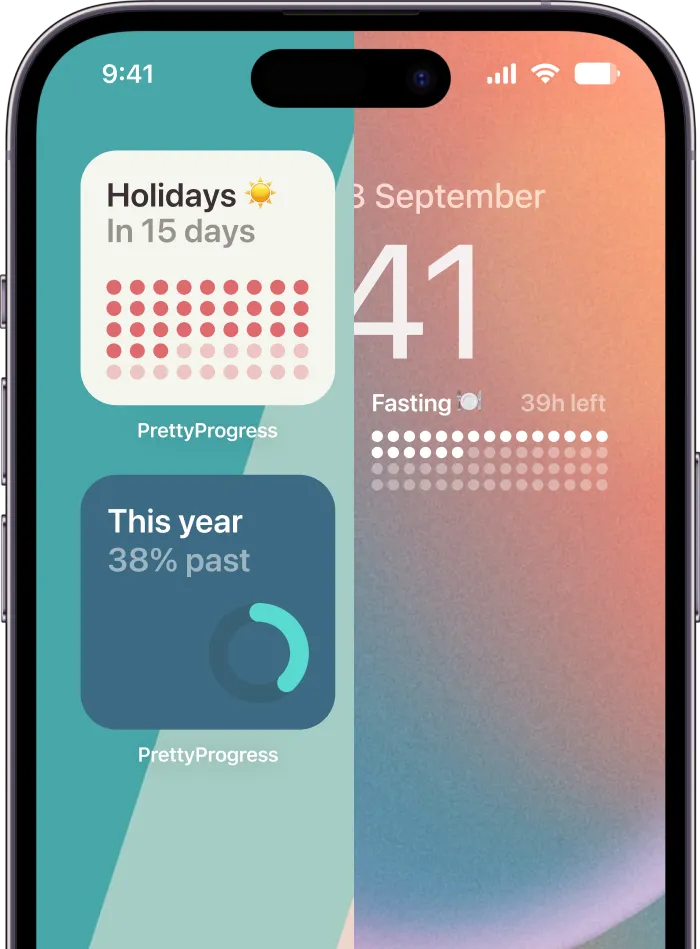
Transform your Apple Watch goal tracker with Pretty Progress. Set up, customize & track any goal with beautiful, glanceable widgets. Get started now!
You already have an Apple Watch on your wrist, and it probably reminds you to stand, move, and exercise with almost no effort. Then real life takes over. You need to finish a client proposal, count down to an exam, remember a habit streak, or stay aware of a deadline that matters more to your week than closing a ring.
That’s where a lot of people hit the same wall. The watch is excellent at fitness tracking, but your life isn’t only fitness. If you want a real Apple Watch goal tracker, you need a setup that keeps non-fitness goals visible in the same quick, glanceable way.
Table of Contents
- Beyond Activity Rings Your Apple Watch as a Life Goal Tracker
- Initial Setup Getting Pretty Progress on Your Watch
- Designing Your Motivation Visual Customization
- Real-World Workflows Putting Your Tracker to Work
- Sustaining Momentum Troubleshooting and Advanced Tips
- Frequently Asked Questions About Goal Tracking
Beyond Activity Rings Your Apple Watch as a Life Goal Tracker
Apple built a strong goal system into the watch with Activity Rings. The red Move ring tracks active calories, the green Exercise ring requires 30 minutes of exercise, and the blue Stand ring asks you to stand for at least one minute in 12 different hours per day according to this Activity Rings overview. That system works well for movement, but it doesn’t help much when your real priority is a product launch, thesis deadline, or reading habit.

A watch becomes much more useful when it shows the goals you need to remember throughout the day. That usually means turning the screen into a small progress dashboard instead of treating it as a fitness-only device. Time-based goals are especially powerful on a watch because they answer the question often posed: How far along am I, really?
What the default setup does well
Apple’s built-in system is good at a few specific things:
- Daily behavior cues: Rings are easy to understand and hard to ignore.
- Simple momentum: Closing a ring feels concrete.
- Low friction tracking: Much of it happens automatically.
That’s a solid foundation. It just covers one slice of your life.
Where a broader goal tracker helps
A practical Apple Watch goal tracker should also handle things like:
- Deadlines: days left until launch, exam, trip, or renewal date
- Habit streaks: counting up from the day you started
- Projects: visual progress toward a milestone
- Personal events: birthdays, anniversaries, moving dates, recovery timelines
Practical rule: If a goal matters often, it should live somewhere you naturally look many times a day.
That’s why dedicated countdown and progress tools work so well on Apple Watch. They make invisible timelines visible. Instead of hoping you remember your priorities, you place them on your wrist where they can nudge you all day.
Initial Setup Getting Pretty Progress on Your Watch
The easiest way to build this kind of setup is to start on the iPhone, create one goal, and then make sure it appears on the watch. Keep the first goal simple. Pick something real and close enough to matter, like an exam date, a work deadline, or a vacation.

Start on your iPhone
A clean first setup usually looks like this:
- Download the app: Install Pretty Progress from the App Store on your iPhone.
- Create a new tracker: Add a goal with a clear name, such as “Final Exam” or “Client Launch.”
- Set the timeline: Choose a start date and end date so the progress bar has a meaningful range.
- Pick an icon: Use something you can identify instantly on a small watch screen.
- Save the goal: Keep the first version simple. You can refine colors and layout later.
Naming matters more than people expect. “Project” is vague. “Website Handoff” gives you a quick mental cue every time you see it.
Make sure it reaches the watch
Once the goal exists on the phone, check the Apple Watch app list and confirm the watch companion is installed. In many setups, the app will install automatically if automatic app install is enabled. If not, open the Watch app on iPhone and install it manually.
Then open the app on your watch at least once. That first launch often helps sync the goal list and confirms everything is talking properly.
A good first test is simple. Create one countdown, open it on the phone, then open the watch app and see if the same goal appears without editing anything else.
If you want a more visual walkthrough for complications and widgets, this guide to adding a countdown widget on Apple Watch covers the exact placement options.
Use one goal before adding five
New users often create too many trackers at once. That makes the watch feel busy, and it becomes harder to tell which goal deserves prime screen space.
A better rollout is:
- One urgent deadline first: something with a date that matters this month
- One personal tracker second: a trip, habit streak, or event
- One optional long-range goal later: something you want visible but not dominant
That order helps you learn what you check on your wrist.
For goals tied to travel, walking plans, or route-specific events, accuracy in the underlying timeline matters too. If your milestone depends on distance or route progress, these methods for precise route data are a useful reference for thinking clearly about measurement before you build the tracker around it.
What to check if sync feels off
Most sync problems are ordinary setup issues. Run through this short checklist:
| Check | Why it matters |
|---|---|
| App installed on both devices | The watch can’t show data from an app that never finished installing |
| App opened once on watch | First launch often triggers proper sync |
| Goal saved on iPhone | Draft changes may not appear until you confirm them |
| Watch and phone connected | A weak connection can delay updates |
If the goal appears on the watch app itself, you’re in good shape. After that, adding it to your watch face becomes a key upgrade.
Designing Your Motivation Visual Customization
A tracker only works if you keep seeing it. On Apple Watch, placement is strategy. The right goal in the wrong place fades into the background, while the right goal in the right place becomes part of your decision-making all day.

Choose the right watch surface
There are three placements worth using regularly.
Main watch face complication
This is the strongest location for your most important goal. If you’re checking the time all day, you’re also checking progress. Put your most urgent deadline here, not your least important habit.
This works best for goals with a real endpoint. A product deadline, exam date, and trip countdown all fit naturally.
Smart Stack widget
Use Smart Stack for goals that matter but don’t need permanent front-row placement. It’s a good home for secondary timelines, like “days until conference” or “days into a writing streak.”
This placement keeps your watch face cleaner while still making the data easy to review.
Always-on visibility
If your watch model supports an always-on display, choose designs that stay legible when dimmed. Tiny details often disappear. Bold bars, simple icons, and clear contrast usually hold up better than intricate layouts.
Customize for recognition, not decoration
Pretty Progress supports themes such as Swiss Style, Minimal, Aqua, and Retro OS, along with controls for color, gradients, bar size, shape, layout, and icons. That flexibility is useful when you treat design as a recognition system rather than just visual polish.
Here’s the practical approach I recommend:
- Assign colors by life area: blue for work, green for health, yellow for study
- Use different icons by goal type: briefcase for work, book for study, heart for personal
- Keep one visual rule per category: don’t change every variable at once
When your watch face is tiny, consistency beats creativity. You want instant understanding.
Design shortcut: If you can’t identify a goal in one glance, simplify the layout before you add more data.
For a reminder-focused setup, this Apple Watch reminder app guide is helpful because it shows how visual prompts and timing cues work together.
A useful principle comes from Apple’s workout tracking. For accurate Exercise credit while push-stroking, such as pushing a stroller with a still watch wrist, you need to manually start Outdoor Walk in the Workout app because a dedicated, correctly configured tool tracks better than passive background monitoring, as Apple explains in its exercise credit support note. The same lesson applies here. If you want dependable non-fitness tracking, use a tool built for custom goals instead of expecting passive systems to cover everything.
A quick example helps. If you’re tracking “Quarterly Plan,” choose a compact style with a dark progress bar and plain icon. If you’re tracking “Summer Trip,” use a brighter color and larger visual bar. Different look, different mental category.
A short demo helps if you want to see watch customization in action:
A simple placement model that works
Use this as your default:
- Top priority: main watch face complication
- Second priority: Smart Stack widget
- Nice to track, not urgent: inside the app only
That single rule prevents clutter. The average user doesn’t need every goal on the watch face. They need one or two goals in the right place.
Real-World Workflows Putting Your Tracker to Work
The best Apple Watch goal tracker setups are tied to specific routines. Generic goals fade. Named milestones stay useful because they connect to an actual day, deadline, or habit you care about.

The student workflow
A student usually benefits from three kinds of trackers: one fixed date, one semester arc, and one streak.
The fixed date could be “Biology Final.” That goes on the main watch face. The semester tracker could sit in Smart Stack to show how far through the term you are. A count-up tracker works well for “days studying consistently” or “days since I stopped cramming the night before.”
For students who struggle with attention and task initiation, this Apple Watch apps for ADHD roundup fits well with a goal-tracking setup because glanceable prompts reduce the need to keep every deadline in working memory.
The professional workflow
At work, the watch is most useful when it answers one question quickly: Are we on track?
That’s why visual progress bars work better than a plain date buried in a calendar app. Apple’s Training Load metric measures workout intensity on a 1–10 scale against a 28-day average according to this watchOS analysis. The productivity equivalent is a visual benchmark for time. When you see a project bar moving forward, you can judge whether effort and timeline still match without doing mental math every time.
A simple setup might be:
- Client delivery: countdown to handoff date
- Quarterly target: progress bar for the quarter’s time window
- Vacation: visible reward countdown that keeps morale grounded
When a project feels endless, a visible timeline gives it edges. Edges make work easier to start.
The habit-builder workflow
Habit tracking on a watch works best when you avoid trying to replicate a giant spreadsheet. Keep it narrow. One streak, one challenge, one reset point.
Good examples include meditation consistency, sobriety milestones, journaling streaks, or a personal challenge tied to a date. Count-up timers are especially effective here because they create emotional weight. You aren’t just doing the habit today. You’re protecting accumulated progress.
The watch also adds something paper planners and desktop apps don’t. It stays with you during the tiny moments when habits are won or lost. You see the tracker before the choice, not after.
Matching the workflow to the display
Different goals deserve different visual styles.
| Goal type | Best display style | Why |
|---|---|---|
| Exam or deadline | Bold countdown | Urgency is the point |
| Long project | Progress bar | You want a sense of pacing |
| Streak or recovery | Count-up display | Accumulated time matters most |
| Personal event | Icon plus days remaining | Fast emotional recognition |
If you treat every goal the same way, the watch becomes background noise. If you match the display to the kind of motivation you need, the wrist glance starts pulling real weight.
Sustaining Momentum Troubleshooting and Advanced Tips
The technical problems are usually small. The motivation problems are usually bigger. Both matter.
If your Apple Watch goal tracker stops feeling useful, check the mechanics first. Make sure the app is open on both devices, confirm the widget is pointing to the correct goal, and give the watch face a moment to refresh after edits. If a complication still looks stale, removing it and adding it back often solves the display issue faster than endless tweaking.
Fix the system before you blame yourself
A flat tracker isn’t always a discipline issue. Sometimes the goal is poorly framed. Sometimes the display is too hidden. Sometimes the target no longer fits your actual week.
Try this troubleshooting order:
- Check visibility: Is the goal on a screen you see?
- Check clarity: Does the title make instant sense?
- Check realism: Is the timeline still honest?
- Check relevance: Does this goal still deserve watch space?
That last point holds greater importance than often realized. A goal can be valid and still not belong on your wrist anymore.
Build a visual language you can trust
Color coding works well when it stays stable over time. If green means finance, keep it finance. If blue means work, keep it work. The watch is small, so repeated visual patterns save attention.
Shorter timelines also help. A giant goal with a distant endpoint can feel abstract. Breaking a long project into smaller visible phases often creates better momentum because progress feels legible.
Small visible wins keep a tracking system alive. Hidden progress usually doesn’t.
There’s also a major advantage in manual control. Some Apple Watch users have pointed out the frustration of having no adaptive “sick setting” for fitness goals, which can force them to break streaks or manually lower targets, as discussed in this Reddit thread on sick-day flexibility. A manual goal system is useful because life changes fast. You can pause, rename, adjust, or delete goals when your circumstances change instead of pretending the original target still makes sense.
A better rhythm for long-term use
Sustained use usually comes from a weekly review, not constant editing. Once a week is enough to ask:
- What stays on the watch face
- What moves to Smart Stack
- What gets archived or paused
- Which goal needs a shorter next milestone
That review keeps the watch aligned with your real priorities. If you skip it, even a well-designed setup can become visual wallpaper.
Frequently Asked Questions About Goal Tracking
Does a custom goal tracker replace Apple’s fitness features
No. It complements them. Apple’s built-in activity system is strong for movement tracking, and research found Apple’s algorithm could predict whether a user would meet daily activity goals with up to 79% ROC AUC after seven days of observed behavior in this study on activity goal prediction. That kind of automated prediction makes sense for fitness behavior. Custom goal tracking is different because it gives you direct control over non-fitness goals that only you can define.
Is this better than using Reminders or Calendar
For dates alone, Reminders and Calendar are fine. For visual progress, they’re limited. A dedicated progress display answers “how far along am I?” much faster than a task list or event entry.
What kinds of goals work best on Apple Watch
The strongest fits are:
- Countdowns: exams, launches, travel, renewals, birthdays
- Count-ups: streaks, recovery milestones, days since a start date
- Time-window goals: quarter planning, semester pacing, project phases
Goals that need a quick emotional nudge usually work better than goals that require long text or lots of notes.
Will I actually keep using it
You probably will if the goal is current, visible, and easy to understand in one glance. You probably won’t if the watch face is cluttered or the tracker represents a goal you no longer care about. The most durable setups are the simplest ones.
If you want your watch to track more than fitness, Pretty Progress gives you a practical way to keep deadlines, streaks, and personal milestones visible across Apple devices. Set one real goal, put it where you’ll see it, and let the watch do what it does best: keep important things in view.