
September 24, 2026
Habit Tracker App Apple Watch: Setup Guide That Works
Set up your habit tracker app Apple Watch routine in minutes. Install, configure widgets, complications, and PRO features for streaks that actually stick.
You’ve downloaded a habit tracker, put on your Apple Watch, and now you’re staring at two screens wondering which one you’re supposed to set up first. The good news is that you don’t need a complicated system. A few deliberate choices can turn the watch from a notification source into a useful behavior cue.
This guide uses Pretty Progress as the working example, but the principles apply to any habit tracker app for Apple Watch. You’ll install and pair the apps, choose a readable complication, mirror a habit on your iPhone Lock Screen, build a small routine, recover from missed days, and fix the common sync problems that appear during the first week. By the end, your watch and iPhone should show the same progress without double logging.
Table of Contents
- Your First Five Minutes With a Habit Tracker App Apple Watch
- Installing and Pairing the App on iPhone and Apple Watch
- Setting Up Watch Complications and Lock Screen Widgets
- Customizing Themes, Colors, and PRO Visual Controls
- Building Habits That Actually Stick on Your Wrist
- Quick Fixes for the Most Common Apple Watch Problems
- Your Two-Week Habit Plan and What to Do Next
Your First Five Minutes With a Habit Tracker App Apple Watch
Start with three habits, not a complete redesign of your life. Choose actions you can recognize quickly, such as drinking water, taking medication, completing a breathing exercise, or checking a deadline. The Apple Watch works best when the action and the log are both simple.
The setup path
Keep your iPhone nearby and follow this order:
- Install the habit tracker on your iPhone.
- Confirm that its Apple Watch companion appears in the Watch app.
- Allow notifications and choose a sound and haptic pattern you’ll notice.
- Grant Health access only if steps, movement, or another supported signal will trigger a habit.
- Add one watch complication.
- Add the matching iPhone Lock Screen widget.
- Test one completion on the watch and check that it appears on the phone.
The reason for this order is practical. Pairing and permissions determine whether the watch can display current information, while the complication and widget determine whether you’ll see it. If you customize the face before testing the connection, you may spend time polishing a tile that isn’t refreshing.
Practical rule: A habit belongs on the watch when logging it takes one glance and one tap. If it needs a paragraph, a mood rating, or a longer note, keep that work on the iPhone.
During your first week, resist the urge to add every reminder, color, and statistic. The small payoff is a shared record: you complete the habit on your wrist, then see the same state on your iPhone without entering it twice.
Installing and Pairing the App on iPhone and Apple Watch
Install Pretty Progress from the App Store on your iPhone, then open the Apple Watch app and look under the available Watch apps. If automatic installation is enabled, the watch companion may appear without another download. If it doesn’t, tap Install beside the app name and wait for the icon to appear on the watch.

Open the Watch app on the iPhone and confirm that the companion is listed under Installed on Apple Watch. Then launch it on the watch. You’re checking two things at once: the app opens normally, and the watch is receiving the configuration created on the iPhone.
Open Settings > Notifications on the iPhone and find the tracker. Turn notifications on, then choose a sound and a noticeable haptic response. You can adjust the intensity later, but a quiet alert is easy to miss during the first few days. If you use Focus modes, check that the tracker is permitted during the times you want reminders.
If your habit depends on movement, open Settings > Privacy & Security > Health, select the app, and review its read or write permissions. Grant only the data the habit needs. For example, a step-based prompt should use movement data, while a simple meditation check-in doesn’t need access to every health category.
For a more detailed walkthrough of watch-based goal tracking, learn how Apple Watch goal trackers work. Keep Background App Refresh enabled so the complication has a chance to update, and review Wrist Detection if alerts behave unexpectedly. If you use iCloud syncing, enable it before you build history, so the same log can survive a phone replacement or reset.
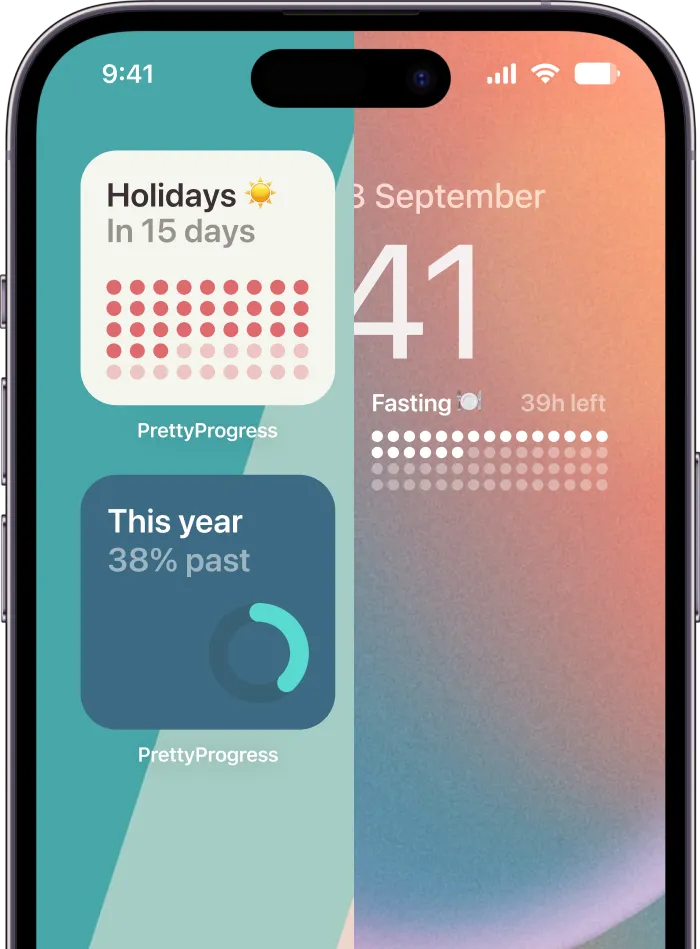
Here’s a visual example of the relationship between the iPhone app and the watch companion:
Setting Up Watch Complications and Lock Screen Widgets
A complication is more than an app shortcut. It’s a small, persistent surface that can show progress before you decide whether to act. If you’re unfamiliar with the term, you can find watch complications explained before choosing a face and slot.
On the Apple Watch, press and hold the current face, tap Edit, then swipe to the complication layout. Tap the slot you want to change and browse the available modules. Choose the Pretty Progress ring or grid option if it’s available, then select the habit or tracker you want visible.
Use the largest slot that fits naturally into your routine. A tiny corner tile may work for a single ring, but it’s a poor choice if you need to distinguish several habits. Don’t cram every item onto the face. The point is recognition at a glance, not turning the watch into a dashboard.
Three placements worth testing
- Modular face corner: Good for a single habit you check often.
- Infograph sub-dial: Useful when the ring needs stronger visual presence beside other information.
- Rectangular Lock Screen medium widget: Helpful when you want the same state visible on the iPhone before opening it.
On the iPhone, press and hold the Lock Screen, tap Customize, choose the Lock Screen, and tap the widget area. Add the matching Pretty Progress widget and select the same habit shown on the watch. Matching the two surfaces reduces interpretation. A completed ring on the wrist should look completed on the phone too.

Test the setup by completing one habit on the watch. Wait briefly, then check the iPhone widget and the main app. If only one surface changes, don’t immediately rebuild the habit. First check the connection, background refresh, and sync settings.
If your goal is a timer or deadline rather than a yes-or-no habit, learn how to add a countdown widget on your Apple Watch. That distinction matters because a countdown can cue preparation, while a habit check records the behavior itself.
Customizing Themes, Colors, and PRO Visual Controls
Visual choices affect whether you can understand the cue quickly. Treat the theme as part of the behavior design, not as decoration you need to perfect before starting.
Choose based on where you’ll use the watch:
- Gym or outdoor lighting: Use a high-contrast palette and a larger ring or number.
- Bedside checking: Choose a dimmer, restrained style that won’t feel aggressive at night.
- Planning and sharing: A softer or more colorful theme can make a monthly progress view easier to read and more personal.

On the iPhone, open Settings > Pretty Progress and select a base theme. Then adjust the accent color for each habit if the app supports per-habit styling. Give hydration, meditation, and movement different visual identities so you can tell them apart without opening a menu.
Turn on Dim Mode for nighttime wear if a bright face makes you ignore the watch. Bold Streak Numbers can help when the watch is held at arm’s length, especially if the ring alone doesn’t tell you what remains.
PRO controls can be useful when they solve a real visibility problem. Custom icons can shorten recognition, per-event color rules can separate different types of progress, and photo backgrounds can make the iPhone view feel more connected to a personal goal. Check each setting on both devices, because some visual controls may remain iPhone-only while the watch uses a simplified mirrored presentation.
A useful constraint: Pick one default theme for the first week. You can change it later, but constant styling decisions compete with the habit you’re trying to observe.
Building Habits That Actually Stick on Your Wrist
More notifications don’t automatically create more consistency. The Apple Watch is strongest when it handles a micro-habit, a short timer, or a one-tap completion. It’s less suitable for planning a full routine, writing a journal entry, or deciding what the habit should mean.
Good watch-first examples include drinking water, taking medication, starting a breathing exercise, correcting posture, or recording a one-line gratitude note. Open the app, tap once, and move on. Use the iPhone for creating the habit, reviewing patterns, changing schedules, and writing anything that requires attention.

Cue the action, not just the clock
Schedule reminders around an existing anchor. “After coffee” is easier to remember than an arbitrary time because the first action already exists. “Before lunch” can work better than a series of alerts that arrive while you’re in meetings.
Start with two reminders for a habit, not a flood of prompts. One can arrive near the anchor, and another can act as a recovery cue later. If you keep dismissing both, change the timing or reduce the habit rather than adding more alerts.
This approach fits what researchers observed about Apple Watch use. In a 2024 study of 330 participants, 80.6% reported regularly tracking fitness or health and wellness activities with the watch, and 75% said they checked or used it four to five times per day, according to the study on Apple Watch adoption and nudging behavior. Frequent access creates opportunities for useful cues, but it also creates opportunities for noise.
For people comparing devices as part of a broader health routine, a guide to finding your ideal fitness watch can help separate tracking features from habit design.
Recover without throwing away the record
When you miss a day, tap the missed cell and decide what happened. If you completed part of the action, log the partial completion if the app supports it. If you did nothing, mark it as missed or skipped instead of inventing a perfect record.
Then reduce the next target. A shorter breathing session or a smaller reading goal keeps the chain connected to reality. A streak is feedback about a system, not a verdict about your character.
Use this quick test for each new habit:
- Watch-first: The action takes one glance and one tap.
- Phone-first: The action needs planning, notes, choices, or reflection.
- Hybrid: The iPhone defines the routine, while the watch records the completion.
Quick Fixes for the Most Common Apple Watch Problems
Most first-week problems come from stale complications, permissions, or a sync handoff between the iPhone and watch. Fix the simplest layer first, then move toward reinstalling the watch companion.
| Symptom | Two-step fix |
|---|---|
| Complication shows a blank tile | Remove the complication and add it again. Then open the watch app once to refresh its data. |
| Complication doesn’t refresh after midnight | Toggle Background App Refresh off and on. If it remains stale, replace the complication temporarily and re-add it. |
| Watch app crashes on launch | Restart the Apple Watch and iPhone. If the crash returns, reinstall the watch companion without deleting the iPhone app. |
| Sync stalls between iPhone and Watch | Keep both devices nearby with Bluetooth enabled. Open the iPhone app, then launch the watch app and wait for the log to reconcile. |
| Streak counts don’t match across devices | Confirm that both devices use the same iCloud or account state. Log one test completion on the iPhone and check whether the watch follows. |
| Watch face reverts after a restart | Recreate the face configuration and save it as a separate face. Check that the intended complication is installed on the watch. |
| Notifications arrive silently | Review the app’s sound and haptic settings. Then check Focus mode and the watch’s silent or theater settings. |
A blank tile usually means the face is pointing at an unavailable or stale module. A mismatched streak is different. It usually indicates that the devices recorded different local states, so checking permissions and sync is more useful than repeatedly changing the face.
If both devices still behave inconsistently after 48 hours, reinstall the watch app before touching the iPhone installation.
Your Two-Week Habit Plan and What to Do Next
Use the first two weeks as a controlled reset, not a promise to become perfectly consistent. Apple’s Heart and Movement Study analysis found that, among roughly 100,000 consistent Apple Watch wearers, more than 60% increased daily exercise minutes by over 10% during the first two weeks of January, while about 80% of those who improved maintained the gain through the second half of January; 90% of that subgroup still held the increase through February and March, as reported in Apple’s analysis of staying active in the new year. The useful lesson is not that every habit will follow the same pattern. It’s that a short reset window needs repeated reinforcement.
Start with three habits and assign each one a natural visual moment:
- Morning: Check the complication after brushing your teeth.
- Midday: Log movement, hydration, or a brief breathing pause near lunch.
- Evening: Review the day while winding down.
On Day 1, write down where logging felt awkward. Did the complication make sense? Was the reminder too early? Did you need the iPhone instead of the watch?
On Day 7, audit the streaks. Prune one habit if the list feels noisy, or add one only if the original three are easy to recognize. Don’t treat a crowded dashboard as progress.
On Day 14, review missed days without punishment. Seasonal lapses are part of the design problem. Apple’s analysis noted that exercise levels typically dipped in November and December before rebounding, so plan a restart cue for busy or disrupted periods instead of relying on motivation to return by itself.
Finally, enable one PRO visual feature that matches your goal, rotate the complication slot occasionally so it doesn’t become invisible through familiarity, and save this troubleshooting section for the next sync hiccup. For movement-related goals, be cautious with calorie-based decisions. A review of 56 validation studies reported mean absolute percentage errors of 4.43% for heart rate, 8.17% for step counts, and 27.96% for energy expenditure, with accuracy varying across activities, according to the Apple Watch validation review. Use observable actions such as steps, stand prompts, or completed habits as your primary signals.
Your streak is data about the system you built, not a definition of who you are.
Pretty Progress lets you create customizable countdowns, progress bars, widgets, and Apple Watch complications for habits, deadlines, routines, and other goals. Set up one tracker on your iPhone, mirror it to the surfaces you already check, and visit Pretty Progress to make your first wrist-based cue today.