
September 14, 2026
Android Lock Screen Icons How to Customize and Add Widgets
Learn how to customize Android lock screen icons, shortcuts and widgets step by step, including version differences and Pretty Progress widgets.
You glance at your phone while coffee brews, expecting to see a useful reminder. Instead, the lock screen shows a few tiny dots, an unfamiliar app icon, and no clear clue about what needs your attention. The phone is secure, but it isn’t helping you decide whether to interact with it.
Android lock screen icons can do more than signal that an app sent something. With the right shortcuts, notification settings, and a carefully chosen widget, your locked phone can show the time, a task deadline, a progress goal, or a quick path to the camera and flashlight. The exact controls vary between Pixel phones, Samsung Galaxy devices, Android versions, and user settings, so the trick is knowing which layer you’re changing.

This guide starts with the basics, then moves into tap-by-tap customization. You’ll learn how notification icons differ from shortcuts, where widgets fit, why Android 16 and One UI 7 can make alerts feel too small, and how to build a lock screen that stays glanceable without becoming noisy.
Table of Contents
- Why Your Android Lock Screen Icons Matter More Than You Think
- What You Can Customize on Android Lock Screens Today
- How to Change Android Lock Screen Icons and Shortcuts
- How to Add Widgets to Your Android Lock Screen With Pretty Progress
- Making Lock Screen Icons Readable When Android Defaults to Minimal
- Keep Your Lock Screen Useful and Clutter Free
Why Your Android Lock Screen Icons Matter More Than You Think
A lock screen is the first surface you see after picking up your phone. That makes every icon a decision about what deserves attention before you reach your home screen. A camera shortcut can help you capture a moment quickly, a flashlight icon can save you from searching through the notification shade, and a progress widget can keep a deadline visible without turning into another distracting app session.
The confusion usually starts because people call several different things “lock screen icons.” A notification icon represents an app alert. An app shortcut is a control placed on the lock screen, often near a bottom corner. A widget is a larger information surface that can show context, such as a countdown or progress state. These elements may look related, but Android manages them through different settings.
Practical rule: If an icon tells you that something happened, treat it as a notification. If tapping it starts an action, treat it as a shortcut. If it shows changing information at a glance, treat it as a widget.
Android’s design has changed repeatedly. Android’s lock screen history records several important steps, including the gesture-based design introduced with Android 2.0, the tab approach in Android 2.1, the padlock interaction in Android 3.0, direct camera access in Android 4.0, Google Search access in Android 4.1, and lock screen widgets in Android 4.2. Those changes show why instructions from an older phone can look completely wrong on a newer one.
A small dashboard for real life
Consider a student heading to class. A tiny messaging icon may not answer the useful question, which is whether an assignment is due soon. A clear countdown widget can answer that immediately. A professional may prefer a calendar or project reminder, while someone who takes frequent photos may value the camera shortcut more than any notification preview.
The best layout depends on what you need to know before you access your device. You don’t need every app represented. You need a few deliberate signals that support your day.
Android lock screen widgets have also had an uneven history. Google introduced them with Android 4.2 Jelly Bean in 2012, removed them in Android 5.0 Lollipop in 2014, and brought them back for phones with Android 16 QPR2, where widgets can be pinned to swipeable pages directly to the right of the main lock screen interface, as documented in coverage of the Android lock screen widget return. That return makes the lock screen more useful, but it also means your available options depend heavily on your phone’s software.
Customization is reversible. You can replace a shortcut, reduce notification detail, remove a widget, or restore the previous clock style without changing your personal files. Start with one useful change, lock the phone, and check what appears before building a more elaborate setup.
What You Can Customize on Android Lock Screens Today
Think of Android lock screen customization as three layers. The first layer contains shortcuts, the second contains widgets, and the foundation contains system controls, including the clock, notifications, and security behavior. Your phone may expose all three, or it may limit one of them through its Android version or manufacturer interface.

Shortcuts are action icons
Shortcuts usually sit near the lower part of the lock screen. Depending on the device, you might assign the camera, flashlight, a wallet function, or another supported app. Some phones require a press or swipe rather than a simple tap to prevent accidental activation in a pocket.
These icons are useful when the action matters more than the information. A camera shortcut starts the camera. It doesn’t tell you whether a meeting is approaching or whether a habit target is complete.
Widgets provide context
Widgets occupy more space because they show information instead of only identifying an app. On supported Android 16 QPR2 phones, lock screen widgets can be pinned to swipeable pages to the right of the main lock screen. That gives you room for glanceable content while keeping the primary lock screen relatively clean.
Older phones may not offer native lock screen widgets at all. A supported third-party lock screen widget app or launcher can provide an alternative, but its controls and security behavior won’t necessarily match Pixel or Samsung settings. Before installing anything, check whether the tool supports your Android version and whether it requires notification access, accessibility access, or another permission.
System controls set the boundaries
The clock style, wallpaper, notification privacy, screen lock, and always-on display determine how the other elements behave. A secure lock screen can hide sensitive content even when the app is allowed to send notifications. A manufacturer can also rename settings or place them in a different menu.
For broader Android customization ideas, you can review this guide to customizing an Android home screen. Home screen widgets and lock screen widgets serve different jobs, so don’t assume a widget available on the home screen will automatically appear while the phone is locked.
Why two phones can show different icons
Android notification visibility uses three levels: public, private, and secret, according to Android’s notification guidance. Public notifications can appear fully on a secure lock screen. Private notifications can show the app name and icon, with optional non-sensitive text, while secret notifications stay hidden entirely.
OEM skins and user settings can override the presentation, so a setup that works on a Pixel may look different on a Samsung Galaxy. If an icon is missing, check the app’s notification permission, the lock screen notification setting, the notification category, and whether the phone is currently in a stronger security state. Test while the phone is locked, not only from the settings preview.
How to Change Android Lock Screen Icons and Shortcuts
Before editing shortcuts, make sure you have a screen lock configured. A PIN, pattern, or password gives Android the security context it needs for lock screen controls, and some shortcut options won’t appear until the device is protected.
The names below can differ slightly by software release, but the path is usually close.
On stock Android and Pixel phones
Start with the lock screen editor:
- Open Settings.
- Tap Wallpaper & style.
- Choose Lock screen.
- Look for Shortcuts, Lock screen shortcuts, or the pencil-shaped edit control.
- Select the left or right shortcut slot.
- Choose an available action, such as Camera or Flashlight.
- Save the design, then lock your phone and test both icons.
The preview may show the icon without explaining the required gesture. Try the shortcut from the actual locked screen, and check whether it needs a tap, swipe, or press. If the phone asks for authentication before opening an app, that’s expected on some devices. The shortcut can remain visible while the content stays protected.
On Samsung Galaxy phones
Samsung places these controls inside its Lock screen editor:
- Open Settings.
- Tap Lock screen.
- Tap the lock screen preview or Edit.
- Select one of the bottom shortcut positions.
- Tap the existing icon.
- Pick another supported shortcut or app.
- Tap Done, then lock the phone to confirm the result.
Samsung’s One UI layout can differ from stock Android, and the available choices may depend on the installed apps. If you don’t see a custom app in the list, the app may not offer a supported lock screen shortcut. In that case, use a notification or widget route instead of forcing the app into a shortcut slot.

Adjust notification icon behavior
Shortcut icons are only one part of the lock screen. To change notification visibility on a Pixel-style interface, open Settings, choose Notifications, then look for lock screen notification controls. On Samsung, open Settings, tap Notifications, and inspect the lock screen options, including the notification style and whether content is shown.
Choose based on the information you need:
- Icon-only presentation keeps the screen quiet, but you’ll need to access the phone to understand the alert.
- Compact previews provide some context while reducing visual clutter.
- Full notification cards are easier to scan, but they can expose more information and occupy more space.
For sensitive apps, use private or secret behavior where appropriate. If an app must appear without revealing its content, sanitized fallback text is safer than displaying the full message. Remember that the app can define notification visibility, while your phone’s settings and manufacturer skin can still affect the final result.
Test with the screen locked and the phone unattended. A settings preview can’t always show the same privacy behavior as a real secure lock screen.
Grant notification permission when an app asks for it, and review battery settings if a widget or reminder stops updating. Don’t disable your existing lock method while testing. If you dislike the new layout, return to the same editor and restore the original shortcuts.
How to Add Widgets to Your Android Lock Screen With Pretty Progress
A shortcut tells you what you can do. A widget tells you where something stands. That distinction matters when you want a deadline, event, fasting window, or personal goal visible before you open an app.
On phones that support the newer lock screen widget experience, begin from the lock screen editor. Open Settings, choose Wallpaper & style or Lock screen, open the lock screen customization screen, and look for a widget area or an option to add a page. On Android 16 QPR2 phones with the feature available, widgets can be placed on swipeable pages directly to the right of the main lock screen.
Build the information first
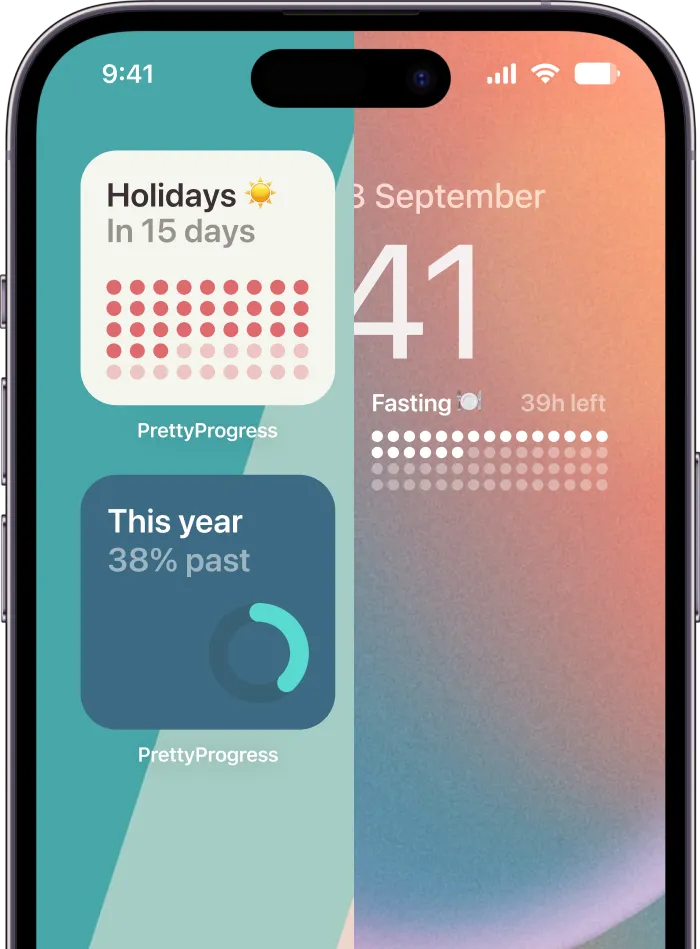
Install Pretty Progress, then create the countdown or progress display you want to see. Choose a start date and end date, select the event or goal, and adjust the design so the most important information remains readable at a glance. A short exam countdown, a project deadline, a movie release, or a progress bar for a personal milestone can all work, provided the label is brief enough for the available space.
The app supports configurable themes, colors, gradients, bar sizes, shapes, layouts, and icons. You don’t need to use every option. Begin with a clear background and strong contrast, then add visual detail only if it helps you recognize the widget quickly.

Pin the countdown to the lock screen
Follow the app’s instructions for adding countdown widgets to an Android lock screen, then return to the system lock screen editor. Tap the widget area, select the Pretty Progress countdown you created, and place it on the available page. The wording may differ by phone, but the sequence is usually: create the widget in the app, open the lock screen editor, choose the widget, and confirm the placement.
If the widget doesn’t appear, check the basics in order:
- Confirm the countdown exists inside the app.
- Confirm the app has permission to send notifications if its setup requests that access.
- Confirm the phone supports the lock screen widget route you’re using.
- Check whether battery optimization is stopping background updates.
- Lock the phone and swipe to the widget page rather than checking only the main lock screen.
Keep the layout glanceable
A widget should answer one question quickly. “How long until the exam?” is clearer than a crowded panel containing several unrelated goals. Use the main lock screen for the clock and essential shortcuts, then place supporting progress widgets on the adjacent page when your device provides that layout.
On older Android versions, native lock screen widget support may be absent. A compatible launcher or third-party lock screen tool can offer another route, but read its privacy and permission screens carefully. Lock screen access is sensitive because it can affect what appears before authentication.
Pretty Progress can also sit on the home screen when your phone doesn’t support the same lock screen widget behavior. That fallback still preserves the visual reminder, while the lock screen remains focused on shortcuts and privacy.
Making Lock Screen Icons Readable When Android Defaults to Minimal
Many users aren’t trying to hide notifications. They want to understand them without accessing their device. Recent Android 16 and Samsung One UI 7 experiences increasingly use tiny icons, dots, or compact chips instead of full notification cards, according to Samsung-focused coverage of reduced lock screen notification detail. The result is a cleaner display that can make reminders harder to interpret.
Icon-only versus full information
Icon-only presentation works well for low-priority alerts. A social app, game, or shopping service can remain represented without taking over the screen. The same treatment is less useful for a deadline, medication reminder, travel update, or task that needs immediate context.
Use a simple decision test:
| Lock screen treatment | Best for | Main tradeoff |
|---|---|---|
| Icon or dot | Low-priority activity | You won’t know the message context |
| Compact chip | Alerts you recognize quickly | Details may still be abbreviated |
| Full preview | Time-sensitive or task-based reminders | More visual and privacy exposure |
| Widget | Stable goals and changing progress | Requires supported widget access |
Open Settings, then Notifications, and inspect the lock screen notification style. On Samsung, look for the lock screen notification controls and style options. On Pixel-style Android, look for options that control whether notifications appear and whether sensitive content is shown.
Give important information a dedicated surface
A notification is event-driven. It appears because an app sent an alert. A widget is goal-driven. It remains available because you want to monitor something, even if no new notification arrived.
That makes a progress bar a useful alternative for a deadline. Rather than waiting for an app to send repeated reminders, you can place the relevant status on a lock screen widget page when your phone supports it. For a simpler visual reference, a customized digital clock and date display can make the primary lock screen easier to scan.
Minimalism is useful when it removes noise. It becomes a problem when it removes the answer you picked up the phone to find.
Test privacy and readability together
After changing the style, lock the phone and view it from a normal distance. Check whether the icon has enough contrast against the wallpaper, whether the label is understandable, and whether sensitive text stays hidden. Repeat the test with the phone’s secure lock enabled, because the public, private, and secret visibility levels can produce different results.
If the same notification behaves differently on a Pixel and a Samsung Galaxy, don’t assume either phone is broken. OEM skins and user settings can alter the presentation. Keep essential reminders in a widget when possible, and reserve full notification previews for alerts where context matters more than visual restraint.
Keep Your Lock Screen Useful and Clutter Free
A useful lock screen doesn’t need to show everything. It needs to show the few things that help you make the next decision quickly.
Review your setup whenever your priorities change:
- Keep shortcuts intentional: Use the camera, flashlight, wallet, or app action you reach for.
- Separate alerts from goals: Let notifications report events, and use widgets for ongoing progress.
- Protect private content: Choose public, private, or secret visibility according to the information each app handles.
- Check after updates: Android and manufacturer interfaces can move settings or change default presentation.
- Test the locked view: Confirm readability, gestures, and privacy on the actual secure lock screen.
- Remove stale widgets: If a goal no longer matters, delete it instead of letting the screen become visual background noise.
If an icon stops appearing, check notification permission, lock screen visibility, battery restrictions, and the app’s own settings before rebuilding the entire layout. A small, focused arrangement is easier to maintain than a screen packed with every available shortcut and alert.
Pretty Progress offers customizable countdown and progress widgets for goals, events, and deadlines, giving Android users another way to keep important context visible alongside their lock screen icons. Visit Pretty Progress, create one countdown that matters to you, and add it to your supported lock screen or home screen for a clearer daily reminder.