August 6, 2026
How to Plan a Welcome Home Party That Actually Feels Good
Plan a welcome home party with confidence using our step-by-step guide, real timelines, budget tips, and ideas for food, decor, and guest management.
You’re probably dealing with a real-life homecoming, not a magazine spread. Someone’s coming back after travel, deployment, school, treatment, or a long stretch away, and you want the moment to feel warm without turning the house into a stressful production. The best welcome home party starts with the person who’s arriving, then bends to the realities of your space, your budget, and how much energy everyone has.
A welcome home gathering can be as simple as sharing a favorite meal around the kitchen table. Choose a few thoughtful touches that help the returning person settle in, and keep the plan manageable for everyone involved.
Table of Contents
- Why Welcome Home Parties Need More Thought Than They Get
- Your Countdown Timeline From One Month Out to the Day Before
- Guest List, Invitations, and Knowing When to Keep It Small
- Food, Decor, and Activities at Three Effort Levels
- The Final 24 Hours and the Day-Of Run Sheet
- Budget Realities and the Countdown Widget That Builds Hype
Why Welcome Home Parties Need More Thought Than They Get
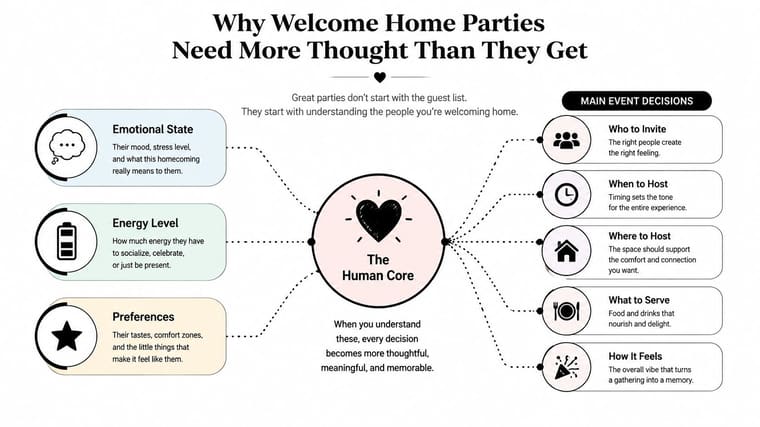
The easiest version of this party is also the one that flops. Someone comes through the door after a red-eye, expecting a quiet hug and a shower, and instead finds a crowd, loud music, and a table full of people they have to perform gratitude for. A different person might come home after months away and want a room full of faces, a toast, and a camera roll’s worth of hugs. Those are not the same event.
Start With Consent, Not Surprise
A welcome home party should never be built on the assumption that surprise equals joy. If the returning person is exhausted, private, or overstimulated, a surprise can feel like pressure dressed up as affection. That’s why the first planning question is simple, who is this for, and what kind of arrival will help them feel held?
There’s a big difference between “I want to celebrate you” and “I want to put on a show.” The first honors the guest of honor. The second turns the moment into a host project. A calm check-in beats a big reveal every time.
Practical rule: if you don’t know whether the person wants a public moment, ask before you plan the guest list.
Broader hosting guidance becomes useful, especially advice that emphasizes calm, quick hospitality and clear expectations. If you’re also building a themed drink table or serving wine, hosting tips for wine lovers can help you think through the flow without turning the gathering into a tasting competition.
Match the Format to the Person, Not the Pinterest Board
One returning guest may want a few close friends, soft lighting, and an early end time. Another may want a bigger crowd and a loud kitchen full of people talking over each other. If the person is coming back from travel, deployment, hospitalization, or a difficult stretch, the safest default is a smaller room and a simpler schedule.
That’s the whole standard. Match the room to the person’s energy, then set the rest of the plan around that limit. If you need a planning framework that stays organized without getting theatrical, the structure in event planning best practices lines up well with this kind of controlled, low-drama hosting.
The best welcome home party feels like relief. It gives the returning person permission to arrive without performing, and it gives the host a clear boundary before the first invite goes out.
Your Countdown Timeline From One Month Out to the Day Before
A good timeline keeps the event from becoming a pile of last-minute decisions. The work gets easier when you spread it out, and the countdown starts working for you instead of against you. Once the date is chosen, put it somewhere visible, then keep nudging yourself back to it with a countdown widget or reminder on your home screen so the party stays real instead of drifting into the background.
One Month Out Sets the Shape
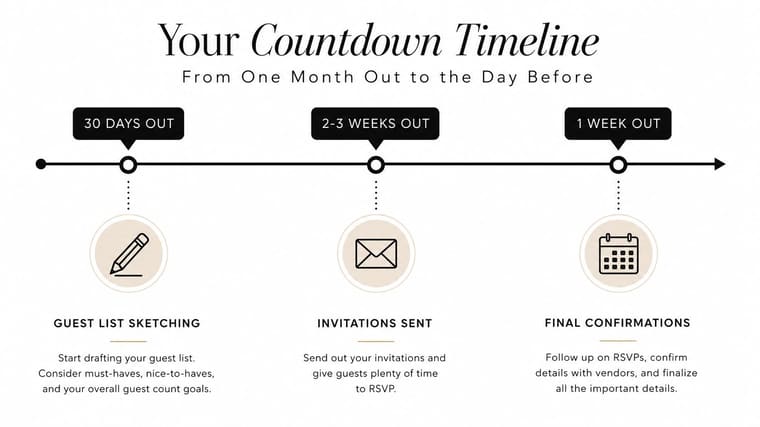
About 30 days out, sketch the guest list and decide how much house you want to use. This is also the point to think through food style, seating, and whether the event should feel like a drop-in or a sit-down visit. A planning checklist like the one in ABC Hire’s event planning guide is useful here because it keeps the order of tasks visible instead of forcing you to remember everything at once.
At this stage, don’t shop for decor. Lock the date, decide the tone, and figure out whether you’re hosting in the living room, kitchen, backyard, or a mix of spaces. If the guest of honor needs downtime, build that into the plan now, not later.
Two to Three Weeks Out Is Invitation Time
For casual gatherings, invitations usually work best 1 to 3 weeks before the event, and larger or more formal events benefit from printed or e-invitations because they improve headcount planning and reduce uncertainty. That lead time matches the kind of planning rhythm used in a stepwise approach where guest lists happen about 30 days out and RSVP checks happen about 7 days out (welcome home party planning guidance).
When the invite goes out, update your countdown widget again. That small ritual matters more than it sounds like it should. It turns the date from “something I should remember” into “something I’m already building toward.”
One Week Out Is About Confirmation
The final week is for RSVP follow-up, grocery planning, and cutting anything that feels fussy. The guest list should be mostly locked by then, and the menu should already be simple enough that you’re not inventing it on Thursday night. If you want a model for keeping track of moving parts, this event planning timeline is the kind of visual prompt that helps hosts stay on track without spreadsheets taking over the night.
Keep the last week boring on purpose. Boring means fewer mistakes, fewer forgotten items, and fewer reasons to panic on the day before.
By the morning of the party, the countdown widget should already feel like a cue to finish, not start.
Guest List, Invitations, and Knowing When to Keep It Small
A welcome home party only feels generous if the room can hold it, and if the person coming home can handle the level of attention. That starts with the question people rush past, who needs to be there, and who is only there because they always get invited. If the returning person is tired, private, or overwhelmed by noise, a smaller guest list is not a downgrade. It is the better plan.
Build the List From the Room Backward
Start with the space, not the invite pile. A typical home with one main living area can comfortably hold about 10 to 14 people indoors (The Bash). That gives you a realistic ceiling when you want people to move, talk, and settle in without everyone standing shoulder to shoulder.
RSVPs rarely come back perfectly clean. A practical planning rule is to expect some drop-off, which is why hosts usually invite a little above the number they want in the room. That is the kind of math that keeps a living room from turning into a bottleneck and keeps you from paying for food nobody can reach.
If your living room fits 12 comfortably, do not invite 25 people unless you are also using the yard, garage, or another real gathering space. If the guest of honor wants only close friends and family, follow that preference and leave the extended network out of it.
Capacity Planning Snapshot for a Home Welcome Party
| Home Size / Layout | Comfortable Indoor Capacity | Invite Target |
|---|---|---|
| Typical home with one main living area | 10–14 people | A little above the number you want present, to cover normal RSVP drop-off |
Keeping track of responses is its own job, and it gets messy fast when people reply vaguely or bring surprise plus-ones. A practical reference for keeping confirmations organized is mastering your party RSVP list. Use it as a sanity check if the invite list starts to sprawl, because even a small home party gets harder to manage once the “maybe” pile grows.
Use the Text Messages to Set Boundaries Early
A short check-in with the guest of honor prevents awkward overplanning. Something as plain as, “I’m putting together something small for when you get back. Would you want a few people there, or should we keep it just family?” gives you a clear answer before you start inviting people who should not be on the list.
For close friends, keep the invite warm and direct. “We’re gathering at the house to welcome you back and keep it low-key. We’d love to have you there if you’re free.” For the person who will not fit in the room, be honest. “We’re keeping this one very small because of space, but we wanted to tell you first in case we can celebrate separately.”
That kind of clarity saves time, money, and hurt feelings. It also gives the returning person a cleaner experience, which matters more than trying to squeeze in one more guest.
Food, Decor, and Activities at Three Effort Levels
Most party advice dumps ideas into the same bucket and calls it flexible. It isn’t. A tired host needs a plan that fits the hour they have, not the fantasy version of the evening. The trick is to pick the effort tier first, then buy and prep only what belongs in that lane.
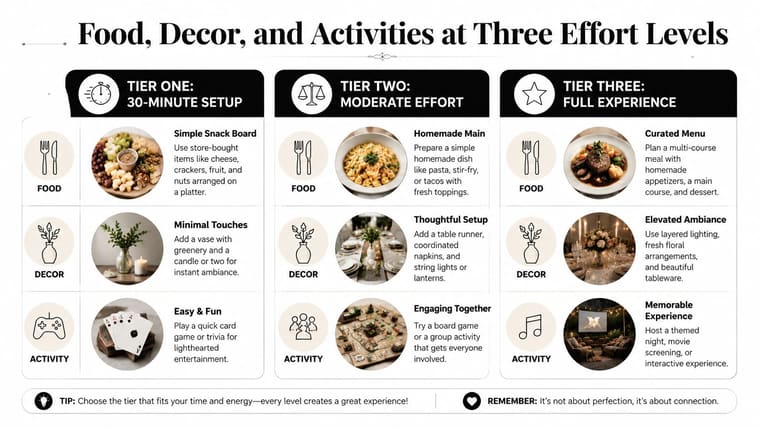
Tier One Keeps It Fast and Honest
Tier One is the 30-minute setup. You clean the main room, set out store-bought snacks, pour drinks, and use a playlist instead of a program. This is the right move when the guest of honor is jet-lagged, when the budget is tight, or when the house itself is doing most of the work.
Food should be easy to grab and impossible to mess up. Think chips, fruit, dips, dessert from a bakery case, or one tray of something familiar. Decor can stop at flowers, clean surfaces, and one sign by the door. Activities can stop at conversation.
Tier Two Gives the Party a Shape
Tier Two adds a simple menu, a little theme, and one structured activity. A memory card table works well here, as does a photo wall with printed snapshots and tape. It feels intentional without forcing people into a performance.
This is also the tier where a calm toast can work, as long as it stays short. Long speeches are a bad trade when the returning person is already emotionally maxed out. Loud games are worse. Anything that turns the guest of honor into a performer usually backfires.
A quiet room nearby matters more than another decoration. If someone needs five minutes away from the crowd, the party stays humane.
Tier Three Is the Full Spread
Tier Three brings in catering, custom details, and a planned toast with enough structure that nobody is improvising under pressure. It makes sense for larger reunions or moments that are already highly emotional, because the host can hand off some work and keep the event moving.
The money in this tier usually goes where guests interact: food, drink, seating, and cleanup help. That’s the part worth paying for. Skip anything that creates maintenance without adding comfort. A giant DIY centerpiece won’t save a party that runs out of ice.
The Final 24 Hours and the Day-Of Run Sheet
The day before should feel like setup, not celebration. If you’re still shopping for basics that morning, the party is already stealing attention from the people in the room. The cleanest run sheet starts with the boring stuff first, then protects the last 30 minutes so nobody is still moving chairs when guests arrive.
Day Before
Go for the short grocery and ice run early enough that you’re not competing with your own stress. After that, do the furniture shuffle and open the main traffic path between the door, drinks, food, and seating. If the room feels crowded when you walk it alone, it’ll feel worse when people show up with bags, coats, and gifts.
This is also the time to label zones. One spot for coats, one for food, one for quiet conversation, one for parking notes if street parking is awkward. If the guest of honor or any neurodivergent attendee needs a low-stimulation place to step away, set up a quiet room or at least a closed-off corner before anyone arrives.
Day Of
The morning should start with the setup window, not with decoration decisions. Put drinks on ice, get the bathroom ready, set out napkins, and make sure the welcome drink is already poured or easy to grab. By the time the final touches happen, the house should already be functional.
A simple run sheet helps:
- Morning setup: Clear surfaces, set seating, finish food prep.
- Final touches: Light cleaning, music, napkins, garbage bags, and a quick walk-through.
- Guest arrival time: Be ready 30 minutes early, then stop making changes.
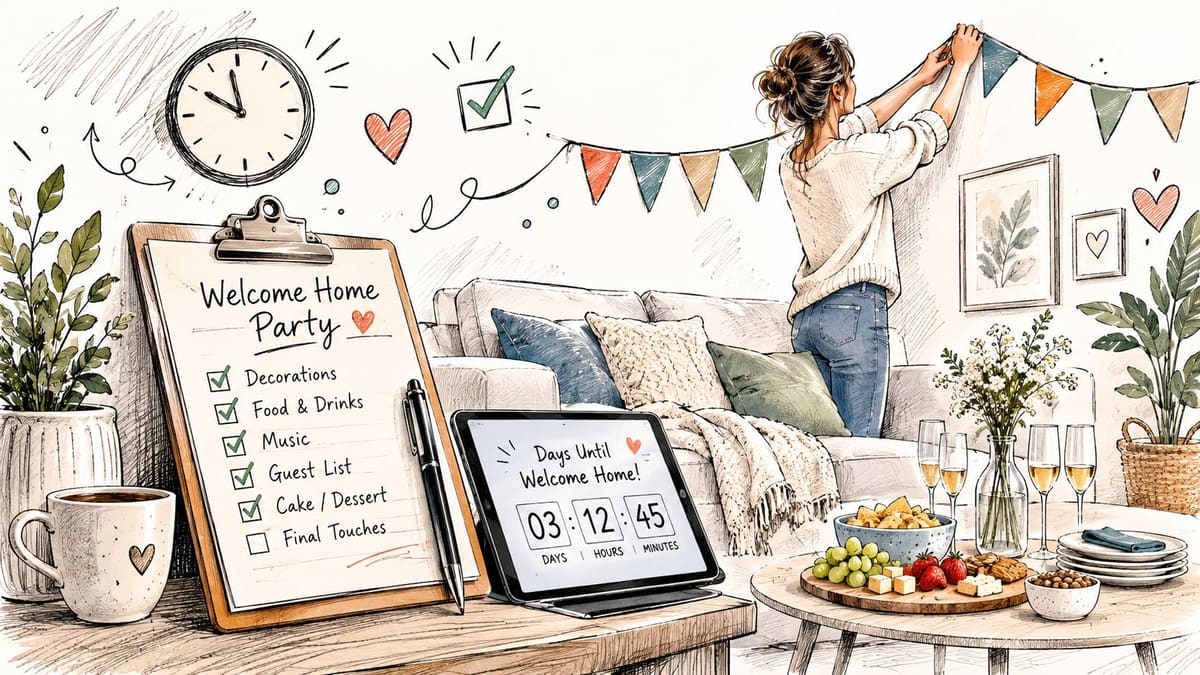
If you want a planning tool that keeps a countdown visible on the devices you check all day, this countdown clock graphic is a good reminder of how a simple visual cue can keep a date from disappearing into the week.
Do the last reset before people arrive, then stop touching the room.
When the first guest walks in, the work should already be invisible.
Budget Realities and the Countdown Widget That Builds Hype
A welcome home party does not need a huge spend to feel thoughtful. What it needs is a clear priority list. In most homes, the money shows up in food, drinks, ice, and a little cleanup help, not in decor. That’s useful because it means the most effective budget move is usually simplification, not cleverness.
Spend Where People Actually Notice
For a 20-person gathering, a low-spend version might lean on snacks you already know how to serve, a medium-spend version might add a fuller spread and a few nicer drink options, and a higher-spend version might include catering or takeout that removes stress from the host. The exact number matters less than the tradeoff, because every extra layer of decoration should be questioned against comfort, time, and cleanup.
The simplest rule is this. If a purchase doesn’t reduce friction, skip it. That applies to themed paper goods, extra signage, novelty favors, and anything that creates more work than atmosphere.
Make Anticipation Part of the Hosting Job
The countdown widget ritual is small, but it works. Set the date, pin the countdown to the home screen, and let it sit there while the week fills up. When invites go out, update it again. On the morning of the party, swap it to a progress bar or final countdown so the day feels real before the first guest knocks.
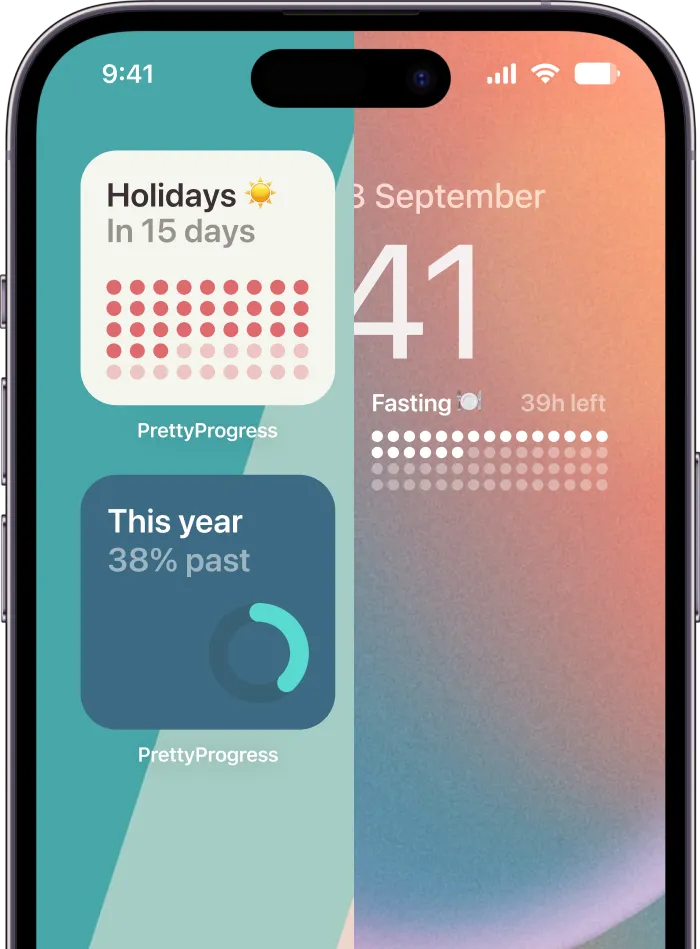
That approach fits especially well if you like keeping date-based reminders visible across devices, because Pretty Progress is built around customizable countdown and progress widgets for events and deadlines. It can sit on the Home Screen, Lock Screen, Apple Watch, or Mac, which makes it a practical option for this kind of visible planning.
What to Do After the Guests Leave
The post-party work should be short. Send thank-yous, save the photos, and ask the guest of honor one honest question about what felt good and what didn’t. That one response is worth more than any decor upgrade for the next time.
If the celebration worked, the room will feel calmer than you expected. That usually means you got the size, pace, and timing right.
If you want a cleaner way to keep a welcome home party on track, build the date into your day the moment you set it. Pretty Progress helps you turn that one event into a visible countdown on your devices, so the planning stays steady instead of disappearing under a busy week. Visit Pretty Progress and use it to keep the homecoming date front and center until the door opens.