July 23, 2026
Best Project Timeline Apps 2026: Top Gantt & Trackers
Discover the 10 best project timeline apps for 2026. Compare platform support, pricing, features, and use-case guides to find your ideal Gantt or deadline
You’re staring at a project board, three chats, a spreadsheet, and a calendar invite, and the same deadline is living in all four places with slightly different dates. That is usually when teams start looking for the best project timeline app, because the core problem is not just task tracking, it is keeping milestones, dependencies, and progress visible enough that people stop guessing. Timeline tools matter for a reason. Atlassian says knowledge workers spend an average of 31 hours each month in unproductive meetings, and Asana cites a separate study showing workers spend 60% of their time on “work about work” rather than skilled tasks. Timeline apps cut that coordination drag by making the schedule obvious at a glance, and visual planning has become so practical for teams, students, and solo planners, a trend confirmed by AppLighter’s app launch duration study which highlights the need for clear roadmaps.
The shift to cloud collaboration made that need harder to ignore. Microsoft reported that Teams reached 145 million daily active users in April 2021, up from 75 million in April 2020, and Zoom said it had 300 million daily meeting participants in April 2020. Asana said it had more than 85,000 paying customers in 2021, and Monday.com said it had over 152,000 customers by the end of 2023.
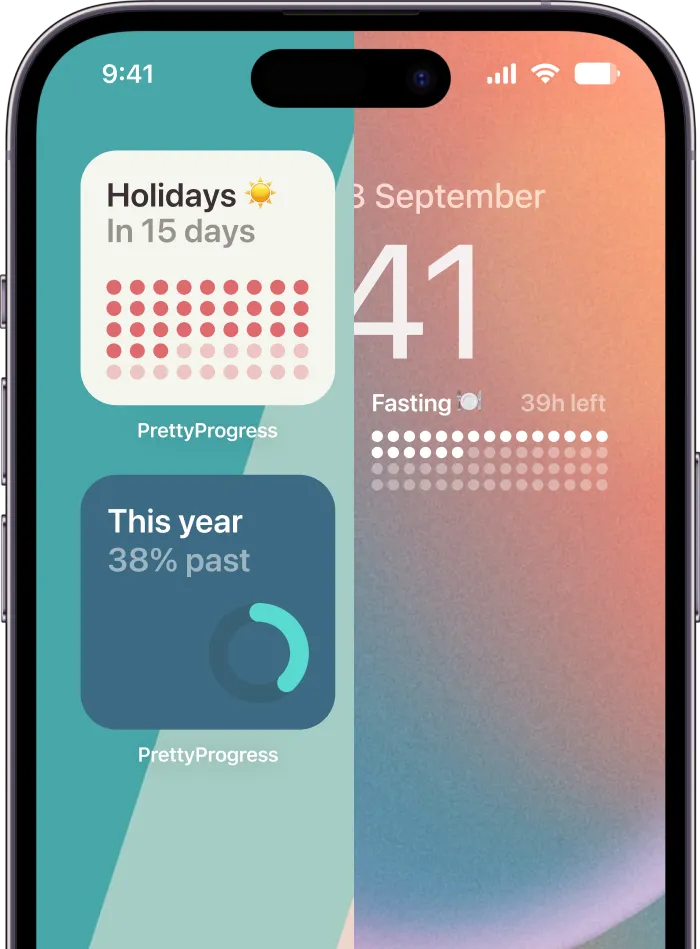
That tells you timeline planning is no longer a niche enterprise habit. It is a mainstream workflow, and the tools below reflect that shift from heavy project systems to lighter visual trackers, including a compact option like Pretty Progress for glanceable deadline tracking.
Table of Contents
- 1. Asana
- 2. Monday.com
- 3. ClickUp
- 4. Smartsheet
- 5. Wrike
- 6. TeamGantt
- 7. GanttPRO
- 8. Notion
- 9. Trello
- 10. OmniPlan
- Top 10 Project Timeline Apps Comparison
- Choosing Your Ideal Timeline Tool
1. Asana
Asana is a strong fit when a team wants timeline planning tied directly to task ownership, milestones, and dependency logic. It works best for deadline-driven groups that need the schedule to stay connected to the work, not sit beside it as a separate artifact. That matters because schedule changes happen constantly, and a timeline only helps if it moves with the project.
The biggest advantage is the way Asana keeps multiple views synchronized. You can work in List, Board, Calendar, and Timeline without rebuilding the project structure each time, which makes it easier for different people on the same team to use the format they trust most. That’s useful in cross-functional work, where one person thinks in tasks and another thinks in milestones.
Where Asana fits best
Asana is especially useful when dependency handling matters. If one task slips, the timeline can reflect the shift instead of leaving the project plan stale, which is exactly what deadline-heavy teams need from a serious timeline app. Its portfolio and reporting layers also help managers look across projects rather than treating each timeline as an isolated plan.
Practical rule: Use Asana when you need one timeline that both doers and managers can live in without losing project structure.
The trade-off is cost and complexity at the upper tiers. Advanced capabilities are not always the right fit for small teams that only need a simple visual tracker, and that’s where a lighter widget-based tool can make more sense. If your goal is to keep multiple deadlines visible without building a full operating system around them, a simpler option can be easier to sustain.
- Best for: Teams that need task-to-timeline alignment and cross-project visibility
- What works: Synchronized views, dependency management, reporting layers
- What does not: Higher-tier features can be expensive for smaller teams
- Website: Asana
2. Monday.com

Monday.com is the pick for teams that want timelines inside a highly visual work OS. It feels less like a traditional scheduling tool and more like a customizable control room, with boards, automations, dashboards, and timeline views all sitting on top of the same data. That makes it attractive when people care as much about presentation and flexibility as they do about the actual dates.
The platform’s strength is how quickly a team can shape it around its own process. Timeline and Gantt views work alongside Calendar, Table, and Board views, so you can move between planning styles without duplicating work. The Timeline column also makes it easier to connect start and end dates, which is useful when multiple people need to see schedule shifts quickly.
Why teams choose Monday.com
The marketplace is a real differentiator. If your workflow depends on templates and integrations, Monday.com gives you more room to assemble a system around your process rather than forcing your process to adapt to the tool. That’s a major reason operations, marketing, and client-facing teams gravitate toward it.
Use it when: You want timeline planning, automation, and dashboarding in one visually consistent environment.
The downside is buying clarity. Monday.com can feel fragmented because of product packaging, and pricing is often perceived as high for smaller teams. For organizations that only need simple schedule visibility, that can be too much platform for too little timeline work. For teams that want a polished, all-in-one setup, it’s still one of the most practical choices.
- Best for: Visual teams that want timelines plus automation and dashboards
- What works: Fast setup, flexible boards, broad integration options
- What does not: Buying decisions can get complicated across product packaging
- Website: Monday.com
3. ClickUp
ClickUp makes sense for teams that want one workspace to hold tasks, docs, whiteboards, goals, dashboards, and timeline planning. It is broad by design, and that breadth is the reason some teams love it and others bounce off it quickly. If your project work sprawls across multiple tools, ClickUp can collapse a lot of that into one place.
The timeline side is solid because Gantt and Timeline views connect directly to tasks, subtasks, and dependencies. Hierarchical organization through Spaces, Folders, and Lists also helps teams keep projects structured instead of dumping everything into a flat board. For PMs who need to manage several layers of work, that structure matters.
Where ClickUp earns its keep
The value is in consolidation. You can keep planning, collaboration, and reporting together instead of stitching separate apps into a workflow. Its free plan also gives teams a way to test basic scheduling before committing, which helps when the buying team is still comparing options.
A realistic concern is complexity. When a platform tries to be a work hub, feature sprawl can make simple timeline work harder than it should be. Buyers also need to review plan details carefully, because feature changes and upsells can affect what’s available at a given tier. If your team wants a clean, predictable Gantt-first experience, a narrower tool may be less frustrating.
Good fit: Teams that want to centralize planning, docs, and reporting in one platform.
Poor fit: Teams that only need a straightforward timeline and minimal setup.
- Best for: Teams that want a broad all-in-one planning workspace
- What works: Deep feature set, structured hierarchy, multiple collaborative views
- What does not: Can feel crowded and needs careful plan review
- Website: ClickUp
4. Smartsheet
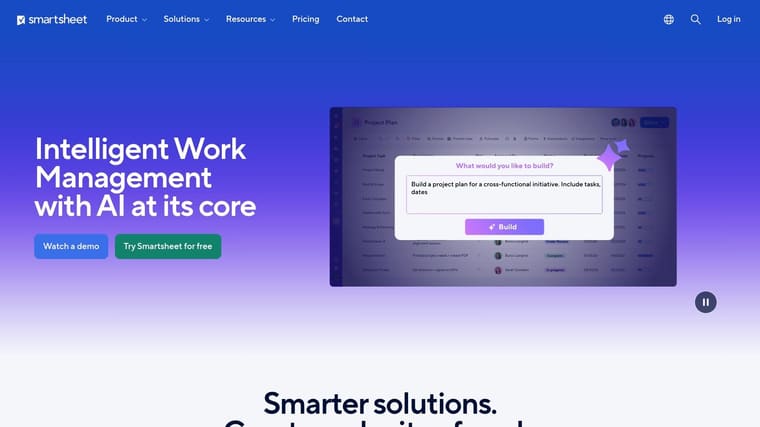
Smartsheet is the practical choice when a team likes spreadsheet logic but needs stronger scheduling than Excel can offer. It feels familiar to operations people, PMOs, and construction teams because the grid remains central, yet the Gantt layer gives the schedule real shape. That mix is why it often lands in environments where stakeholders still expect spreadsheet-style updates but the work itself needs more discipline.
Its biggest strength is portfolio visibility. You can roll work up from sheets into dashboards and reports, which helps when different teams own different pieces of the same program. The Gantt view also supports dependencies and critical-path thinking, so the timeline can show not just what’s due, but what blocks the next step.
For teams handling messy, changing workstreams, that’s the point. Smartsheet is built for schedule visibility as work changes, and its own project timeline positioning emphasizes planning schedules, adjusting timelines, and keeping progress visible. That aligns with what a best-in-class timeline app needs to do when reality shifts.
A good internal check is whether your team wants reporting first or aesthetics first. Smartsheet is not a decorative planner. It’s a working system for people who need governance, control, and a clear view of the portfolio.
If event teams need a visual way to map phases, venues, and handoffs, the timeline logic pairs well with this event planning timeline guide, especially when the schedule has to be shared across multiple stakeholders.
- Best for: Operations teams, PMOs, and spreadsheet-oriented planners
- What works: Familiar interface, reporting rollups, strong Gantt handling
- What does not: No permanent free plan, and advanced features can require add-ons
- Website: Smartsheet
5. Wrike
Wrike fits teams that need rigorous timeline control plus approvals, proofing, and analytics around the schedule. It is a serious platform for larger teams, especially PMOs and marketing groups that manage work across several functions and need the timeline to reflect more than just dates. The Gantt experience is one of its core strengths, and it is built for dependency-driven schedules.
The platform goes beyond a basic timeline by adding baselines, cross-project views, and printing or sharing options for timelines. That makes it useful when leaders want to compare plan versus reality or when a stakeholder needs a readable snapshot without logging into the system. Resource planning and request forms also help turn the timeline into part of the broader intake and execution process.
What makes Wrike different
Wrike is strongest when governance matters. Approvals and proofing reduce the chaos that often happens after a plan is built, and the reporting tools help managers see where work is sticking. That makes it a practical fit for teams where the timeline is only one layer of a broader operating model.
The trade-off is packaging complexity. Wrike’s plans can be hard to compare cleanly, and enterprise-level features are often quote-based. That means the tool is worth evaluating carefully, not casually. If your team needs a timeline system that sits inside a more controlled delivery environment, it belongs on the shortlist.
Short version: Wrike is for teams that need schedule discipline, review loops, and cross-project control in the same place.
- Best for: Larger teams, PMOs, marketing operations
- What works: Dynamic Gantt, baselines, approvals, and analytics
- What does not: Pricing and packaging can require extra diligence
- Website: Wrike
6. TeamGantt
TeamGantt is the cleanest answer for people who want Gantt scheduling without adopting a bigger work platform. It’s purpose-built, so the interface stays focused on timeline work instead of surrounding the calendar with unrelated features. That makes it a strong choice for project managers who want speed, clarity, and less setup friction.
The tool handles dependencies, milestones, and workload views without making you learn a sprawling system first. That simplicity is the selling point. If the team’s main question is “what runs when, and what blocks what,” TeamGantt gets to that answer quickly.
Why it works in real projects
Project-based pricing is one of its practical advantages. It gives teams a clearer way to scale up or down by project rather than always thinking in the logic of giant enterprise bundles. It also supports public share links and exports, which are helpful when you need to show timelines to clients or stakeholders who are outside the system.
For construction teams, the Builder Edition and Procore sync make it more relevant than a generic Gantt app. That kind of industry-specific fit is what separates a convenient tool from one that slots into daily work.
If your team is trying to keep a lot of moving projects visible without turning the tool into a second job, TeamGantt is easy to live with. For a broader visual philosophy on project tracking, this timeline visualization guide is a useful companion.
- Best for: Teams that want a straightforward Gantt-first tool
- What works: Fast setup, clean UI, shareable outputs
- What does not: Less all-in-one depth than larger suites
- Website: TeamGantt
7. GanttPRO
GanttPRO is a strong fit for small and midsize teams that want a dedicated timeline app without paying for a broad work-management stack. It stays close to the core Gantt use case, which keeps the learning curve manageable and the workflow easy to explain. That simplicity matters when you want people to update the schedule instead of avoiding it.
Its core appeal is the combination of dependencies, critical path, and resource or cost management in a cloud-first format. Exports are also practical, with PDF, PNG, XML, and Excel available, so the timeline can move into meetings, reporting, or client delivery without much cleanup. For teams that need to show the same schedule in multiple formats, that flexibility is useful.
Best use case
GanttPRO works well when you need something dedicated, not bloated. It is easy to learn, and the workflow is built around the Gantt chart rather than around a maze of optional modules. That makes it appealing to teams that want a timeline tool first and a platform second.
The limitation is ecosystem depth. You won’t get the same integration breadth or enterprise governance you’d expect from the largest suites, so it may not be the right home for highly complex organizations. But for budget-conscious teams that want a clear Gantt-centric system, it’s an efficient option.
Practical rule: Pick GanttPRO when timeline clarity matters more than having a giant app ecosystem.
- Best for: SMBs that want a dedicated, budget-conscious Gantt tool
- What works: Easy learning curve, useful exports, resource features
- What does not: Smaller ecosystem and fewer integrations
- Website: GanttPRO
8. Notion
Notion is the best fit when timelines live alongside docs, knowledge bases, and lightweight project planning. The Timeline database view turns records into a visual schedule, but it stays inside the same workspace where teams already write notes, spec documents, and content briefs. That makes it especially useful for roadmaps and editorial calendars.
The advantage is context. If a team wants the brief, the task list, the decision log, and the timeline in one place, Notion handles that elegantly. Multiple synced views also let the same data appear as a table, board, calendar, or timeline, which keeps the planning system flexible without requiring duplicate maintenance.
Where Notion breaks down
Notion is not built for heavy scheduling. If your work depends on advanced dependencies, resource leveling, or formal project controls, you’ll feel the limits quickly. It can support planning, but it doesn’t replace a full scheduling engine.
That said, for product roadmaps, content operations, and smaller teams that want a good-looking shared workspace, it works well. The timeline view is broad enough to stretch from hours to years, so it can handle both short campaigns and longer planning cycles.
Use Notion when documentation and scheduling are supposed to support each other, not live separately. If you want a planner that behaves more like a knowledge system than a PM suite, Notion belongs near the top of the list.
- Best for: Roadmaps, content calendars, and lightweight planning
- What works: Docs plus timeline in one workspace, flexible synced views
- What does not: Limited advanced PM controls
- Website: Notion
9. Trello
Trello makes sense for teams that already run on boards and want to add a timeline without changing habits. The Timeline view is available on Premium and Enterprise plans, which means the shift from Kanban to time-phased planning can happen with low friction. That matters because adoption often fails when a tool asks people to rethink everything at once.
The value is cross-board visibility and a familiar mental model. You can still work from cards while using Calendar, Dashboard, Table, and other views to understand how work stretches across time. Butler automations and Power-Ups help the boards stay active, which is useful for teams that prefer lightweight workflow automation over a heavier PM system.
When Trello is enough
Trello works best when the team’s schedule is simple and the main need is visibility, not resource management. It can be a clean bridge between task tracking and timeline planning, especially for groups already committed to board-based work. That makes it a practical option for smaller teams and departments that don’t need a complex Gantt engine.
The limitation is depth. Advanced resource management and reporting are not its strength, so larger teams may outgrow it once the planning becomes more interdependent. If you need a timeline that lives inside a simple board culture, though, Trello is often the least disruptive route.
Use Trello when: Your team already works in cards and just needs a better sense of when things happen.
- Best for: Board-first teams that want a low-friction timeline add-on
- What works: Familiar boards, easy adoption, multiple views
- What does not: Timeline is not on the free or standard tiers
- Website: Trello
10. OmniPlan
OmniPlan is for Apple-centric project managers who want real scheduling depth on macOS, iPadOS, and iOS. It is one of the most serious native options in this list, with support for Gantt charts, dependencies, constraints, resource leveling, network diagrams, and baselines. If you manage projects on Apple devices and prefer a desktop-grade planning experience, it is unusually strong.
The main appeal is control. OmniPlan gives individual PMs and small Apple-only teams a toolkit that feels closer to traditional professional scheduling software than to lightweight task apps. Offline use is also a practical advantage for people who don’t want every planning session tied to the browser.
Who should use it
OmniPlan is a fit for people who care more about the schedule itself than about broad collaboration features. It’s especially good when one project manager owns the timeline and needs to model constraints or dependencies carefully. Stakeholder exports and printing help when the plan has to move into meetings or formal reviews.
The trade-off is obvious. It’s Apple-only, so it doesn’t make sense for cross-platform teams. Collaboration is also lighter than in cloud-first PM suites, which means it’s better as a serious planning tool than as a shared operating environment.
If your workflow lives in Apple devices and you want depth without switching to a browser-only system, OmniPlan belongs on the shortlist.
- Best for: Apple-only teams and individual PMs who need advanced scheduling
- What works: Native app experience, deep control, offline use
- What does not: Not suitable for cross-platform collaboration
- Website: OmniPlan
Top 10 Project Timeline Apps Comparison
| Tool | Core features ✨ | UX / Quality ★ | Value / Price 💰 | Target audience 👥 | Standout 🏆 |
|---|---|---|---|---|---|
| Asana | ✨ Interactive Timeline/Gantt, dependencies, multi-view sync | ★★★★ polished, integrated reporting | 💰 Mid–High, advanced features on higher tiers | 👥 Deadline-driven teams & PMOs | 🏆 Tight Timeline + rules & reporting |
| Monday.com | ✨ Timeline/Gantt, Timeline column, automations & dashboards | ★★★★ very visual, highly configurable | 💰 High per-seat; complex packaging | 👥 Visual teams, ops & product | 🏆 Robust automations & marketplace |
| ClickUp | ✨ Gantt/Timeline, tasks, docs, whiteboards, automations | ★★★★ feature-rich, can be complex | 💰 Good value; Free Forever available | 👥 Teams wanting an all‑in‑one work hub | 🏆 Consolidates planning, docs & reports |
| Smartsheet | ✨ Spreadsheet-style grid + Gantt, rollups & reporting | ★★★ familiar spreadsheet UI for fast onboarding | 💰 Mid, add‑ons/higher tiers for advanced features | 👥 Ops, PMOs, construction & large portfolios | 🏆 Spreadsheet familiarity + portfolio reporting |
| Wrike | ✨ Dynamic Gantt, baselines, cross‑project views, proofing | ★★★★ enterprise-grade scheduling | 💰 Enterprise pricing; quote-based for top tiers | 👥 Large teams, PMOs, marketing orgs | 🏆 Rigorous scheduling + approvals/proofing |
| TeamGantt | ✨ Core Gantt with dependencies, milestones, exports | ★★★★ clean, simple UI | 💰 Project-based pricing, clear & scalable | 👥 SMBs & teams needing pure Gantt | 🏆 Purpose-built simplicity for scheduling |
| GanttPRO | ✨ Gantt, resource & cost management, strong exports | ★★★★ focused & easy to learn | 💰 Low per-user; tiered plans + trial | 👥 SMBs seeking budget-friendly Gantt | 🏆 Affordable, export-rich Gantt tool |
| Notion | ✨ Timeline DB view + synced views and docs | ★★★ flexible, great for docs+timelines | 💰 Freemium, good value for docs-centric teams | 👥 Product/content teams & knowledge bases | 🏆 Combine documentation and lightweight timelines |
| Trello | ✨ Kanban-first with Timeline (Premium/Enterprise) & Butler | ★★★ very low friction, easy adoption | 💰 Low for basic; Timeline requires paid plan | 👥 Kanban teams wanting simple timelines | 🏆 Minimal change to add time-phased views |
| OmniPlan | ✨ Pro Gantt, constraints, resource leveling, baselines | ★★★★ native Apple UX; works offline | 💰 Apple-only purchase/subscription | 👥 Apple-centric PMs & individual planners | 🏆 Deep, device-native scheduling on Apple platforms |
Choosing Your Ideal Timeline Tool
The right project timeline app depends less on feature count and more on how your team works. If you need full dependency control, cross-project visibility, and reporting, Asana, Wrike, and Smartsheet are the most natural fits. If you want a visual work hub with automation, Monday.com and ClickUp fit better, though both ask for more setup and more internal discipline than simpler apps.
If your main need is a clean Gantt experience, TeamGantt and GanttPRO keep the focus on the schedule instead of the surrounding software stack. If your team thinks in docs and knowledge as much as tasks, Notion is easier to fold into day-to-day work. If you already live in Trello, the Timeline view is a low-friction way to add time to an existing board workflow. If you work in the Apple ecosystem and want professional scheduling controls on device, OmniPlan is the most specialized option here.
The lighter end of the market still matters. Not every team needs a full project management suite just to keep deadlines visible. A widget-based planner like Pretty Progress can be enough when the main goal is glanceable tracking, persistent reminders, and a cleaner way to keep one deadline top of mind throughout the day.
Pick the tool people will keep open, not the one with the longest feature list. Start with the workflow pain you are trying to solve, move the timeline into one place, and keep the system simple enough that your team will use it. If you want a visually calm way to track milestones, install Pretty Progress, set one deadline, and use it for a week to see whether glanceable progress helps your day stay on track.