
August 14, 2026
How to Track Fitness Progress
How to track fitness progress: use 5 simple metrics, review weekly trends, and avoid scale-only mistakes that hide real results.
You’re working out. You’re trying to eat better. You’re showing up more often than you used to. But when you check the scale, it either barely moves or heads the wrong direction, and suddenly it feels like none of the effort counts.
That’s usually not a progress problem. It’s a measurement problem.
The simplest answer to how to track fitness progress is this: pick 3 to 5 metrics that match your goal, log them on a set schedule, and review trends instead of reacting to one number. Typical options include recording workouts after each session, checking body weight as a weekly trend, taking one body measurement such as waist, adding monthly photos, and keeping a short note on energy or recovery. That gives you a full picture without turning fitness into paperwork.
I’ve seen the same pattern over and over: the first thing people drop is not training, but logging. So the best system is rarely the most detailed one. It’s the one you can still do when you’re tired, busy, or slightly annoyed.
Good tracking is a skill. Like lifting technique or meal prep, it gets easier when you practice it. The point isn’t to collect endless data. The point is to create a clear loop: you do the work, you record a few meaningful signals, and those signals help you stay motivated or make smart adjustments.
Table of Contents
- Beyond the Scale Your Starting Point
- Ask better starting questions
- How I Picked the Best Ways to Track Fitness Progress
- Define What Progress Means to You
- Build a goal that means something in real life
- Match the metric to the goal
- Choose the Right Metrics to Measure
- Start with a small dashboard
- Comparison of Key Fitness Tracking Metrics
- Pick tools you’ll actually use
- Build Your Personal Tracking Workflow
- Design for low friction
- Turn data into a review ritual
- Establish a Cadence for Review and Adjustment
- Use the right lens for the right timeframe
- Don’t let one bad data point hijack the week
- Common Tracking Pitfalls and How to Avoid Them
- When tracking becomes clutter
- When numbers start messing with your head
- Frequently Asked Questions
Beyond the Scale Your Starting Point
If you want a method you can use right away, start here: choose one performance metric, one body metric, one consistency metric, and one visual or subjective metric. Log workouts after every session. Check body metrics weekly under the same conditions. Take photos monthly. Then review the last few weeks together before you decide whether anything is working.
That matters because fitness progress is rarely visible in one place. Body weight can swing from hydration, glycogen, meal timing, and normal day-to-day variation, so it works better as one signal inside a small system than as your only scoreboard. Practical guidance on tracking progress consistently recommends logging workout performance every session and using weekly or monthly trend checks for body metrics rather than treating a single weigh-in as the truth (exercise tracking guidance).
A beginner-friendly starter system can be as simple as this:
- Workout log: exercises, sets, reps, load, or duration after each session
- Weekly weight trend: one weigh-in day or a weekly average
- Waist measurement: same spot, same time each week
- Monthly photos: same lighting, same pose, same clothing
- Energy note: one short line such as “felt strong” or “dragging all week”
That setup is sufficient. In my experience, waist plus workout performance usually tells a clearer story than scale weight alone, especially in the first couple of months when body changes are slow and normal fluctuations are loud.
The anti-scale lesson still matters; it just shouldn’t be the whole lesson. If your only scorecard is body weight, you’re missing most of the story. A more practical approach is to treat fitness progress like a system with three parts: what you want, what you measure, and how you review it. When those parts line up, tracking stops feeling random.
A lot of frustration starts with vague goals. “Get in shape” sounds fine, but it doesn’t tell you what to watch. Do you want to get stronger, leaner, faster, more energetic, or more consistent? Those are different outcomes, and they need different markers.
If you want a practical example of pairing weight with other body metrics instead of relying on the scale in isolation, Venus Health Co.’s guide is a useful reference.
Ask better starting questions
Before you log anything, answer a few questions:
- What am I trying to improve most right now? Strength, body composition, endurance, energy, routine, or confidence.
- How will I know it’s working? Clothes fit differently, workouts feel easier, weights go up, recovery improves, photos change.
- What kind of feedback keeps me motivated? Daily checkmarks, weekly trends, visual progress, or performance wins.
- What am I willing to track consistently? The best method is the one you’ll still use when life gets busy.
Often, people realize they’ve been using the wrong tool for the job. Someone chasing better body composition may need measurements and photos, not just weigh-ins. Someone training for performance may care more about reps, load, pace, or session quality. If you want a broader view of progress beyond a single number, these body composition assessment methods can help you understand what each approach is useful for.
Practical rule: Track the signal that matches your real goal, not the number that’s easiest to find.
Your starting point doesn’t need to be perfect. It just needs to be clear enough that you can build a repeatable system around it.
How I Picked the Best Ways to Track Fitness Progress
These five criteria determine whether a tracking method is worth recommending.
First, it has to be low friction. If a metric takes too many steps, people stop using it. Second, it has to be repeatable under similar conditions. Third, it has to be relevant to common goals like fat loss, strength, endurance, or consistency. Fourth, it has to show trends over time, not just produce random snapshots. Fifth, it has to help you make a useful decision, such as “keep going,” “increase training,” “simplify recovery,” or “change the plan.”
I also looked at what should disqualify a method. A metric loses value if it creates more anxiety than insight, depends on inconsistent conditions, or produces numbers you never use to make decisions. I’m skeptical of anything that looks impressive on paper but adds noise in real life.
The strongest guidance on progress tracking tends to agree on the basics: use simple measurements, collect them the same way each time, and review repeated patterns instead of isolated readings. One practical overview recommends checking the same categories in the same order each week and measuring under consistent conditions because repeated measures are more reliable than one-off data points (RippedBody on progress tracking).
That’s also why this article favors a small dashboard over a giant one. In practice, the methods that survive past week three are usually boring: workout logs, a weekly body check, monthly photos, and one quick review day. Boring is good when the goal is consistency.
Define What Progress Means to You
The strongest tracking systems start with a personal definition of success. Not a generic one. Yours.
Some goals are outcome goals. Lose fat. Do a pull-up. Run farther without stopping. Other goals are process goals. Train on schedule. Walk regularly. Log workouts. Get to bed earlier so recovery improves. You need both. Outcome goals give direction. Process goals give you something to win at this week.
Build a goal that means something in real life
A useful goal usually answers one of these:
- What do you want to do better? Lift more, move more easily, finish sessions with less fatigue.
- What do you want to feel more often? Stronger, calmer, more capable, more confident in your body.
- What do you want your routine to look like? Structured workouts, regular walks, balanced training, fewer all-or-nothing swings.
If you need help turning loose intentions into clearer targets, this guide to SMART objectives and goals is a good framework. It helps narrow broad ambitions into something you can follow.
Match the metric to the goal
Here’s the comparison that matters most:
| Goal type | Good tracking choices | Less useful on its own |
|---|---|---|
| Strength | workout log, reps, load, total work completed | scale weight alone |
| Body composition | weight trend, waist measurement, photos, fit of clothing | one isolated weigh-in |
| Endurance | pace, distance, session duration, effort notes | mirror checks |
| General health routine | completed sessions, weekly consistency, sleep and energy notes | chasing perfect numbers |
| Balanced training | split between cardio and lifting, workout frequency, recovery notes | random workout variety |
Someone trying to improve overall fitness often does best with a mixed portfolio. For example, one body metric, one performance metric, one routine metric, and one subjective marker like energy or recovery. That gives you enough information without drowning you in data.
If your routine includes both lifting and conditioning, your tracking should reflect both. This is especially useful when you’re balancing cardio and strength training, because progress can show up in different ways depending on the phase of training.
Progress means more than “I weigh less.” It can also mean “I trained consistently, recovered better, and performed better than last month.”
A good definition of progress should make you want to keep going, not just keep checking.
Choose the Right Metrics to Measure
More metrics aren’t needed. What is needed are better-selected metrics.
A solid system usually includes a small mix of performance, body-based, and real-life indicators. That’s what keeps you from overreacting to one bad weigh-in or one rough workout. It also makes tracking feel useful instead of punishing.
One practical source recommends logging workout volume and comparing small week-to-week changes instead of relying only on body weight. It also notes that body weight can fluctuate by 1–2% day to day due to hydration and glycogen changes, which is why weekly or monthly trendlines are more reliable than single weigh-ins. For strength training, the same guidance suggests recording exercises, sets, reps, and load, then aiming for progression such as adding 1 rep or 1 pound over time. A simple example is moving from 3 sets of 10 push-ups to 31 total push-ups the next week, or increasing a squat from 135 pounds to 136 pounds (Nerd Fitness on tracking progress).
Start with a small dashboard
If you’re learning how to track fitness progress, use 3 to 5 metrics total. That’s enough to show patterns and not so much that you quit.
A balanced dashboard might look like this:
- Performance metric: weight lifted, reps completed, run pace, distance, or session duration
- Body metric: weekly weight trend, waist measurement, or another circumference measure
- Visual metric: progress photos taken consistently
- Adherence metric: number of workouts completed as planned
- Subjective metric: energy, recovery, mood, or workout confidence
Not everyone needs all five. If tracking starts to feel heavy, remove one.
Comparison of Key Fitness Tracking Metrics
| Metric | What It Measures | Best For | Frequency | Pros & Cons |
|---|---|---|---|---|
| Workout log | Exercises, sets, reps, load, duration | Strength and structured training | Every workout | Pros: shows real performance change. Cons: requires quick entry after sessions. |
| Body weight trend | Broad body change over time | Fat loss or maintenance goals | Weekly | Pros: simple and familiar. Cons: noisy if you obsess over single readings. |
| Waist measurement | Change around the midsection | Body composition tracking | Weekly or regular check-ins | Pros: useful when the scale is unclear. Cons: technique needs consistency. |
| Progress photos | Visual body change | Physique goals and motivation | Monthly | Pros: catches changes the scale misses. Cons: easy to skew if lighting and pose change. |
| Running pace or distance | Cardio performance | Endurance goals | Each relevant session | Pros: clear feedback. Cons: can fluctuate with fatigue and terrain. |
| Energy and recovery notes | How training feels in real life | Sustainability and program fit | Short note after workouts or at week’s end | Pros: helps you adjust before burnout. Cons: subjective, so patterns matter more than one note. |
If you want a rough estimate to pair with other body metrics, tools like AI Meal Planner’s body fat calculator can be useful as a reference point. I’d still treat calculators as one input, not the whole verdict.
Pick tools you’ll actually use
The best tool is the one that creates the least friction.
A notebook works well if you like writing by hand and you mostly care about workouts. It’s simple, fast, and distraction-free. The downside is that photos, measurements, and trend comparisons usually end up scattered.
A notes app or spreadsheet gives you more flexibility. You can keep a workout log, body metrics, and short reflections in one place. This suits people who want control without using a dedicated fitness app.
A fitness app is useful when reminders, history, and visual summaries help you stay engaged. If you want ideas on building a realistic routine around your measurements and check-ins, this article on a progress schedule is worth reading.
Track immediately after the workout, not later that night when details are fuzzy and motivation is gone.
The less effort it takes to capture the data, the more honest and consistent your log will be.
Build Your Personal Tracking Workflow
A good system should fit into your life without needing constant motivation. That usually means choosing one primary place to store your data, setting a repeatable check-in rhythm, and making the process visible enough that you don’t forget it.
One practical recommendation is to combine weight, waist circumference, progress photos, and performance metrics such as running speed, distance, and lifting volume, with check-ins every 4–6 weeks for meaningful comparison. The same guidance notes that photos work best when taken in the same lighting, pose, and clothing each time (Innerg on tracking progress methods and tools).
Design for low friction
Here’s a workflow that works well for busy people because each step has a clear place:
- After each workout, log the session immediately.
- On one set day each week, record your chosen body metric or metrics.
- On one set day each month, take progress photos.
- At your review point, look for patterns instead of reacting to isolated results.
The biggest mistake I see is building a system that looks impressive but is annoying to maintain. If opening three apps, finding a tape measure, and exporting charts feels like a chore, you won’t do it for long.
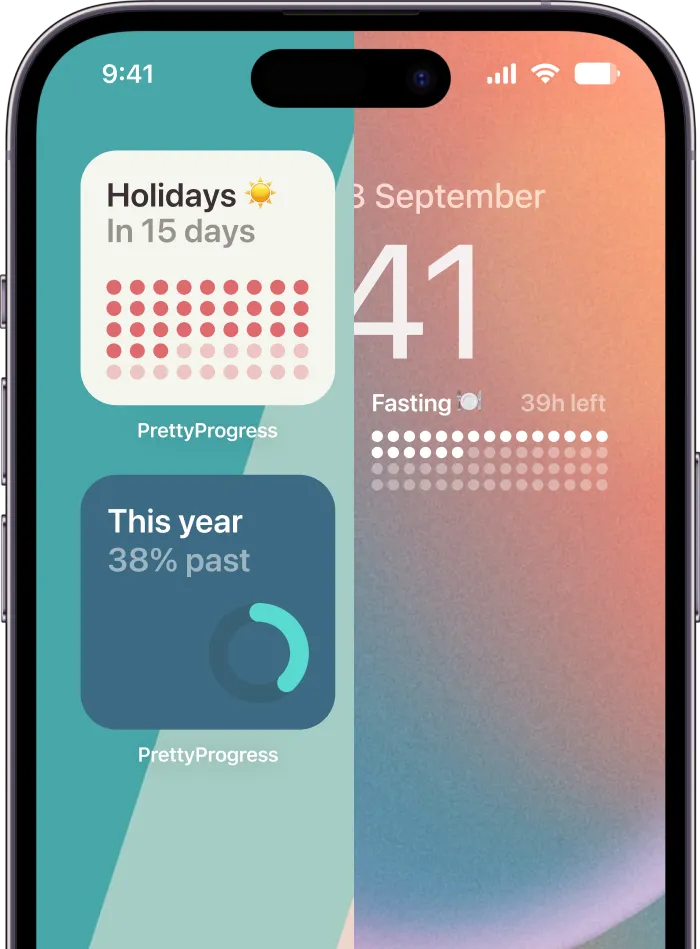
Some people do best with a paper training log. Others need digital reminders. One option is to use a goal progress tracker app to keep the review cycle visible. Pretty Progress, for example, lets you place customizable progress bar and countdown widgets on your devices, which can be useful if visual reminders help you stick to review dates or larger milestones.
Turn data into a review ritual
Don’t just collect data. Interpret it.
A useful monthly review asks questions like:
- What improved clearly? Performance, consistency, measurements, or how training feels.
- What stayed flat? That’s not always failure. It may just mean the adaptation is slower.
- What got harder than expected? Recovery, schedule, hunger, boredom, soreness.
- What should change next month? Keep, reduce, increase, or simplify.
This walkthrough is a useful companion if you want to see visual motivation in action before setting up your own system.
A tracking workflow should reduce decision fatigue. If it creates more of it, simplify the system.
That’s the trade-off worth respecting. More data can make you feel productive. Better workflow is what keeps you consistent.
Establish a Cadence for Review and Adjustment
People often quit tracking because they expect every data point to tell a story. Most don’t. Progress becomes clearer when you review the right things on the right timeline.
A technically sound approach is to combine weekly body metrics with every-workout performance logs: weigh in once per week under identical conditions, measure waist and other circumference points at the same spot, take monthly progress photos with the same lighting and angle, and record load, sets, reps, and duration after every session. This makes trend analysis more reliable by comparing weekly averages rather than single sessions (Zing Coach on tracking fitness progress).
Use the right lens for the right timeframe
A smart review rhythm looks like this:
- Weekly check-in: Look at workout completion, performance notes, and body metrics collected under the same conditions.
- Monthly review: Compare photos, measurements, performance trends, and how well the plan fit your real life.
- Quarterly evaluation: Ask whether your current plan still matches your goal.
- Annual reflection: Notice how much your baseline has changed, not just what happened recently.
Weekly check-ins should be brief. You’re looking for direction, not drama. Monthly reviews are where deeper decisions happen, especially if you’re deciding whether to push harder, stay steady, or pull back.
Don’t let one bad data point hijack the week
A flat week doesn’t mean the plan is broken. A heavy-feeling workout doesn’t erase good training. A photo that looks “off” doesn’t cancel a month of consistency.
The common assumption is that more frequent checking creates more control. In reality, too much checking often creates more emotional noise. If you react to every blip, you’ll keep changing plans before the plan has time to work.
Use these reframes:
- One weigh-in is data, not a verdict
- One hard workout may reflect stress, sleep, or timing
- One missed session doesn’t define your consistency
- A trend matters more than a moment
Review with curiosity, not accusation.
When people learn how to track fitness progress well, they stop asking, “Did I fail this week?” and start asking, “What does this pattern tell me?”
That shift keeps you moving.
Common Tracking Pitfalls and How to Avoid Them
Even a good system can go sideways if you use it in a way that creates stress. The fix usually isn’t to stop tracking. It’s to track with better boundaries.
When tracking becomes clutter
The first trap is tracking too much. People start with good intentions, then pile on every possible metric. Soon they’re logging sleep, steps, water, macros, weight, photos, heart rate, mobility, soreness, and three different apps worth of stats. The result is usually fatigue, not insight.
Keep it lean.
- If you’re overwhelmed, cut back to one performance metric, one body metric, and one consistency marker.
- If you skip logging often, your system has too much friction.
- If you don’t use the data, stop collecting that category.
Another trap is comparing your progress to someone else’s highlight reel. Social media shows polished snapshots. It doesn’t show their training age, injury history, stress load, sleep, or genetics. Your log should compare you to your past self, not to strangers.
When numbers start messing with your head
The harder pitfall is emotional. Some people start treating numbers like identity. Good weigh-in, good person. Bad workout, bad week. That’s not useful, and it’s not true.
A healthier approach is to treat your metrics like feedback from a dashboard. They show what may need attention. They don’t tell you your worth.
Try these resets when tracking starts to feel heavy:
- Rename the metric in your head: not “proof,” just “feedback”
- Celebrate non-scale wins: stronger sets, better form, steadier routine, more energy
- Keep your review appointments limited: don’t check progress every time anxiety spikes
- Adjust the method if needed: some people do better with fewer weigh-ins and more performance-based markers
There’s also a perfection trap. People think a missed entry ruins the system. It doesn’t. A useful system is flexible enough to survive real life. If you miss a day or a week, resume at the next planned checkpoint.
Consistency beats completeness. A simple log you keep is more valuable than a perfect system you abandon.
The best tracking system is the one that supports your training instead of overshadowing it. Keep it honest, keep it light, and keep it focused on decisions you can make.
Frequently Asked Questions
What is the easiest way to track my fitness progress?
The easiest method is a small weekly dashboard: log each workout, track one body metric, and review once a week. That means workouts after every session, a weekly weight trend, a waist measurement, and one quick note on energy. I’ve found that once a system needs more than a minute or two per check-in, compliance drops fast.
What is the best way to measure my fitness progress?
The best way is to combine performance, body, and consistency markers instead of relying on one number. A good mix is workout performance, a weekly body trend, monthly photos, and adherence to your plan. That combination shows whether you’re getting stronger, changing physically, and following through.
What is the 3-3-3 rule for fitness?
There isn’t one universal fitness-tracking standard called the 3-3-3 rule. Different coaches and creators use that phrase for different workout structures or habit systems, so it’s not reliable as a measurement framework on its own. If someone gives you a 3-3-3 plan, judge it by the same basics in this article: is it repeatable, relevant to your goal, and useful for reviewing trends?
What is the 5 5 5 30 rule?
Like 3-3-3, the 5-5-5-30 rule is not a universal progress-tracking standard. The phrase gets used in different ways online, often for simple activity routines rather than a formal way to measure change. If you use a rule like that to build consistency, it can be helpful, but you still need actual markers such as workouts completed, performance, and body trends to know whether it’s working.
How often should I check my progress?
Log workouts every session, review body metrics weekly, and compare photos monthly. Several practical guides recommend using a fixed schedule and standardized conditions because progress is easier to read when the data is collected the same way each time (Pretty Progress on tracking structure). In my experience, a set review day is what turns tracking from a good intention into a real habit.
What if the scale is not changing?
Look at the rest of your dashboard before you change the plan. If your waist is shrinking, lifts are improving, workouts are more consistent, or photos look different, progress is still happening. The scale is useful, but it should share the job with other markers.
If you want a simple visual way to stay connected to your goals between check-ins, Pretty Progress can help. You can use its countdowns and progress bar widgets to keep review dates, training blocks, race days, or body-composition milestones visible on your Home Screen, Lock Screen, Apple Watch, Mac, iPhone, iPad, or Android device. That kind of glanceable reminder won’t do the work for you, but it can make your system easier to follow consistently.