
June 8, 2026
A Simple Goal Tracking App: Your 2026 How-To Guide
Find the best simple goal tracking app for you. This guide covers key features, widget setup, and habit-building tips to keep you motivated without the clutter.
You probably have a goal app on your phone right now that looked promising for about three days.
It had dashboards, streaks, categories, tags, recurring tasks, charts, and a setup flow that made your life feel briefly under control. Then real life showed up. You missed a few check-ins, the notifications got noisy, and the app started to feel like one more thing to manage.
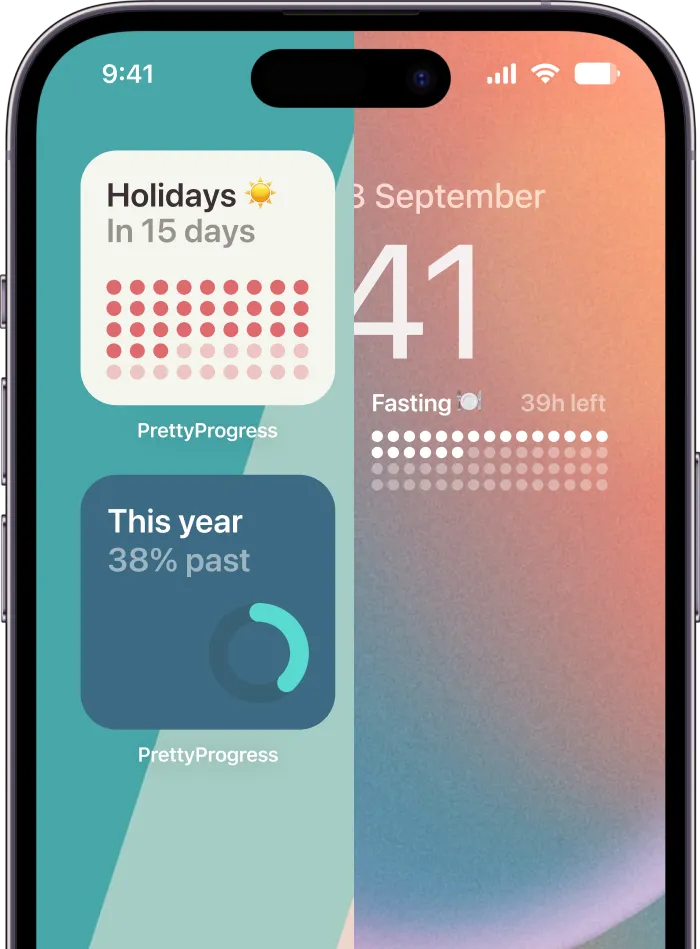
That’s the pattern I see most often. People don’t fail because they don’t care about their goals. They stop because the tracking system asks for too much attention. A simple goal tracking app works better when it behaves like a visual cue, not a second job. For many people, the key advantage is a single widget on the Home Screen, Lock Screen, desktop, or watch face that keeps one important goal in sight all day.
Table of Contents
- Why Complex Goal Trackers Often Fail
- Key Features for Simple and Effective Tracking
- Countdown vs Progress Bar Which Is Right for You
- Quick Setup for At a Glance Motivation
- Sample Use Cases for Real Life Goals
- Building Habits That Stick with Your App
Why Complex Goal Trackers Often Fail
A feature-rich app usually fails in a predictable way. You download it on a motivated day, add six goals, color-code everything, set reminders, and feel productive before you’ve made any real progress. A week later, the app is full of half-finished lists and overdue prompts.
The problem isn’t effort. The problem is friction.
When a tracker asks you to log too much, sort too much, review too much, or interpret too much, it stops being support and starts being admin. That’s especially common with apps built around the idea that you should track every habit, every project, and every metric in one place. Some people love that. Few, however, find it sustainable.
What usually breaks first
A complex tracker often creates three failure points:
- Too many decisions: You have to choose categories, views, metrics, and workflows before you can even begin.
- Too much maintenance: Missing a few days creates cleanup work, which makes returning feel worse.
- Too much noise: Notifications multiply, and every goal starts competing for attention.
Practical rule: If tracking the goal feels harder than doing the goal, the system is too complicated.
I see this with health goals all the time. Someone wants to eat better, sleep more, and exercise consistently. They install a broad wellness platform, then spend the first evening setting up meal logs, workout routines, reminders, and dashboards. If what they really needed was a single visible reminder to drink water, hit a step target, or stay aware of a fasting window, a giant system won’t help. A narrower tool often does. If your main challenge is food choices, it can help to find your ideal nutrition app instead of forcing one app to solve every health decision.
Visibility beats intensity
The tracking systems that last usually feel almost boring. They don’t demand a lot. They stay visible, they update easily, and they make the next step obvious.
That’s why glanceable motivation matters. A widget on your Lock Screen doesn’t ask for a planning session. It reminds you that the exam is getting closer, the savings bar is moving, or the project deadline hasn’t disappeared.
The best tracker is often the one you don’t have to open.
That shift matters. Instead of building a productivity headquarters, you’re building a cue. And cues are what keep goals alive during ordinary days, not just on motivated ones.
Key Features for Simple and Effective Tracking
Individuals seeking a simple goal tracking app don’t need another full productivity suite. They need a tool that answers one question fast: How am I doing on the one thing that matters right now?
Current app coverage often leans toward dashboards, analytics, habits, and all-in-one setups. It rarely focuses on the person who wants a single glanceable widget on a phone screen, even though that’s a different job-to-be-done entirely, as noted in this roundup on goal tracker apps.

The right job for the app
If you want consistency, look for a tool that does one of these jobs well:
- Shows a deadline clearly: Good for exams, launches, trips, moving dates, or fasting windows.
- Shows cumulative progress: Better for savings, reading, writing, training blocks, or recovery goals.
- Lives where you already look: Home Screen, Lock Screen, desktop, or watch face.
A lot of apps can technically track goals. Fewer are built around visual persistence. That’s the difference that matters.
One useful way to think about it is this. The app shouldn’t become a place you visit only when you feel disciplined. It should become part of your environment. If you want more ideas on making goals visually obvious, this guide to visual goals that stay in sight is a helpful reference.
What to keep and what to avoid
The features worth caring about are simpler than most app store descriptions suggest.
- Widget support that’s usable: Not just a tiny summary that sends you back into the app, but a real visual indicator you can read instantly.
- Fast input: You should be able to update progress in a few taps, or not need updates very often.
- Minimal interface: One screen should tell you what matters. If every screen is full of tabs, filters, or analytics, that’s a warning sign.
- Visual customization: Colors, icons, themes, and layout matter because they help the goal feel personal. A widget you enjoy seeing gets noticed longer.
- Clear start and end points: A vague tracker creates vague behavior. Good tools make the finish line visible.
What matters less than people think:
- Deep reporting
- Complex tagging
- Team features for personal goals
- Endless categories
- Motivation systems that feel game-like when you didn’t ask for a game
Here’s the trade-off. Rich systems can be powerful for project managers, operators, and people running many parallel workflows. But for personal consistency, feature depth often works against follow-through.
A simple goal tracking app should reduce thinking, not add more of it.
Countdown vs Progress Bar Which Is Right for You
Your first big choice is visual. Do you want to see time remaining or progress completed?
Both work, but they motivate differently. A countdown creates urgency. A progress bar creates momentum.
Choosing Your Tracking Style
| Tracking Style | Best For | Psychological Effect | Example Goal |
|---|---|---|---|
| Countdown | Fixed-date events and deadlines | Builds anticipation and time awareness | Final exam in June |
| Progress Bar | Ongoing measurable goals | Builds satisfaction through visible movement | Save for a laptop |
| Countdown | Short windows that reset or end | Keeps attention on a current phase | Fasting window ends tonight |
| Progress Bar | Milestones you can chip away at | Reinforces effort with each update | Read pages toward a book goal |
A countdown works best when the date itself is the anchor. You don’t need to interpret anything. The message is simple: this is getting closer. That’s useful for presentations, vacations, launch dates, application deadlines, and seasonal goals.
A progress bar works better when the goal accumulates over time. It answers a different question. Not “how long is left?” but “how far have I come?” That’s a better fit for saving money, writing a paper, training for an event, or finishing a course.
If the date creates the pressure, use a countdown. If the action creates the result, use a progress bar.
Some goals can work either way. A student writing a dissertation could use a countdown to the submission date or a progress bar for chapter completion. A lot depends on what helps more: urgency or reassurance.
If you’re deciding between the two for an event-based goal, this example of a countdown clock graphic for deadlines and milestones can help you think in visuals instead of features.
The mistake is mixing both styles for every goal. Pick the one that makes the next action feel obvious.
Quick Setup for At a Glance Motivation
A simple goal tracker should take minutes to set up, not an entire Sunday afternoon.
Start with one goal, one visual style, and one screen placement. That’s enough to make the system real.

Step 1 Pick one goal only
Don’t start with five. Pick the goal you already think about most often.
Good first choices include:
- A deadline with consequences: exam date, portfolio submission, moving day, certification test
- A measurable personal target: save for a purchase, finish a reading list, complete a writing project
- A time window you want to respect: fasting period, no-spend month, recovery plan
Write the goal in plain language. “Finish term paper.” “Save for emergency fund.” “Fast until noon.” If the wording sounds corporate, you probably won’t connect to it.
Then choose the visual style. Use countdown for deadline-driven goals. Use progress bar for cumulative goals.
Step 2 Make it visually hard to ignore
Many people tend to rush. Don’t.
The widget should feel distinct enough that your eye catches it automatically. Choose a layout, color, icon, and label that fit the goal. For a stressful work deadline, a clean monochrome style may reduce mental clutter. For a savings goal, a brighter color can make progress feel more alive.
This is one place where a purpose-built app can help. Pretty Progress is one option that creates countdown and progress bar widgets for iPhone, iPad, Apple Watch, Mac, and Android, with customizable themes, colors, layouts, and icons. That matters if your goal needs to stay visible without turning into a full task manager.
A few practical examples:
- Save for a trip: Use a progress bar with a calm color and a short label like “Trip Fund.”
- Exam date: Use a countdown with a bold number display and the exam name.
- Intermittent fasting: Use a clean Lock Screen countdown with the end time in the title.
A widget isn’t decoration. It’s environmental design.
Step 3 Put it where your eyes already go
Placement decides whether the tracker becomes useful or invisible.
Use the most visible slot available:
- Lock Screen for goals you need to feel throughout the day
- Home Screen first page for goals tied to daily action
- Apple Watch face or desktop for work goals or time-sensitive windows
If your goal is “Save $500,” place the progress widget where you access your phone several times a day. If your goal is “Final exam,” put the countdown on the first Home Screen page so the shrinking time horizon stays real.
After placement, leave it alone for a few days. Don’t keep redesigning it.
If you want a quick visual walkthrough of what this setup can look like in practice, this short demo helps:
The setup is complete when the widget does three things without effort: catches your eye, tells the truth, and suggests the next move.
Sample Use Cases for Real Life Goals
The best simple systems fit into ordinary days. They don’t ask you to become a different person. They make the goal easier to see and easier to resume.

Student deadlines
A student rarely needs a giant project stack for every class. More often, they need a quick sense of what’s getting close.
One setup that works well is a Home Screen countdown for the next exam and a separate progress bar for a major paper. The countdown creates urgency. The progress bar reduces the feeling that the paper is one giant block.
That matters because small targets are easier to complete than ambitious ones. In an NIH study of 1.4 million users, only 18.2% of weight-loss goals were met overall, while users aiming for the easiest targets of 1% to 2% of initial body weight were much more likely to succeed, with nearly 30% reaching at least 100% of their goal. Half of successful users in that easiest group got there within 100 days (NIH study on goal attainment). The lesson carries over well to schoolwork. Break a big deadline into visible, believable milestones.
Professional targets
A professional goal often gets buried under meetings and messages. That’s why a desktop or phone widget can help more than another app tab.
Take a quarterly target. A sales lead might use a progress bar for pipeline movement. A designer might track a portfolio launch date with a countdown. A writer might track pages drafted toward a proposal. None of these require a heavy system if the goal itself is straightforward.
What works is persistent visibility. What doesn’t is hiding the goal inside software you only open during planning sessions.
ADHD friendly task momentum
People with ADHD often know what matters. The hard part is holding that target in working memory long enough to act on it.
A simple progress widget helps because it reduces re-entry friction. Instead of reopening a project board and figuring out where things stand, you see one bar and one label. “Deck 60%.” “Tax prep 3 of 5.” “Declutter bedroom.” That’s enough to restart.
For some users, emotional regulation support matters alongside productivity support. If anxiety is adding drag to your follow-through, a dedicated mental health app can be a better companion than forcing one tracker to carry everything.
One visible next step beats a complete system you avoid.
Intermittent fasting windows
Fasting is a strong fit for glanceable tracking because the question is simple. How much time is left?
A Lock Screen countdown works well here. You don’t need charts or meal logs every time you check the time. You just need a clear endpoint. “Eating window starts in…” or “Fast ends at…”
This is the kind of goal where too many features get in the way. The visual cue is the support. The less you have to interpret, the easier it is to stick with the rhythm.
Building Habits That Stick with Your App
A simple goal tracking app can help you start. It won’t carry the whole habit on its own.
The durable part is the review loop. People drift when they stop looking critically at whether the goal is still clear, still realistic, and still visible enough to prompt action.
Use a weekly review
The strongest routine I recommend is a short weekly check-in. Not a deep life audit. Just a scheduled moment to look at the widget, update the number if needed, and decide the next step.
That rhythm matters because goal-setting guidance recommends specific, measurable, time-bound milestones with regular review, and one summary of that research reports that people who set time-bound goals and report progress weekly are 40% more likely to succeed (goal tracking guidance and weekly review research summary).

A good weekly review can be very short:
- Check accuracy: Is the progress bar current, or have you been avoiding updates?
- Check scope: Is the goal still small enough to act on this week?
- Check visibility: Are you still seeing the widget, or has it blended into the background?
Fix the system before you blame yourself
Most abandoned trackers don’t need more discipline. They need less friction.
If you fall behind, don’t delete the goal immediately. Adjust it. Shrink the milestone. Simplify the label. Move the widget to a more visible spot. Change from progress bar to countdown, or the other way around, if the current style isn’t helping.
Try these corrections first:
- Lower the tracking burden: If daily updates feel annoying, choose a goal that only needs weekly adjustment.
- Tighten the goal: “Get healthier” is too broad. “Walk toward a weekly target” is easier to track.
- Remove extra goals: If you’re ignoring everything, keep one live widget and archive the rest.
Review beats guilt. Small corrections keep a goal alive longer than self-criticism does.
Prevent widget blindness
Anything visible long enough can become invisible. That’s normal.
If you stop noticing the tracker, refresh one element without rebuilding the whole system. Change the color, switch the icon, shorten the label, or move it from Home Screen to Lock Screen. The goal stays the same. The visual cue becomes noticeable again.
If consistency is your main struggle, keep the system plain. One goal. One widget. One weekly review. If you want more practical ways to hold that rhythm, this guide on how to stay consistent with goals is worth reading.
The app matters less than the behavior it supports. But when the app is simple, visible, and easy to update, that behavior becomes much easier to repeat.
If you want a tool built around this exact approach, Pretty Progress lets you create countdown and progress bar widgets for Home Screen, Lock Screen, desktop, and watch surfaces so one goal stays visible without the overhead of a full productivity system.