
June 18, 2026
Quarterly Goal Tracker: Build, Plan, & Achieve More in 2026
Build your digital quarterly goal tracker with Pretty Progress. Define goals, track milestones, and stay motivated step-by-step for 2026.
You probably already have a goal list somewhere. Notes app. Paper planner. Maybe a spreadsheet you opened twice in January and forgot by March.
The problem usually isn’t ambition. It’s visibility. Annual goals sit too far away, and vague targets like “get healthier” or “grow my business” don’t give your brain anything concrete to act on today. A quarterly goal tracker fixes that by shrinking the distance between intention and action. Instead of staring at a full year, you work inside a short cycle you can manage, then turn each goal into a progress bar you can see on your phone every day.
That visual part matters more than people think. When progress is glanceable, you don’t have to rely on memory or motivation alone. You see the bar. You know whether you’re moving. You adjust before the quarter disappears.
Table of Contents
- Why Quarterly Goals Beat Annual Resolutions
- How to Define Your Goals for the Next 90 Days
- Building Your Visual Tracker in Pretty Progress
- Making Progress Glanceable with Widgets
- Staying on Track with Regular Check-ins
- How to Adapt Your Tracker When Plans Change
Why Quarterly Goals Beat Annual Resolutions
Annual resolutions fail for a simple reason. They ask you to stay emotionally connected to something that feels far away.
A quarterly goal tracker creates a shorter loop. You can still aim at a big yearly outcome, but you only have to manage the next stretch in front of you. That changes the work from abstract aspiration to visible execution.
The performance case for this is strong. Organizations that review their goals quarterly achieve 31% greater returns than those reviewing them annually, and more frequent reviews also make companies 31% more likely to achieve their goals, according to goal-setting statistics summarized by Mooncamp. The practical takeaway isn’t just “review more often.” It’s that a 3-month cycle gives you enough time to make real progress and enough feedback to correct course before a goal goes stale.
Why the quarterly rhythm works
Quarterly planning reduces two common problems:
- Distance: A year is long enough to procrastinate against.
- Drift: Priorities change, and annual plans rarely change with them.
- Fog: Big goals often stay too broad to measure week by week.
With a quarterly system, your annual objective gets split into 4 milestones across a 12-month year. That makes the next target clearer. You aren’t trying to “transform your life.” You’re trying to complete one concrete segment of a longer path.
A good quarterly goal tracker doesn’t just record progress. It forces a decision: keep going, adjust, or stop pretending the current plan still fits reality.
This is also why digital tracking works so well. When you turn a quarterly target into a live progress bar on your phone, the goal stops being a sentence in a notebook. It becomes a visible commitment. That’s a very different experience from checking a resolution list once a month and hoping momentum appears on its own.
If you want a stronger foundation before setting your targets, this guide to goal-setting best practices is a useful companion. Keep the principle simple though. Shorter review cycles create more chances to notice what’s working and fix what isn’t.
How to Define Your Goals for the Next 90 Days
Individuals often don’t struggle because they lack goals. They struggle because their goals are too broad, too numerous, or too fuzzy to track.
“Get healthier” can’t go in a quarterly goal tracker. Neither can “be more productive.” The tracker needs something countable, visible, and specific enough to update without debate.
Start with outcomes, not activities
Start by asking one question: what would count as meaningful progress by the end of this quarter?
That shifts the focus away from intentions and toward evidence. “Read more” becomes “finish 3 books.” “Improve fitness” becomes “complete 30 workouts in 90 days.” “Be better at networking” becomes “reach out to 12 people and schedule 4 conversations.”
A useful quarterly goal has three qualities:
- Clear finish line: You can tell whether you did it.
- Measurable movement: You can update progress along the way.
- Real relevance: It matters enough that you’ll still care about it next month.
SMART thinking helps here, but don’t get trapped in goal-writing theater. You don’t need the perfect sentence. You need a target you can track accurately. If you want help tightening vague ideas into measurable ones, this article on SMART objectives and goals is worth reviewing.
Use a small goal list
The next mistake is overloading the quarter. Microsoft recommends limiting teams to 3–5 goals per quarter to protect focus and measurement quality, as noted in its guide to goal-setting pitfalls. That advice applies just as well to personal planning.
If you put ten priorities into one quarter, you don’t have ten priorities. You have a pile of unfinished intentions competing for attention.
Practical rule: If every goal feels important, none of them will stay visible long enough to move.
For business owners and team leads, this same discipline shows up in broader planning frameworks too. If you want a business-focused perspective on narrowing priorities, this piece on strategic goal setting for agencies is a helpful reference.
Sample Quarterly Goals by Persona
| Persona | Broad Goal | Specific Quarterly Goal |
|---|---|---|
| Student | Do better in school | Complete all weekly review sessions for core classes and submit every major assignment on time this quarter |
| Professional | Improve career growth | Finish one portfolio project, update resume, and apply to a defined set of target roles this quarter |
| Freelancer | Grow revenue | Send proposals consistently each week and close a set number of new client conversations this quarter |
| Person with ADHD | Be more organized | Use one task system daily and complete a short weekly review every week this quarter |
| Health-focused individual | Get healthier | Complete a defined workout target and prep meals on a consistent schedule through the quarter |
Notice what these examples have in common. They’re not inspirational slogans. They’re trackable commitments.
A strong quarterly goal tracker starts with a short list you can glance at and understand immediately. If a goal needs a paragraph to explain, tighten it before you track it.
Building Your Visual Tracker in Pretty Progress
Planning becomes visible. A quarterly goal tracker works best when each goal has a start date, an end date, and a progress view you can understand in a second.
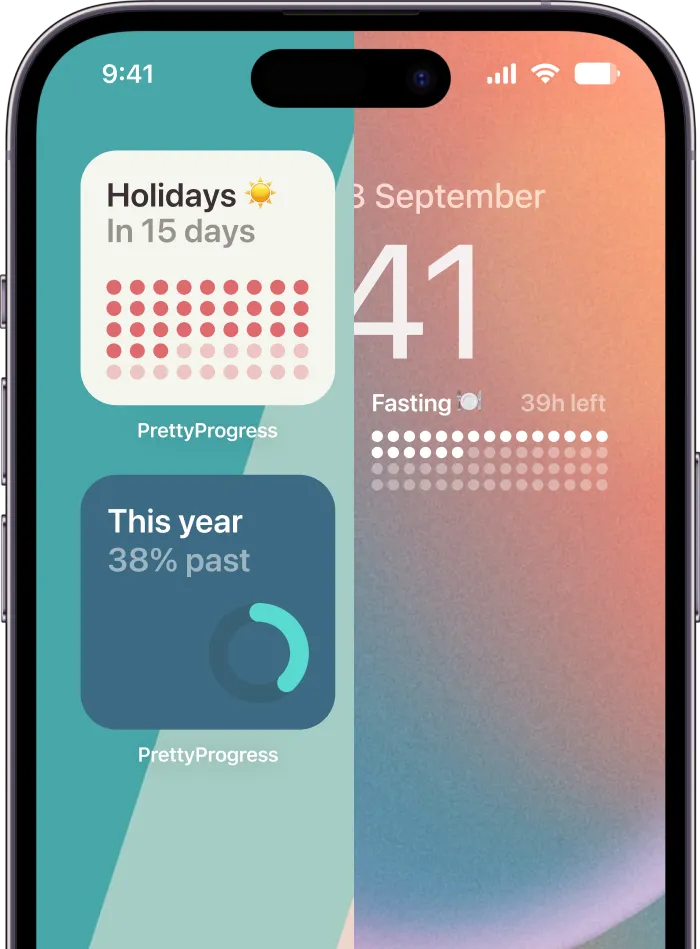
A practical way to do that is with Pretty Progress, which supports date-based progress bars and widgets across Apple devices and Android. If your quarter has a defined end date, that structure fits naturally.

Set one quarter as a real timeframe
Don’t create a generic “Q1 goals” note and stop there. Build each tracker with actual dates.
Sandler recommends breaking a large annual target into four steps, one for each quarter, in its guidance on setting quarterly goals you can achieve. That’s useful because each quarter becomes a contained execution window rather than a loose theme.
Inside your tracker, give each goal:
- A specific title: “Complete 30 workouts” beats “Fitness.”
- A start date: The day the quarter begins for you.
- An end date: The last day of the quarter.
- A clear unit: Books, workouts, outreach messages, study sessions, pages, or milestones.
If you run an online business and need a second system for organizing offers, content, or customer workflows around your goals, a platform for online entrepreneurs can sit alongside your tracker without replacing it.
Turn each goal into a visual bar
The strongest trackers don’t try to show every task. They show progress on outcomes.
Suppose your quarterly goal is “Read 6 books.” Your progress bar moves when you finish a book or hit meaningful reading milestones. If your goal is “Launch my portfolio,” the bar moves when core assets are complete: outline done, project selected, copy drafted, design finished, published.
That’s different from a to-do list. A to-do list gets longer. A progress bar gets fuller.
Try this setup:
- Create one tracker per goal so each bar stays clean and readable.
- Name the result, not the effort. “Submit thesis draft” is better than “Work on thesis.”
- Choose milestone checkpoints you can update without guesswork.
- Use simple labels so the widget still makes sense at a glance.
Your phone should show progress, not project clutter.
Customize the tracker so you’ll actually look at it
Design isn’t fluff here. It affects attention.
Choose a theme, color, and bar style that makes the tracker easy to read on your Home Screen or Lock Screen. If a widget looks noisy, your brain will filter it out. If it feels clean and personal, you’ll notice it repeatedly without effort.
For clients who struggle with consistency, I usually suggest matching visual style to goal type. Academic goals can be minimal and quiet. Fitness or savings goals often benefit from stronger contrast. Creative projects can use more expressive themes if that helps the widget feel alive instead of administrative.
The key is simple. Your quarterly goal tracker should feel easy to check, easy to update, and hard to ignore.
Making Progress Glanceable with Widgets
A tracker hidden inside an app doesn’t help much on a busy day. You need your goals to surface without asking for attention.
That’s where widgets earn their place. They reduce friction. You don’t open a planner, search for a note, or remember your exact target. You just wake your phone and see where things stand.

Put your tracker where your eyes already go
With phones being checked dozens of times a day, the Home Screen, Lock Screen, and watch face are ideal places for a quarterly goal tracker.
A good widget does two jobs at once. It reminds you the goal exists, and it shows whether your recent behavior matches the target. That creates a low-pressure accountability loop.
The placement matters:
- Home Screen: Best for goals you want to review often during work hours.
- Lock Screen: Best for a simple reminder with minimal visual noise.
- Apple Watch complication: Best for fast, passive check-ins during the day.
- Android home or lock screen: Best if you want larger visual presence and easy rescaling.
Choose the right widget for the right job
Not every goal needs the same display style. Match the widget to the kind of motivation you need.
For example:
- Minimal bar widget: Good for people who get overwhelmed by detail.
- Detailed progress widget: Better when exact movement helps, such as reading, savings, or exam prep.
- Date-focused countdown: Useful when the deadline itself creates urgency.
- Color-coded setup: Helpful when you’re tracking several goals across different life areas.
A common mistake is adding too many widgets at once. That turns the screen into wallpaper. Start with one or two high-value goals. Keep them large enough to notice.
If your quarterly goal tracker blends into the background, it’s not working as a visual system.
On Apple devices, add the widget where you naturally pause, such as the first Home Screen page or Lock Screen. On Apple Watch, use the complication for the one goal you most need to keep top of mind. On Android, place the widget on the screen you open first, not a secondary page you rarely reach.
The win isn’t decoration. It’s repeated exposure. Every glance becomes a tiny check-in, and those tiny check-ins keep the quarter alive.
Staying on Track with Regular Check-ins
A quarterly goal tracker isn’t a set-and-forget tool. It only works when you revisit it before the quarter is almost over.
The review habit doesn’t need to be complicated. It just needs to happen often enough that small problems stay small.
Use a short review rhythm
A practical cadence is a 12-week quarter with milestones every 2–4 weeks, plus recurring check-ins of 30–60 minutes held weekly or biweekly, based on guidance from Business.com on effective quarterly goals. That rhythm gives you enough contact with the goal to adjust while there’s still time to recover.
If weekly feels heavy, do biweekly. If your quarter is intense or fast-moving, weekly will serve you better. The point is consistency, not ceremony.

A simple agenda that keeps the tracker useful
Use the same short checklist every time so you don’t waste energy deciding how to review.
- Update the bar first. Enter the current progress before you reflect on anything else.
- Review movement. Did the goal advance since the last check-in, stall, or slip?
- Name the obstacle. Be specific. Lack of time, unclear next step, competing deadline, low energy.
- Choose one next move. Pick the smallest meaningful action for the next stretch.
That last step matters most. Reflection without a next action turns into self-criticism.
A healthy review also includes recognition. Microsoft warns against moving straight from one goal to the next without acknowledging progress in its earlier-cited guidance. When people skip that pause, motivation drops. You don’t need a big reward. You just need to mark that something moved forward.
Small wins are fuel. If you ignore them, the next week starts heavier than it should.
Keep your check-ins brief and honest. If you miss one, resume the next cycle. Don’t turn a tracking habit into another standard you feel bad about failing.
How to Adapt Your Tracker When Plans Change
Rigid goal systems break the moment life gets messy. Workloads spike. Deadlines move. A goal that made sense at the start of the quarter can become unrealistic or irrelevant halfway through.
Most goal advice doesn’t handle that well. Inkwell notes that many guides fail to explain what to do when priorities shift mid-quarter, while resilient systems allow goals to be carried over, modified, or removed, as described in its article on using a quarterly goals page. That flexibility isn’t weakness. It’s what makes the system usable in real life.

Pause, assess, pivot
When a goal starts wobbling, use a simple filter.
First, pause. Don’t keep pretending the original plan still fits if your circumstances changed.
Then assess:
- Is the goal still important?
- Is the scope still realistic for this quarter?
- Did the deadline change, or did the goal itself change?
Then pivot in one of three directions:
- Modify it if the goal matters but the current version is too large.
- Replace it if something more urgent has clearly taken priority.
- Carry it over if the work is still worth doing, just not inside this quarter.
What to change inside the tracker
When you adjust the plan, update the tracker immediately. Rename the goal if the outcome changed. Revise milestones if the scope shrank. If you’re carrying the goal forward, archive the quarter and create a new one rather than faking completion.
That honesty protects motivation. A quarterly goal tracker should reflect reality, not guilt.
If you want a cleaner way to keep goals visible every day, Pretty Progress lets you turn quarter-based goals into date-based progress bars and widgets on iPhone, Android, Apple Watch, iPad, and Mac, so your next milestone stays in view instead of disappearing into a notes app.