July 22, 2026
Marathon Training Timeline for Runners of All Levels
Use this marathon training timeline to guide your build, peak, taper, and race week. Week-by-week schedules for all levels plus widget tracking tips.
You’re staring at a calendar, the race is real, and the big question isn’t whether you can train. It’s whether your marathon training timeline is organized well enough to get you to the start line healthy, confident, and ready to run for hours. The fix is simple in concept and demanding in execution, break the work into phases, give each week a purpose, and track the whole thing so progress stays visible even on messy days.
Table of Contents
- Introduction and Timeline Overview
- Understanding Marathon Training Phases
- Week-by-Week Timeline and Mileage Progression
- Sample Plans for Different Levels
- Recovery and Injury Prevention Advice
- Race Week Checklist and Taper Strategies
- Tracking Timeline with Pretty Progress Widgets
Introduction and Timeline Overview
A marathon plan works best when the whole block feels like a series of checkpoints, not one giant blur. That’s why a marathon training timeline should be built around daily actions, weekly progress, and clear phase changes. When runners only think about race day, they either rush the build or drift through the middle weeks without enough structure.
The practical starting point is the total time you need, not just the plan length. A widely cited benchmark is 16 to 20 weeks of structured marathon-specific work, built on a prior aerobic base of about 6 to 12 weeks. For newer runners, the total runway is often longer, and one reference notes that first-time runners may need 3 to 6 months of general preparation before the marathon plan even begins, while REI recommends at least one year of consistent running and a stable weekly volume of 20 to 30 miles before starting a marathon block. Runner’s World’s marathon training plan guide is useful here because it frames the timeline as base plus build, not just a calendar count.
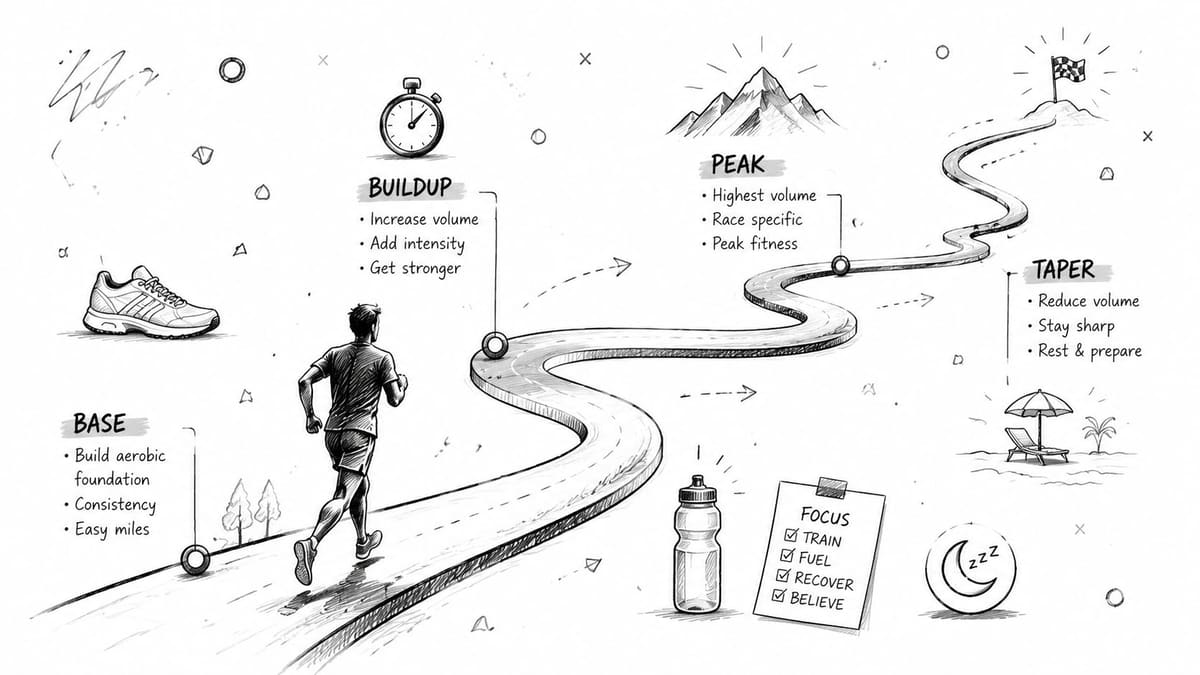
A good timeline usually moves through four phases, base building, buildup, peak, and taper. Each phase has a job, and each job changes what “good” training looks like that week. Early on, consistency matters more than hero workouts. Later, long runs, race-pace work, and recovery discipline matter more.
Practical rule: if a week feels random, it’s too loose. If every week has a reason, you’re on the right track.
Tools help because runners forget progress faster than they think they do. A glanceable tracker can keep the next run, the next long run, and the taper countdown visible without opening a training app. A simple setup like the one described in the Pretty Progress schedule guide works well when the race is months away and motivation needs a daily nudge.
Understanding Marathon Training Phases
Base building lays the floor
Base building is the part of marathon preparation where the body learns to tolerate repeated running without breaking down. The goal is aerobic durability, not standout workouts. For most runners, this phase should feel steady and repeatable, with enough easy volume to make later marathon work possible.
A marathon timeline starts before the longest long run. Runners usually need a stretch of aerobic preparation before the specific block begins, and newer runners often need a longer runway than experienced runners. If the base is too thin, the marathon block turns into damage control because every workout asks for more than the body can give.
During base work, most runners should keep the week simple. Easy runs, one longer run, and enough recovery to absorb the training. The pace should stay controlled, because the point is to build consistency and lower the cost of each mile.
Buildup adds specificity
The buildup phase shifts from general mileage to marathon-relevant stress. Long runs grow more demanding, moderate efforts show up more often, and runners begin practicing pace control under fatigue. The job of this phase is to make race-specific work feel familiar instead of overwhelming.
A disciplined buildup also leaves room for the hard sessions that matter later. Marathon-pace segments, threshold work, and longer long runs need a body that can recover between efforts. If intensity arrives too early, the plan starts to feel like a series of tests instead of a progression.
Tracking that shift from base to buildup matters because adaptation is easy to miss when the weeks start blending together. A simple visual tracker can show whether training is staying on course, which helps runners adjust before small issues become missed sessions. How to track fitness progress is useful for that kind of monitoring, especially when the focus is on week-to-week consistency rather than a single big workout.
Peak and taper complete the picture
Peak training is the hardest part of the cycle, but it still needs order. The strongest weeks usually come near the back end of the plan, after the runner has already built enough volume and specificity to handle them. At that point, the work should sharpen race fitness, not just prove toughness.
A practical peak phase places the most demanding long runs and marathon-specific sessions close enough to race day that the fitness stays fresh, then eases off before fatigue buries the gains. That is why the final hard block should sharpen fitness, not chase more and more stress. The point is to arrive ready, not spent.
Taper is not lost time. It is where the training starts to settle in. Mileage comes down, recovery improves, and the runner keeps enough sharpness to feel normal without carrying the full load of the build. The last weeks should protect what has already been earned, not add another layer of fatigue.
Week-by-Week Timeline and Mileage Progression
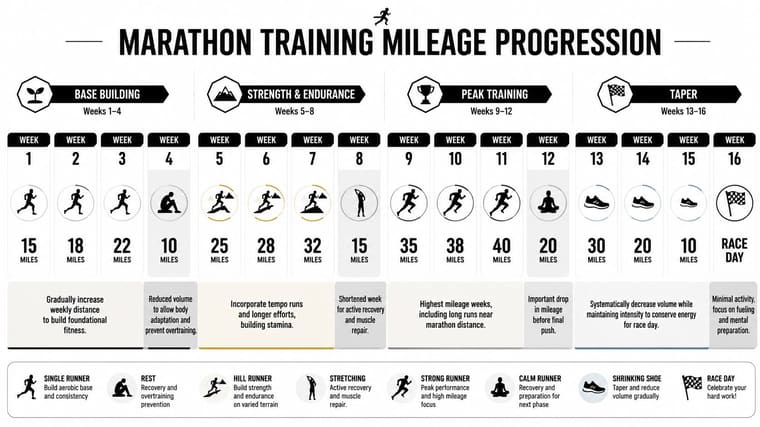
A solid marathon training timeline usually follows a build that rises for three weeks, then backs off for one. That 3-weeks-up/1-week-down pattern builds fitness without letting fatigue pile up too fast. It also gives you regular checkpoints, which matters when the weeks start to blur together.
The week-by-week structure should change as the race gets closer. Early on, the goal is to establish repeatable training days and keep the long run controlled. Later, the plan becomes more specific, with marathon-pace work, race fueling practice, and long runs that feel closer to race conditions. A clear phase-based timeline also makes it easier to track progress in a widget, especially when you want a simple visual of whether volume and recovery are staying in balance.
How the weeks should feel
The first three weeks of a plan should feel controlled. Mileage rises, but the point is to make training repeatable, not to test how much strain you can absorb. Week four should back off enough that your legs feel fresher by the end of it, not flatter or more beat up. That pattern repeats through the build, then shifts harder into peak training before the taper takes over.
A useful way to read the timeline is by stress, not just mileage. Early weeks focus on moving often and staying consistent. Middle weeks add long-run confidence and one quality workout. Peak weeks make the long run feel marathon-specific, while the taper reduces load but keeps a little sharpness in the legs.
Sample structure across the build
Here’s a clean way to think about the progression without locking yourself into one exact mileage number:
- Weeks 1 to 3, base focus: easy volume grows from manageable to steady, the long run stays comfortable, and the week should end with a sense that more work is possible.
- Week 4, recovery: mileage comes down, extra rest matters, and the priority is absorbing the earlier work.
- Weeks 5 to 7, strength and endurance: add hills, tempo segments, or marathon-pace blocks while keeping the easy days easy.
- Week 8, recovery: this is another down week where the goal is to come back hungry, not drained.
- Weeks 9 to 11, peak training: long runs get most race-like, fueling practice matters, and the week should feel demanding but repeatable.
- Week 12, recovery: a deliberate drop helps you absorb the highest load before the final push.
- Weeks 13 to 15, taper: the volume falls while short efforts keep the legs awake.
- Week 16, race day: very light running only, plus fuel, sleep, and logistics.
What to adjust when real life interferes
If work gets messy, sleep drops, or your legs start giving warning signs, protect the pattern before you protect the exact mileage. A missed quality workout is better than forcing a stale one. The plan should flex around life because consistency beats one perfect week.
Coach’s note: if you need to shorten a week, keep the long run or the key workout, not both. Drop the rest first.
The analysis of 92 marathon plans found that 18 weeks is a practical minimum for most runners, while 24 weeks is a common gold-standard build for newer athletes. That analysis is useful because it confirms something coaches see constantly, experienced runners can compress the build, but newer runners usually do better with more runway.
Sample Plans for Different Levels
A marathon plan has to match what a runner can absorb. A beginner who needs more recovery between sessions should not follow the same weekly load as an experienced runner who already handles regular stress well. As noted earlier, marathon builds need enough runway to fit the runner, not just the calendar.
| Runner Level | Duration Weeks | Weekly Runs | Peak Mileage |
|---|---|---|---|
| Beginner | 20 to 24 | Fewer, with more recovery between runs | Conservative peak volume |
| Intermediate | 16 to 20 | Moderate weekly frequency | Moderate peak volume |
| Advanced | 16 to 20 | Higher frequency, more distributed load | Higher peak volume |
For beginners, the safest approach usually starts with fewer runs, steady long-run growth, and more time to recover between sessions. That fits the broader coaching point that beginners do better with conservative progression and tighter control over training density, rather than stacking more weeks onto the plan. Everfit’s marathon prep guidance makes the same point in practical terms, density drives adaptation and injury risk more than total duration alone. Pair that with expert tips on runner nutrition, because new runners often underfuel the work they are trying to absorb.
Intermediate runners can usually handle a more standard build with one quality session and one long run each week. The restraint matters more than the ambition. A runner who already has a base does not need to turn every Tuesday into a test of fitness. The week should leave enough freshness to protect the weekend long run and keep the legs responsive.
Advanced runners often need more precision than volume. They can handle a tighter schedule because the body has already adapted to repeated stress, but the risk shifts toward piling load onto the same systems again and again. That risk rises when work stress, travel, or poor sleep enters the picture. If the week has to change, move a workout to a better day instead of forcing everything into the same tired block.
A few practical rules hold up across levels:
- Beginners: keep the schedule simple, use fewer weekly runs, and treat recovery as part of training.
- Intermediates: build around one long run and one quality workout, then protect the easy days.
- Advanced runners: spread stress across the week so hard days do not stack back to back.
Life interrupts plans. A sick kid, a business trip, or a rough sleep week can throw off perfect execution. The right response is to keep the next run honest and continue from there, not to chase missed mileage with a reckless surge.
Recovery and Injury Prevention Advice
Training only works if the body can absorb it. Beginners usually do better with fewer weekly runs and conservative mileage progression, because the main risk is not a lack of effort, it is too much stress too soon. As noted earlier, pushing density before the legs are ready usually breaks the plan.
Build recovery into the week
Recovery starts with how the week is arranged. Easy days need to stay easy, long runs should be followed by genuine recovery, and strength work should support running instead of competing with it. Baylor College of Medicine’s marathon tips also point to the basics, strength training, nutrition, and sleep matter as much as the running itself.
Use a simple recovery rhythm:
- After long runs: walk a little, eat soon, and keep the rest of the day low-key.
- After quality workouts: leave the urge to “test fitness” for another day.
- On down weeks: reduce strain across the board, not just in mileage.
Strength work helps the body handle repeated loading. Single-leg work, glute activation, and hip stability drills are especially useful when one side starts taking more of the load than the other. A runner does not need a huge gym session, just steady support work that keeps form stable later in the plan.
Watch for warning signs
Pain that changes your stride is a warning sign. So is fatigue that does not improve after a normal recovery day. If sleep gets worse, soreness becomes one-sided, or a small ache keeps growing from run to run, the plan needs to change.
Soreness is normal. Limping is not.
Recovery also depends on what you eat and when you eat it. If long runs leave you flat, snack timing may be part of the problem. For practical ideas on what runners keep down before and after sessions, expert tips on runner nutrition can help you build a simple routine that supports the work without making it harder to follow.
Consistency matters more than proving toughness. Runners who protect sleep, cut avoidable stress, and respect early warning signs usually reach peak week in better shape than runners who force the plan through every ache.
Race Week Checklist and Taper Strategies
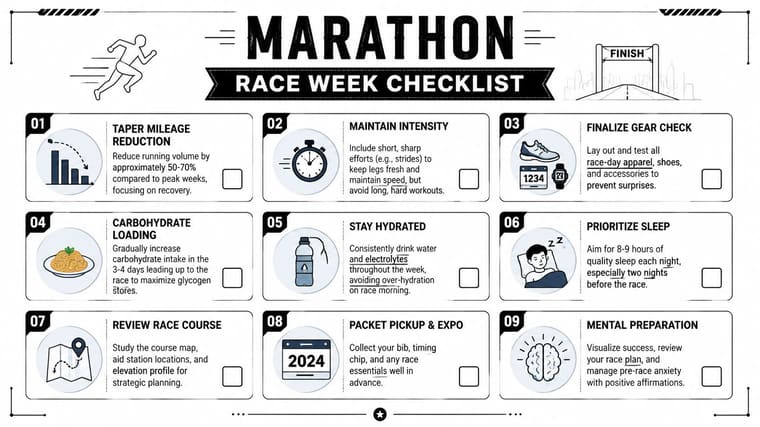
Race week should feel lighter, sharper, and more predictable. Most plans use a 2 to 3 week taper, with mileage stepping down gradually so the body stays fresh without losing its rhythm. Keep the reduction controlled, not dramatic. That gives you room to arrive rested instead of second-guessing every easy run.
The checklist that keeps race week calm
- Taper mileage reduction: cut volume with intention, not panic.
- Maintain intensity: keep a few short, controlled efforts so the legs do not go flat.
- Gear check: lay out shoes, bib, socks, watch, and layers early.
- Carbohydrate loading: settle into the familiar, higher-carb routine in the final days.
- Hydration: sip steadily instead of trying to fix everything the night before.
- Sleep: protect the nights leading into race day, especially the second night before.
- Course review: know the turns, aid stations, and terrain.
- Packet pickup: get the bib and timing chip sorted before the last-minute rush.
- Mental prep: rehearse the first miles, the fueling plan, and the backup plan if the weather changes.
A calm checklist does more than reduce stress. It keeps small details from turning into race-morning problems.
What should stay in the week
Short shakeout runs can help, but only if they stay short. A few strides or brisk pickups are enough to keep the nervous system awake without creating fatigue. Heavy workouts, new shoes, and experimental food are all bad ideas this close to the start.
The taper feels strange because effort drops before confidence does. That mismatch is normal. Trust the reduction, keep the routine simple, and focus on arriving on the line rested rather than restless. If you want a simple way to keep the countdown visible, Pretty Progress’s home-screen timer guide shows how to set that up without adding another layer of work.
Tracking Timeline with Pretty Progress Widgets
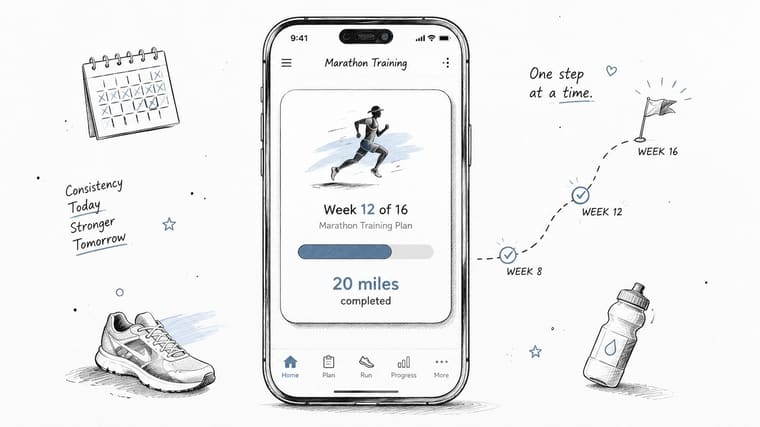
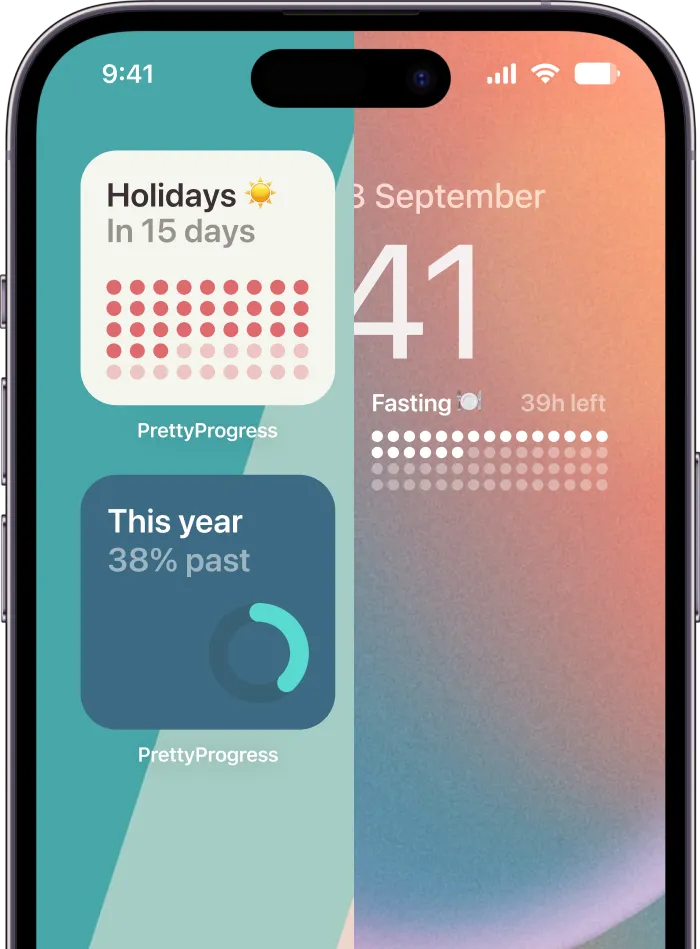
A marathon timeline works better when you can see it without hunting for it. That’s the whole case for widgets and glanceable trackers, they keep the next target visible when motivation drops and routine gets noisy. Pretty Progress is one option for that because it can show a start date, an end date, and a progress bar or countdown widget across devices, including iPhone, iPad, Apple Watch, Mac, and Android. Its home-screen timer guide shows how to put that visibility where you’ll see it.
Set it up around the milestones that matter most, not just the final race date. That can mean one widget for the whole plan, another for the next long run, and a third for taper countdown. The value isn’t decoration, it’s reducing the mental load of remembering where you are in the build.
If you like a simple system, use one widget for the current phase and one for the race itself. If you prefer more detail, track each major checkpoint separately, such as base completion, peak week, and taper start. Either way, the point is the same, the timeline stops living in a training log only and starts showing up during the day.
If you want a simpler way to keep your marathon timeline in view, set up a countdown or progress widget now, then connect each major training phase to a visible milestone. Start with Pretty Progress and keep the next run, the next long run, and race day in sight every day.