
July 7, 2026
Car Maintenance Schedule: The Ultimate Guide for 2026
Don't guess on vehicle care. Our complete car maintenance schedule guide provides mileage-based tables, seasonal checks, and tracking tips to save you money.
You’re probably here because your car is running fine right now, but you have a nagging feeling you’re forgetting something. Maybe the oil change sticker is long gone. Maybe your phone reminder got swiped away. Maybe you drive so little that you assume maintenance can wait.
That’s a common point of confusion. A good car maintenance schedule isn’t about memorizing a giant list of parts. It’s about knowing what matters now, what can wait, and how to keep track of it in real life.
Think of maintenance like regular checkups instead of emergency room visits. Small, planned service keeps your car safer, steadier, and cheaper to own. It also gives you control. You stop guessing, and you start managing the car on purpose.
Table of Contents
- The Financial Case for Regular Car Maintenance
- The Ultimate Mileage-Based Maintenance Schedule
- Essential Monthly and Seasonal Car Checks
- Warning Signs Your Car Needs Immediate Attention
- DIY Maintenance vs Calling a Professional
- Tailoring Your Schedule for Climate and Driving Habits
- How to Track Your Maintenance Schedule Effectively
The Financial Case for Regular Car Maintenance
A lot of drivers hesitate on maintenance because it feels like paying for something that isn’t broken. That’s understandable. You hand over money for an oil change, a fluid service, or a filter replacement, and the car often feels the same on the drive home.
But the money question cuts the other way too. According to car maintenance statistics compiled with 2026 RepairPal and AAA data, the average American spends about $936 per year on routine maintenance and unscheduled repairs. The same source says that when tire wear, fluids, and incidentals are included, that annual total works out to roughly $1,424, or 9.83 cents per mile, based on average annual mileage.
Maintenance is planned spending
Planned spending is almost always easier to handle than surprise spending. When you know your oil service, brake inspection, or coolant replacement is coming, you can budget for it, schedule it, and compare shops calmly.
That’s the same reason people use a bill payment reminder system for recurring expenses. Maintenance works better when you treat it like a predictable obligation instead of an emergency.
Practical rule: If a service feels inconvenient today, ask yourself what it protects tomorrow.
The expensive part is usually delay
Some parts give warning before they fail. Others don’t. Timing belts are a good example. Factory scheduled maintenance guidance notes that timing belts are commonly inspected or replaced between 60,000 and 90,000 miles, and if one breaks, it can cause immediate engine damage.
Here’s the everyday version of that lesson:
- Oil changes protect the engine: Fresh oil handles heat and friction better than worn oil.
- Brake service protects more than pads: If you wait too long, metal-on-metal contact can damage other brake parts.
- Fluid changes prevent chain reactions: Old coolant, brake fluid, or transmission fluid can lead to problems that spread.
Resale value follows records
Buyers and service departments trust paperwork. A folder of receipts, a note in the glovebox, or a clean digital history tells the next owner that the car wasn’t ignored.
That doesn’t mean you need perfect records from day one. It means starting now still matters. The best car maintenance schedule is the one you’ll follow, because consistency saves money better than good intentions.
The Ultimate Mileage-Based Maintenance Schedule
You glance at the odometer during a gas stop and realize you have no idea what the car is due for next. That is how maintenance gets missed. A good schedule solves that by turning random service visits into a simple checklist tied to mileage, time, and your driving pattern.
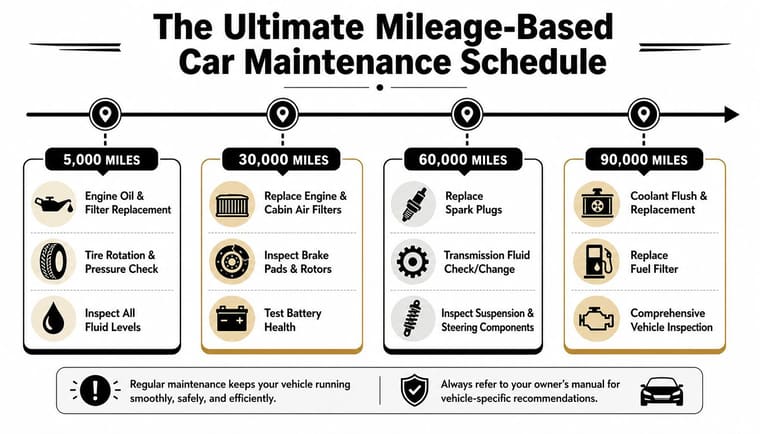
A practical starting point is the 30,000, 60,000, and 90,000 mile framework described in this maintenance schedule guide. It is not a substitute for your owner’s manual. It is a map. Your manual gives the exact route for your engine, transmission, and warranty requirements.
Here’s a visual version you can save.
Start with the owner’s manual
The owner’s manual is the car’s care sheet. Internet checklists are general advice. The manual tells you what applies to your exact vehicle, including whether your engine uses a timing belt or timing chain, which fluids your car needs, and whether your driving counts as severe service.
If you drive a specific model and want to see how a real model-based plan looks, this Toyota Tacoma maintenance schedule is a useful example of how service items are grouped by mileage.
The core mileage milestones
For many daily drivers, oil service every 5,000 to 7,500 miles is the rhythm that keeps everything else organized. If you remember one number, remember your next oil change. Then stack the bigger services around it.
Here’s a simple working schedule you can use as a starting point:
| Mileage | What to do | Why it matters |
|---|---|---|
| Every 5,000 to 7,500 miles | Oil change, tire rotation, basic fluid and brake check | Fresh oil reduces internal wear, and rotation helps tires wear evenly |
| 30,000 miles | Oil service, tire rotation, air filter replacement, inspection of brakes, fluids, suspension | This is often the first major checkpoint for wear items and early leaks |
| 45,000 miles | Replace brake fluid, if your manual calls for it | Brake fluid absorbs moisture over time, which can reduce braking performance |
| 30,000 to 60,000 miles | Service transmission fluid when your manual calls for it | Clean fluid helps protect shift quality and transmission life |
| 60,000 miles | Repeat routine services, inspect or replace spark plugs and coolant based on the manual | Combustion and temperature control both depend on these items doing their job |
| 75,000 to 90,000 miles | Confirm timing belt replacement interval if your engine uses one | Missing this service can lead to serious engine damage |
| 90,000 miles | Major inspection and milestone service | Wear that was gradual earlier becomes more expensive to ignore here |
The numbers matter, but the pattern matters more. Small repeat services protect the expensive systems. Oil protects the engine. Coolant protects temperature control. Brake fluid protects hydraulic response. Tire rotation protects the tires you already paid for.
Some service items confuse people because they do not all age the same way. Spark plugs wear slowly. Filters clog gradually. Brake fluid degrades with time, not just miles. That is why a mileage chart works best when you pair it with a calendar reminder or a monthly countdown timer for recurring car care tasks, especially if your car sits more than it drives.
What each milestone is really checking
At 5,000 to 7,500 miles, you are handling the basics. This is the “keep the car healthy” interval. A mechanic is checking for uneven tire wear, fluid loss, brake wear, and anything unusual before it turns into a repair.
At 30,000 miles, the car is old enough for patterns to show up. Filters may be dirty, brakes may be wearing unevenly, and suspension parts may start showing play. Nothing here is dramatic. That is the point. You want to catch wear while it is still boring.
At 60,000 miles, many vehicles are ready for more than routine oil and tire work. Depending on the manual, spark plugs, coolant, and transmission service are often due. Some manufacturers also move certain inspections from “look at it” to “replace it.”
At 90,000 miles, deferred maintenance usually stops hiding. Rubber parts age, fluids lose their protective qualities, and skipped services start stacking up. A car that has been tracked well usually feels steady here. A car that has been maintained by memory often gets expensive.
Make the schedule usable in real life
A maintenance plan only works if you can follow it on a busy week. Keep it simple. Track three things: current mileage, next due service, and the due date if you do not drive much.
A paper log in the glovebox still works. A phone note works too. Many drivers do better with a small digital tracker or progress widget because it answers one question fast: what is next? That matters for low-mileage drivers, families with two cars, and anyone dealing with winter cold, desert heat, dusty roads, short trips, or long highway commutes.
If your manual gives two intervals, one by mileage and one by time, follow whichever comes first. That single rule clears up most confusion.
Essential Monthly and Seasonal Car Checks
Mileage matters, but time matters too. Low-mileage drivers often overlook this. If you only drive to the grocery store, the car still ages in the driveway.
Verified guidance for low-use vehicles says drivers who cover less than 5,000 miles per year must change their oil at least once annually, regardless of mileage, to help prevent moisture buildup and fluid degradation, as noted in this low-mileage maintenance discussion.
A quick monthly routine
Set aside ten minutes once a month. You don’t need a lift, a toolbox full of gear, or mechanic-level skill.
- Check tire pressure: Look for a visibly low tire and confirm pressure with a gauge.
- Walk around the lights: Test headlights, brake lights, and turn signals.
- Look under the car: Fresh puddles matter. A new leak is easier to fix than an old one.
- Check fluid levels: Washer fluid is simple. Engine oil and coolant deserve a quick look too, using the proper method in your manual.
- Pay attention to battery behavior: Slow cranking is your warning, especially on a car that sits.
A monthly reminder helps because these checks are easy to forget when nothing feels urgent. Some people use a recurring visual cue, like a monthly countdown timer, so the check doesn’t drift from one month into the next.
Seasonal checks that save trouble
Season changes are a good trigger because they line up with what the car is about to face.
For winter, focus on battery strength, tire condition, heater performance, washer fluid, and visibility. If you want a practical walkthrough for cold-weather prep, SwiftJet’s winter prep guide is a useful companion.
For summer, pay attention to coolant condition, A/C performance, tire pressure, and any sign the engine is running hotter than usual.
Low mileage doesn’t mean low maintenance. It often means you need a calendar-based routine instead of a mileage-based one.
Second cars, city cars, and work-from-home cars benefit from this approach most. They usually don’t wear out from distance first. They wear out from sitting, short trips, and missed time-based service.
Warning Signs Your Car Needs Immediate Attention
A maintenance schedule handles prevention. Warning signs tell you when prevention has already turned into a live problem. The trick is knowing which signals mean “book service soon” and which mean “stop driving.”
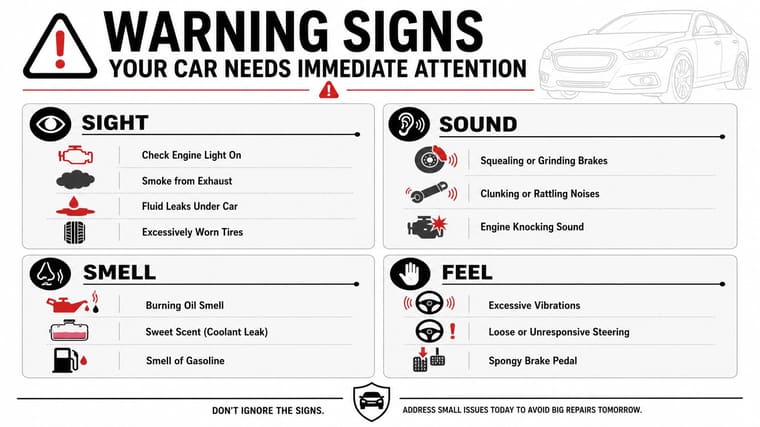
Start with a quick visual guide.
What you see and hear
- Dashboard warning lights: Don’t panic, but don’t ignore them.
- Smoke from the exhaust or engine area: Pull over safely and assess the situation.
- Fluid under the car: A small stain can turn into a serious fluid-loss problem.
- Squealing or grinding brakes: That’s a direct sign your brake system needs attention.
- Knocking, rattling, or clunking noises: New sounds almost always mean a new issue.
A short explainer can help if you want to hear how mechanics describe urgent symptoms in plain language.
What you smell and feel
Smells are surprisingly useful. A sweet smell often points toward coolant. A burning smell can mean oil, belts, or overheated components. A gasoline smell deserves prompt attention because fuel leaks are never casual.
The way the car feels matters just as much:
- Vibration through the steering wheel: Could be tire, brake, or suspension related
- Pulling to one side: Often tied to alignment, tire issues, or braking problems
- Loose steering: Don’t wait on this
- Spongy brake pedal: Treat this as urgent
If the car suddenly sounds, smells, or feels different, believe it. Cars usually give clues before they quit.
A simple rule helps here. If the symptom affects braking, steering, overheating, smoke, or fuel smell, treat it as immediate. If it’s a mild noise with no change in safety or drivability, book an inspection soon and monitor it closely.
DIY Maintenance vs Calling a Professional
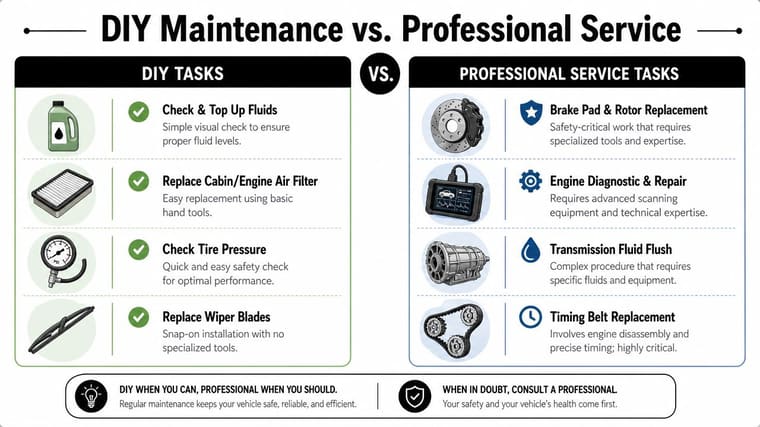
Doing some maintenance yourself can save money and help you understand your vehicle better. But confidence and overconfidence are not the same thing. The safe line is simple. If the job is basic, visible, and easy to reverse-check, it’s often DIY-friendly. If it affects braking, timing, major fluids, or diagnostics, let a professional handle it.
Good jobs for beginners
These are realistic first steps for most drivers:
- Checking tire pressure: Easy, fast, and important for safety
- Replacing wiper blades: Usually a simple snap-on job
- Topping up washer fluid: Low risk and useful year-round
- Replacing cabin or engine air filters: Often straightforward with basic hand tools
- Checking engine oil level: As long as you follow the correct procedure for your car
These tasks build familiarity. You learn where things are, what looks normal, and what doesn’t.
Jobs that belong in a shop
Some work looks simple in a video and becomes risky in a driveway.
| Leave this to a professional | Why |
|---|---|
| Brake pad and rotor replacement | Brakes are safety-critical and require correct torque, fitment, and inspection |
| Transmission fluid service | The fluid type and procedure must match the vehicle |
| Timing belt replacement | This is precision work tied directly to engine timing |
| Engine diagnostics | Modern fault tracing often needs scan tools and experience |
A good shop also does something you can’t easily do at home. It sees patterns. A technician may notice uneven wear, fluid seepage, or developing suspension play while handling a routine service.
If you’re unsure, use this test: Can I clearly verify I did it correctly before driving at full speed? If the answer is no, that job probably belongs to a professional.
Tailoring Your Schedule for Climate and Driving Habits
A generic car maintenance schedule is only a starting point. Two drivers can own the same model, drive the same mileage, and need different service timing because their daily conditions aren’t the same.
Verified guidance recommends a hybrid approach for severe driving, where frequent short trips, extreme heat, and similar conditions may require cutting standard maintenance intervals by 50% to maintain reliability, according to this severe-use maintenance guidance.
When your driving counts as severe use
A lot of people think “severe driving” means racing, towing huge loads, or off-roading every weekend. Sometimes it does. But in normal life, severe use often looks boring.
You may need a shortened schedule if you regularly do any of these:
- Short trips: The engine doesn’t always reach full operating temperature long enough to burn off moisture well.
- Stop-and-go traffic: Brakes, fluids, and engine heat get worked harder.
- Extreme heat: Fluids and rubber components have a tougher life.
- Dusty conditions: Filters clog faster.
- Frequent heavy loads: Towing or hauling adds stress.
If that sounds like your driving, don’t follow the “ideal highway miles” schedule. Use the more conservative version.
Climate changes the schedule too
Climate-specific advice is often too vague, but it matters. Verified guidance on regional maintenance notes that coastal areas may require constant washing and quality rustproofing to limit rust, while cold-climate states benefit from undercoating because of road salt, as discussed in this climate-focused maintenance article.
That means your personalized plan should include more than mileage:
- Coastal areas: Wash the underbody more often and watch for corrosion.
- Snow and salted roads: Protect the underside and inspect brake and suspension components closely.
- Mountain driving: Long descents and heavy engine braking increase strain on oil and cooling systems.
- Hot climates: Keep a closer eye on coolant health, battery condition, and rubber hoses.
If winter is your main challenge, this guide on winterizing your car effectively adds practical prep ideas worth reviewing before the season changes.
One more time-based rule belongs here because people miss it often. Verified guidance says tires should be replaced after six years regardless of tread depth in the severe-use source above. Rubber ages even when the tread still looks decent.
How to Track Your Maintenance Schedule Effectively
Most maintenance plans fail for a simple reason. People don’t forget that cars need care. They forget when each item is due.
A working system needs to answer four questions fast: what was done, when it was done, what’s next, and whether the trigger is mileage or time.
Paper works if you keep it simple
A glovebox notebook still works well. Keep one page per service item.
Write down:
- Date of service
- Mileage at service
- What was done
- What is due next
- Shop name or part used
This method is great for people who like physical records and quick receipt storage. It also helps at resale time because the history stays with the car.
A spreadsheet gives you better visibility
A basic spreadsheet is my favorite middle-ground option. Make one row per item and sort by what’s due first.
Use columns like these:
| Service item | Last date | Last mileage | Next due by date | Next due by mileage | Notes |
|---|---|---|---|---|---|
| Oil change | |||||
| Tire rotation | |||||
| Brake fluid | |||||
| Coolant |
This works especially well if you manage more than one vehicle in the household.
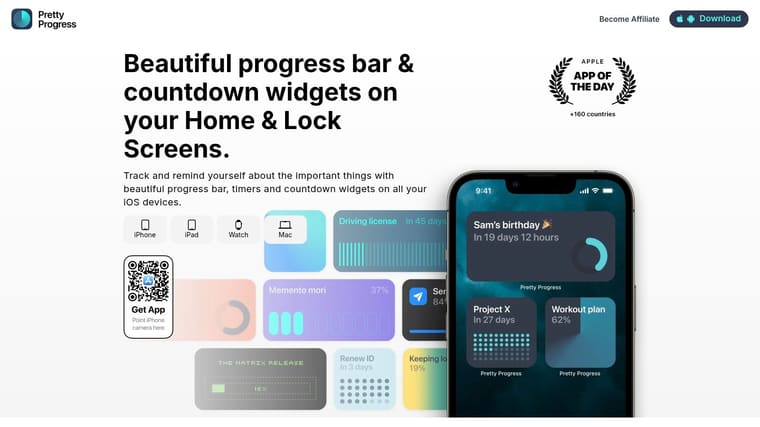
Widgets make reminders harder to ignore
Some people need the reminder to stay visible, not buried in a notes app or calendar. That’s where a visual tracker helps.
Instead of writing “oil change due sometime next month,” you can use a progress-based reminder that shows time passing at a glance. That approach works well for maintenance because it turns vague future service into something visible every day, similar to a goal progress tracker app.
The best tracking system is the one that stays in front of your eyes before the service becomes overdue.
A good tracking habit also separates mileage-based items from time-based items. For example, your oil might be due by date even if you haven’t reached the mileage target. Your tire rotation may be mileage-driven. Your seasonal checks fit best on the calendar.
If you want one practical setup, use this:
- Keep receipts in one place.
- Update your log the same day service is done.
- Set the next due item immediately, by mileage, date, or both.
- Review the list once a month so nothing sneaks up on you.
A car maintenance schedule doesn’t need to be complicated. It needs to be visible, current, and easy to update.
If you want a cleaner way to keep maintenance dates and service intervals visible, Pretty Progress can help. It turns deadlines and recurring timelines into simple, glanceable widgets on your devices, which makes it easier to keep your next oil change, seasonal check, or tire rotation from slipping past you.