
June 25, 2026
Intermittent Fasting Tracker: A Perfect Setup Guide
Learn how to choose, set up, and use an intermittent fasting tracker to build a consistent habit. Our step-by-step 2026 guide makes it easy.
You’re probably doing this in your head right now.
You finished dinner sometime last night, but was it 8:10 or closer to 8:40? You want to fast until lunch, but now you’re doing time math before you’ve even had coffee. That’s where intermittent fasting often stops feeling simple. The eating pattern itself can be straightforward. The tracking is what turns it into friction.
A good intermittent fasting tracker should remove that friction, not add more of it. In practice, that usually means less logging, fewer screens, and something you can understand at a glance. After trying dedicated fasting apps with meal logs, education tabs, and too many nudges, I’ve found that a visual widget setup works better for real life. You don’t need another app to manage. You need a timer you’ll notice and keep using.
Table of Contents
- Why a Visual Tracker Is Your Secret Weapon
- Defining Your Goals and Fasting Window
- Choosing the Right Intermittent Fasting Tracker
- Setting Up Your Tracker for Glanceable Motivation
- Beyond the Timer Building Consistency and Troubleshooting
- Conclusion From Tracking to Second Nature
Why a Visual Tracker Is Your Secret Weapon
Manual fasting works for about three days. Then life gets noisy.
You stay out late, dinner shifts, a snack sneaks later than planned, and suddenly you’re trying to remember exact times from the night before. That mental overhead matters more than people think. If every fast starts with uncertainty, the habit starts with resistance.
A visual tracker fixes a very specific problem. It turns fasting from a memory task into a visible countdown. You don’t have to calculate when your eating window opens. You just look.
Why the visual part matters
A timer hidden inside an app still requires effort. A widget on your screen changes the experience because it’s glanceable. The progress bar becomes part of your environment, like a clock or calendar reminder.
That does three useful things:
- It cuts decision fatigue. You stop asking, “Can I eat yet?”
- It reduces time math. The answer is already on screen.
- It keeps momentum visible. A half-finished bar feels easier to protect than an abstract plan.
Practical rule: If you need to open an app, tap twice, and remember what happened yesterday, your fasting setup is already too complicated.
This approach also fits how people use fasting now. Intermittent fasting is no longer a fringe habit. The category is projected to grow at a 15.7% CAGR from 2023 to 2030, and 10% of Americans already use intermittent fasting as a primary diet method, according to fasting market trend data.
A tracker should feel light
The tracker’s job isn’t to impress you with features. It’s to support the habit.
That’s why I prefer a widget-style setup over a full fasting platform for many users. The visual cue is enough. A simple fasting countdown widget for iPhone gives you the one thing that matters most in the moment: a clear sense of progress.
When people struggle with fasting, it usually isn’t because they don’t understand the concept. It’s because their system asks for too much attention. The right visual tracker lowers the effort so the habit has a chance to stick.
Defining Your Goals and Fasting Window
Most fasting mistakes happen before the first fast starts.
People pick a schedule because it sounds effective, then realize it clashes with school, work, social plans, or training. A fasting window has to fit your day. If it doesn’t, no tracker will save it.
Start with your day, not the protocol
The common schedules are easy to describe. The important question is whether they match how you live.

Here’s the simplest way to think about them:
| Schedule | What it feels like in real life | Good fit for |
|---|---|---|
| 16:8 | Skip breakfast or eat a later lunch, then finish dinner at a consistent time | Most beginners |
| 18:6 | Tighter daily structure with less room for casual snacking | People who already handle 16:8 well |
| 20:4 | A narrow eating window that requires planning | People who prefer fewer, larger meals |
| OMAD | One main meal a day. Very rigid. | Advanced fasters only |
| 5:2 | Normal eating on most days, restricted intake on two days | People who dislike daily timing rules |
If you want a broader practical overview before choosing, this expert guide on intermittent fasting is a useful read because it helps frame the common approaches without turning the whole thing into a science exam.
Pick a window you can repeat
A good starting window should feel boring. That’s a compliment. Boring routines last.
For a standard workday, 16:8 often works well because it lines up with a late breakfast or lunch start and a normal dinner. If you work a 9 to 5 schedule, a noon to 8 PM eating window is often easier than trying to stop eating too early and getting derailed by evening hunger.
If you’re a student or your schedule changes daily, anchor your plan to the part of the day you control most. For some people that means a consistent first meal time. For others it means a firm kitchen cutoff at night.
A practical setup looks more like this:
- Office schedule: Delay the first meal until midday and keep dinner consistent.
- Shift work: Define your window around your wake time, not the clock on the wall.
- Family dinners: Protect the evening meal and slide the first meal later.
- Training days: Keep the fasting plan flexible enough that workouts don’t feel miserable.
Your first fasting window should feel sustainable on an ordinary Tuesday, not just on your most disciplined day.
If you want help calculating exact start and end times before building the habit into your screen, an intermittent fasting duration calculator makes this much easier than doing the math manually.
The key is choosing a schedule you can repeat with minimal friction. You can always tighten it later. Starting with a plan that fits your life beats starting with one that looks impressive.
Choosing the Right Intermittent Fasting Tracker
The app store is full of fasting trackers that promise structure, coaching, analytics, and community. Some people like that. However, such extensive features are often unnecessary.
What they need is a visible countdown and a small amount of accountability.

Why complex trackers lose people
Dedicated fasting apps often start strong because they feel motivating. There’s onboarding. There are streaks. There’s an explanation for every phase of the fast. Then the habit settles into daily life, and the extra layers start to feel like chores.
That drop-off isn’t just a hunch. A 2022 study of fasting app users found that long-term adherence was rare, with only 6.9% of users remaining active after 26 weeks in the tracked cohort, according to the JMIR mHealth retention study.
That’s the trade-off with feature-heavy apps. They can create excitement at the beginning, but they often ask for more attention than the habit itself deserves.
What a simpler tracker does better
A simpler intermittent fasting tracker has a narrower job:
- Show the fasting window clearly
- Stay visible without opening the app
- Avoid turning every fast into data entry
- Fit alongside other goals instead of becoming its own ecosystem
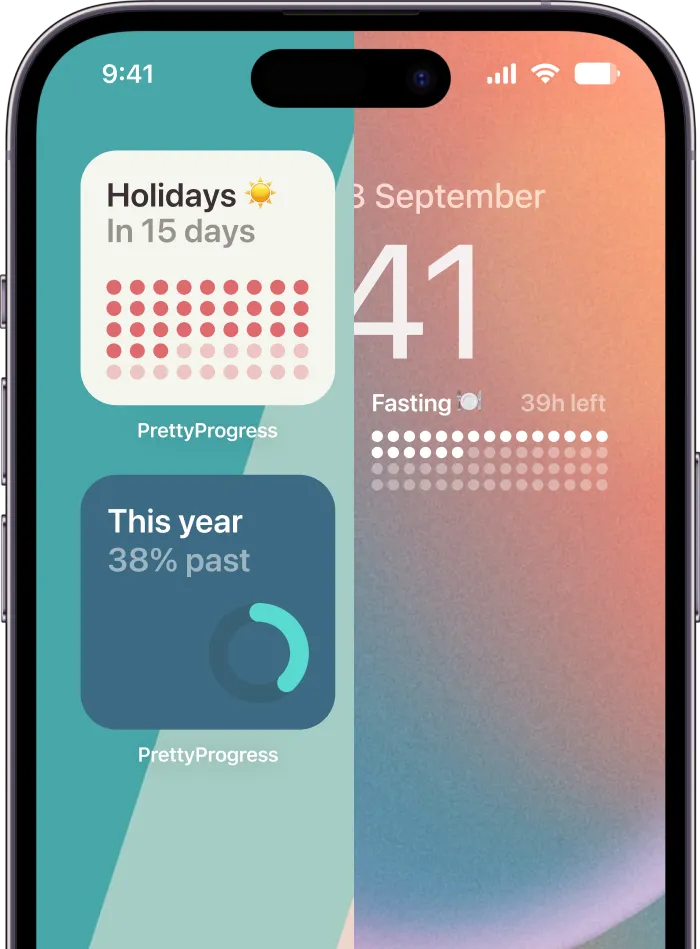
That’s where a flexible widget app can be more effective than a dedicated fasting app. Rather than centering everything around food logs, coaching tabs, and social features, it focuses on the countdown itself. In that category, Pretty Progress is one option. It lets you create a fasting countdown as a visual progress bar and place it on your Home Screen or Lock Screen, which is often enough for people who want structure without friction.
A short demo makes the difference easier to see in action.
The tracker that survives month three is usually the one that asks the least from you on day ninety.
I still think dedicated apps have a place. If you want meal logging, educational content, and a more guided experience, they can be helpful. But if your main problem is consistency, not information, the minimalist route usually wins. A clean progress bar on your screen is harder to ignore and easier to keep using than a complicated dashboard buried behind notifications.
Setting Up Your Tracker for Glanceable Motivation
Setup matters because it decides whether you’ll consistently use the tracker when life gets messy.
The goal isn’t to build a perfect fasting system. It’s to make the next fast obvious. Once the countdown is visible on your device, you stop relying on memory and willpower.
Build the countdown first
Start with one fasting schedule, not five variations. Pick the window you chose earlier and create a countdown that reflects your real eating rhythm.
Here’s the simplest setup flow:
- Choose your fasting length. If you’re starting with 16:8, set a fasting duration that matches it.
- Pick a clear start time. For many people, that’s right after dinner.
- Set the end time automatically. Let the timer calculate when the eating window opens.
- Name it something plain. “Fast until lunch” is better than a vague label you’ll ignore.
- Keep the design easy to read. Good contrast beats decorative clutter.

If you want extra ideas on what makes a timer easy to see throughout the day, this guide to a home screen timer setup is useful because the same visibility rules apply to fasting widgets.
Put it where your eyes already go
This is the part often skipped, and it’s the part that makes the system work.
A tracker hidden on page three of your phone behaves like a task. A widget on the first screen behaves like part of your routine. Put it somewhere you naturally check many times a day.
Try this placement logic:
- Lock Screen: Best if you want instant status with zero tapping.
- Primary Home Screen: Good if you frequently access your phone and want the bar visible next to your calendar or to-do app.
- Secondary screen or widget stack: Fine if you prefer less visual noise, but easier to forget.
- Tablet or desktop companion view: Helpful if you work from one device for long stretches.
I’d keep the fasting widget near tools you already trust, like your calendar, reminders, or weather. That makes it feel normal rather than aspirational.
Keep the design focused
You don’t need a loud theme. You need a widget that reads quickly.
A few practical choices help:
- Use a progress bar first. Bars show momentum better than text-only timers.
- Limit competing widgets. If everything on screen is trying to grab your attention, the fasting tracker disappears.
- Choose one color language. If fasting is always the same accent color, your brain learns it faster.
- Favor one active timer. Multiple fasting widgets create confusion unless you’re intentionally planning ahead.
A glanceable tracker works because it removes the moment of negotiation. You see the bar, and the decision is already simpler.
This setup sounds minor, but it changes the feel of fasting. Instead of opening an app to check whether you’re still on plan, the plan is already in front of you. That’s a small shift with a big behavioral payoff.
Beyond the Timer Building Consistency and Troubleshooting
The timer helps, but consistency comes from how you handle imperfect days.
Individuals rarely quit fasting because one day went badly. They quit because one off-plan meal turns into “I blew it,” and then the system collapses. A practical intermittent fasting tracker should support recovery, not just measurement.
Use reminders without letting them run your day
A reminder should help you start the fast, not flood you with guilt.

Good reminder habits tend to be simple:
- Set one start reminder. Use it near the time you usually finish dinner.
- Use one pre-close cue. A gentle alert before your eating window ends can stop accidental late snacking.
- Avoid constant check-ins. Too many alerts turn a clean habit into background annoyance.
If you use supplements during your eating window or want a more cautious look at what may or may not fit your routine, this clinician’s guide to fasting supplements is worth reading for practical context.
What to do when the day goes sideways
You broke the fast early. Fine. Record what happened and move on.
Don’t try to “punish” the mistake by pushing the next fast too aggressively. That often leads to an overly hard rebound day, which makes the whole system feel unstable. Return to the normal window at the next sensible point.
A few troubleshooting rules work well:
- A late meal isn’t failure. Shift the next start time and keep the rhythm intact.
- Weekend drift is normal. Build a looser weekend rule if your social life makes strict timing unrealistic.
- Low energy in the morning matters. If your work requires focus early, a later first meal may not be the right move.
- Hunger spikes need context. Sometimes the issue is the window. Sometimes it’s what you ate before it closed.
Miss one fast cleanly. Don’t turn one messy evening into a messy week.
There’s also a common worry that fasting leads to overeating during the eating window. That can happen, but the picture is more nuanced than people assume. Between 12% and 15% of users report compensation eating on non-fasting days, yet multiple clinical trials found no significant increase in overall appetite compared with regular calorie restriction, according to the Harvard Nutrition Source review of intermittent fasting.
That’s useful because it reframes the problem. The answer usually isn’t panic. It’s better meal structure, a more realistic fasting window, and less all-or-nothing thinking. The tracker supports that by making your pattern visible. You can spot whether you’re consistently stretching too hard, starting too late, or setting windows that don’t fit your actual schedule.
Conclusion From Tracking to Second Nature
The most effective intermittent fasting tracker usually isn’t the most advanced one. It’s the one you keep using when motivation is ordinary.
That’s why a simple visual setup works so well. You choose a realistic window, turn it into a countdown, and place it where you’ll see it without effort. No digging through tabs. No unnecessary logging. Just a clear signal that helps you stay aligned with the plan you already chose.
Over time, the tracker does something more important than count hours. It reduces the mental load around fasting. You stop negotiating with the clock. You stop guessing when the window ends. The routine starts to feel familiar, and that’s when the habit gets stronger.
A good system should fade into the background while your consistency grows. The widget is only the scaffold. The ultimate goal is a pattern that feels natural enough that you don’t have to think about it much at all.
If your current setup feels noisy, complicated, or easy to ignore, simplify it. Put the progress where your eyes already go. Make the next fast obvious. That alone can change whether intermittent fasting feels like a chore or a rhythm.
If you want a cleaner way to keep your fasting window visible, Pretty Progress gives you a simple countdown and progress-bar widget setup for Home and Lock Screens, so your plan stays glanceable instead of buried inside another app.