
June 30, 2026
How to Stop Procrastinating: A Science-Backed Action Plan
Learn how to stop procrastinating with an actionable, step-by-step guide. We cover the causes, evidence-based techniques, a 30-day plan, and ADHD-specific tips.
You know the moment. A task matters. The deadline is close enough to feel uncomfortable, but not close enough to force action. You open your laptop, then check your phone. You tell yourself you’ll start after one more video, one more email, one more coffee, one more sweep through your notes.
Hours later, the task is still there. The guilt is louder. Starting feels harder than it did in the morning.
If that’s where you are right now, the problem probably isn’t laziness. It’s that your brain is trying to escape discomfort. The good news is that procrastination is workable when you treat it like an emotional regulation problem, not a moral failure. That changes everything about how to stop procrastinating.
Table of Contents
- Why You Can’t Stop Procrastinating (It’s Not Laziness)
- Understand the Emotional Root of Procrastination
- Your Toolkit of Evidence-Based Techniques
- The 30-Day Plan to Build an Unbreakable System
- Troubleshooting Pitfalls and Adapting for ADHD
- Frequently Asked Questions About Procrastination
Why You Can’t Stop Procrastinating (It’s Not Laziness)
The usual story goes like this: you had time, you wasted it, now you’re stressed, so you assume the problem is discipline. That story is wrong often enough that it keeps people stuck for years.
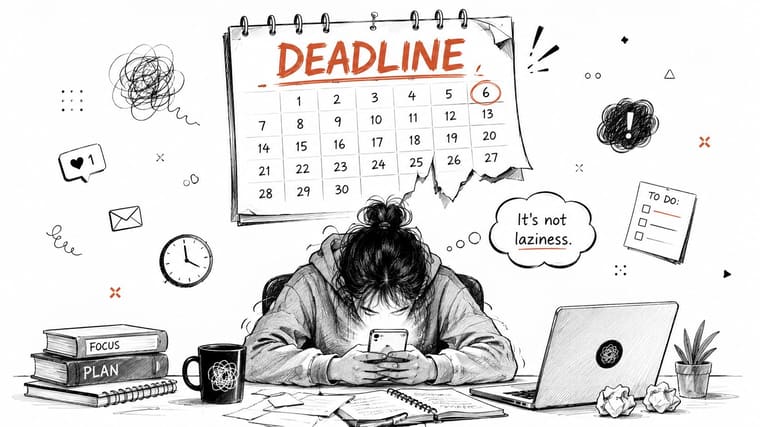
Procrastination is usually an attempt to feel better now. You avoid the task because the task brings up dread, self-doubt, boredom, confusion, or fear of doing it badly. Scrolling, snacking, cleaning, messaging, researching, and “getting organized” all work for a moment because they reduce that discomfort.
That doesn’t make the pattern harmless. Approximately 20% of adults are chronic procrastinators, and one study found that a single-point increase on a 5-point procrastination scale correlates with a $15,000 drop in annual salary, according to this procrastination guide. That’s not a tiny habit. It affects work, income, confidence, and stability.
The real problem is emotional escape
When someone says, “I know exactly what to do, I just can’t make myself do it,” I don’t hear laziness. I hear resistance.
Resistance often sounds reasonable in the moment:
- “I need to feel more ready.” You wait for confidence before action.
- “I should do it properly later.” Perfectionism disguises delay.
- “I’m too behind already.” Shame turns one delayed task into a full shutdown.
- “I’ll start when I have a bigger block of time.” You reject small progress because it feels unsatisfying.
Practical rule: If you keep avoiding a task you genuinely care about, the issue is probably not character. It’s that the task triggers an emotion you haven’t learned to work with yet.
You are not broken
People rarely solve procrastination with more self-attack. They usually solve it when they stop asking, “Why am I like this?” and start asking, “What feeling am I trying not to feel?”
That shift gives you an advantage. If the problem were laziness, the answer would be guilt and pressure. But if the problem is emotional regulation, the answer is different. You learn to lower the threat, shrink the starting point, and make action easier than avoidance.
That’s the system that works.
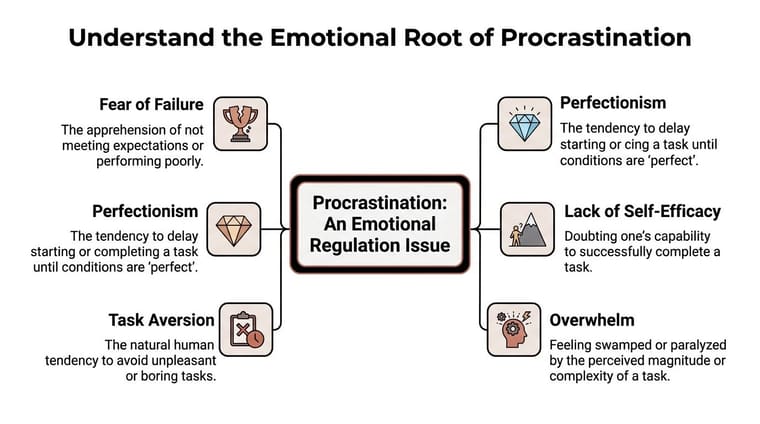
Understand the Emotional Root of Procrastination
Most procrastination advice starts too late. It tells you how to organize tasks after your nervous system has already decided the task feels bad. If you want to learn how to stop procrastinating, you need a method for that exact moment of resistance.
What your brain is trying to avoid
The task itself usually isn’t the whole problem. The hidden layer is what the task represents.
A report might mean possible criticism. Studying might mean facing how behind you are. Cleaning out your inbox might force decisions you’ve been avoiding. Even a simple admin task can trigger resentment if you’re already overloaded.
The CBT-based framework that helps most here is simple: Cognitive Labeling, Cognitive Reframing, Cognitive Distancing, and Initiation, described in this four-step breakdown.
Later in the day, especially if you’re already keyed up, your first job may not be “push harder.” It may be to steady your state first. If your focus is jumpy and caffeine makes that worse, this guide on calm focus without caffeine anxiety gives practical ways to settle your system before you try to work.
Here’s a useful video explanation before you try the drill yourself:
A four-step reset you can use in real time
Use this when you catch yourself circling the task instead of doing it.
-
Label it clearly
Say, “This is procrastination.” Not “I’m a mess.” Not “I’m lazy.” Just name the process. That creates a small gap between you and the impulse. -
Reframe the threat
Ask what your brain thinks is dangerous here. Failure? Embarrassment? Boredom? Then remind yourself that the task is uncomfortable, not unsafe. Your body may react like the task is a threat. That reaction is still just a reaction. -
Distance your identity from the feeling
Tell yourself, “These feelings don’t decide my direction.” This step matters because people often fuse their mood with their identity. “I feel resistant” turns into “I can’t do this.” Those are not the same sentence. -
Initiate with a tiny action
Commit to a very small start. Open the document. Write one sentence. Read one page. Sort one line of the budget. Tiny starts reduce friction better than motivational speeches do.
The first useful goal is not finishing. It’s breaking the freeze.
When people skip these steps, they usually try one of two failed approaches. They either wait for motivation, or they bully themselves. Waiting keeps the task emotionally charged. Bullying adds more dread. Neither creates clean momentum.
This four-step reset does. It gives you a repeatable response for the exact moment your brain wants escape.
Your Toolkit of Evidence-Based Techniques
A good anti-procrastination system needs more than insight. It needs tools that fit different kinds of resistance. Some days you need urgency. Other days you need structure. On low-clarity days, you need the next action chosen in advance.
Use Pomodoro when starting feels heavy
Among students, 80% to 95% report procrastinating, and the Pomodoro Technique is strongly recommended because it uses 25-minute intervals to counter present bias, our tendency to choose immediate relief over future reward, according to the APA’s procrastination overview.
Pomodoro works because it lowers the emotional price of starting. You are not agreeing to “finish the project.” You are agreeing to one short work sprint.
Use it like this:
- Pick one narrow target. “Draft the introduction” works better than “work on report.”
- Set a 25-minute timer. Work only on that target.
- Stop when the timer ends. Then take a short break.
- Repeat if you still have energy. Don’t force marathon mode if consistency is the primary goal.
If you tend to drift during breaks, use the break to stand up, get water, or step away from the screen. Don’t open something that hooks your attention.
Use structure when motivation is unreliable
Pomodoro is one tool. It is not the whole system.
Timeboxing helps when you waste energy deciding when to do the task. You assign a task to a specific block in your calendar. This reduces open-ended dread because the task now has a container.
Implementation intentions help when you know your usual avoidance patterns. Write simple if-then plans such as, “If I feel the urge to scroll before starting, then I will set a 5-minute timer and open the file first.” You are pre-deciding your response.
Habit stacking helps when the task is small but easy to forget. Attach it to an existing routine. After breakfast, review the top three priorities. After shutting your laptop, plan tomorrow’s first task. This is especially useful for maintenance behaviors.
If your weak point is planning rather than effort, these strategies to reduce procrastination offer additional ways to simplify decisions before resistance builds. For a stronger scheduling foundation, this guide to time management best practices is useful when your calendar looks busy but your important work still slips.
Choosing Your Anti-Procrastination Technique
| Technique | What It Is | Best For | Pro Tip |
|---|---|---|---|
| Pomodoro | Short, focused work intervals with breaks | Starting hard tasks and reducing dread | Choose a tiny, specific target before the timer starts |
| Timeboxing | Assigning tasks to fixed calendar blocks | People who delay because the day feels shapeless | Protect your highest-focus block for work that requires thinking |
| Implementation Intentions | Simple if-then plans for likely obstacles | Repeated avoidance triggers and distraction loops | Write the trigger in plain language so you recognize it fast |
| Habit Stacking | Linking a new action to an existing routine | Small recurring tasks and daily consistency | Attach the habit to something you already do automatically |
Use the lightest tool that solves the problem. If a task needs one timed sprint, don’t build a complicated system around it.
The trade-off is straightforward. More structure reduces decision fatigue, but too much structure can become another avoidance ritual. If you spend longer designing your system than doing the work, simplify.
The 30-Day Plan to Build an Unbreakable System
Advice becomes useful when it survives a tired Tuesday, a bad mood, and a messy week. That’s why a short-term challenge works well. It gives you enough time to practice without pretending you’ll become a different person overnight.
Week 1 and Week 2
Week 1 is for noticing patterns. Don’t overhaul your life yet. Track when you procrastinate, what task you avoid, and what feeling shows up first. Keep the notes brief. “Avoided budget review. Felt confused.” “Didn’t start workout. Felt resentful.” This is enough.
Add two rules in the first week:
- Define the next action. Never write “work on project.” Write the first visible step.
- Use the four-step reset once a day. Even if you still resist, practice the sequence.
Week 2 is for building reliable starts. Pick one important task each weekday and begin it with either a 25-minute sprint or a 5-minute initiation. The choice depends on how frozen you feel. If the task feels sticky, use five minutes. If you’re functional but unfocused, use a full sprint.
At the start of this week, plan your key blocks in advance. A simple weekly review helps a lot. This guide on how to plan your week is a good model if you tend to improvise your schedule and regret it later.
Week 3 and Week 4
Week 3 is for protecting momentum. Introduce implementation intentions for your top distractions. Don’t write a long manifesto. Write short responses to predictable failure points.
Examples:
- If I open social media before my first work block, I will close it and start a 5-minute timer.
- If I feel overwhelmed by a big task, I will reduce it to the first visible action.
- If I miss a day, I will restart at the next block, not next Monday.
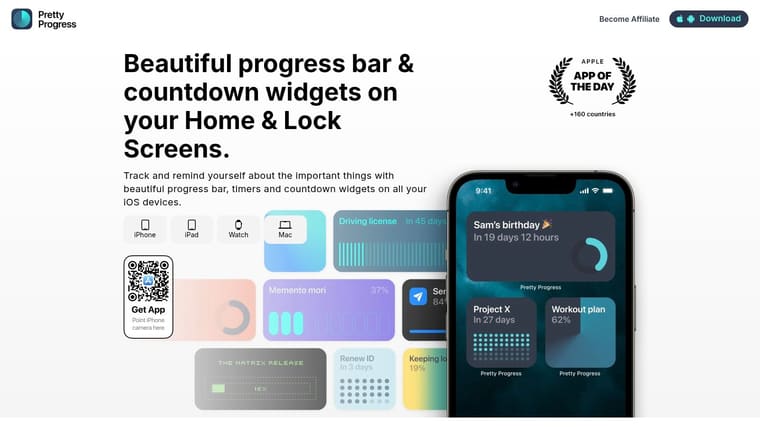
Week 4 is for making the system visible. This stage determines whether consistency takes hold or whether one drifts back into wishful thinking. Put deadlines, countdowns, or progress indicators somewhere you can see them without effort. A visual reminder reduces the chance that your goals disappear behind urgent noise.
Use visual tracking well:
- Make deadlines visible. A countdown to an exam, launch, or project due date keeps time concrete.
- Show project progress. A progress bar is often more motivating than a long to-do list.
- Track streaks carefully. Streaks help, but don’t let one missed day turn into a collapse.
- Keep the display simple. One or two key commitments are enough. Too many visual prompts become wallpaper.
A system becomes durable when it still works after a bad day.
The biggest trade-off in a 30-day plan is ambition. If you try to fix sleep, diet, deep work, email, studying, workouts, and your side project all at once, you’ll create pressure and call it commitment. Keep the focus narrow. One or two meaningful behaviors done consistently will beat a dramatic reset every time.
Troubleshooting Pitfalls and Adapting for ADHD
The mistake I see most often is not procrastination itself. It’s the reaction after it happens. People miss a day, feel ashamed, then use shame as fuel. That usually creates another delay.
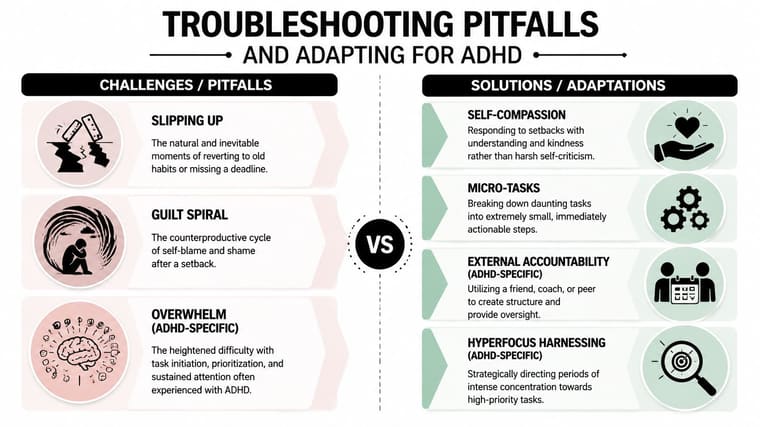
What to do after you slip
Self-criticism feels productive because it sounds serious. In practice, it often deepens avoidance. A study highlighted in this Science Focus article on procrastination found that students who forgave themselves for procrastinating on a first exam procrastinated significantly less on the second one.
That tells you something important. Guilt does not reliably create action. Relief, honesty, and repair do.
Try this after a setback:
- Name what happened plainly. “I avoided the task.”
- Drop the courtroom voice. You are not deciding your worth.
- Repair fast. Restart with the smallest available step.
- Lower the quality bar. A bad first draft beats a delayed perfect one.
You don’t need a fresh week. You need a clean next move.
That last point matters more than many people realize. Perfectionism makes starting feel expensive. Strategic mediocrity makes it cheaper. Give yourself permission to produce an ugly draft, a rough outline, a messy spreadsheet, or a partial review. Completion improves quality. Delay does not.
How to adapt the system for ADHD
ADHD adds real friction to initiation, prioritization, and sustained attention. The fix is not to lecture yourself into behaving like someone with a different brain. The fix is to increase novelty, reduce task size, and externalize structure.
Useful adjustments include:
- Shorter work cycles. If 25 minutes feels too long, start smaller.
- Micro-tasks. Break actions down until they feel almost too easy.
- External accountability. Use a friend, coach, body double, or check-in rhythm.
- Visible prompts. Keep deadlines and progress where you can see them.
- Novelty on purpose. Change location, soundtrack, or task order to refresh attention.
If you want ADHD-specific ways to hold attention without relying on force, this guide on how to focus with ADHD offers practical adaptations you can test.
Frequently Asked Questions About Procrastination
How do I know if it’s procrastination or burnout
Burnout and procrastination can look similar from the outside, but the response should be different. Procrastination is an emotional regulation problem. Burnout is physiological depletion. Pushing through burnout with more hacks and pressure is ineffective and can be harmful, as explained in this article on procrastination and burnout.
A simple test helps. If rest improves your ability to think, choose, and start, depletion may be the bigger issue. If rest doesn’t remove the resistance and the task still triggers dread or avoidance, procrastination is more likely part of the picture.
Can procrastination ever be useful
Delaying on purpose can be strategic if you are intentionally waiting for information, feedback, or a better decision window. That is not the same as avoiding the task because it feels bad.
The difference is clarity. Strategic delay is conscious and scheduled. Procrastination is usually fuzzy, guilt-laced, and reactive.
What’s the best thing to do in the next five minutes
Pick one task you’ve been circling. Then shrink it until it feels almost laughably small. Open the file. Write the title. List the first three bullets. Set a short timer and begin.
If studying is the pain point and you want tools built for distractible brains, this list of best study apps for ADHD students is a helpful place to look for extra support.
The goal is not to feel ready. The goal is to create movement before your brain negotiates you out of it.
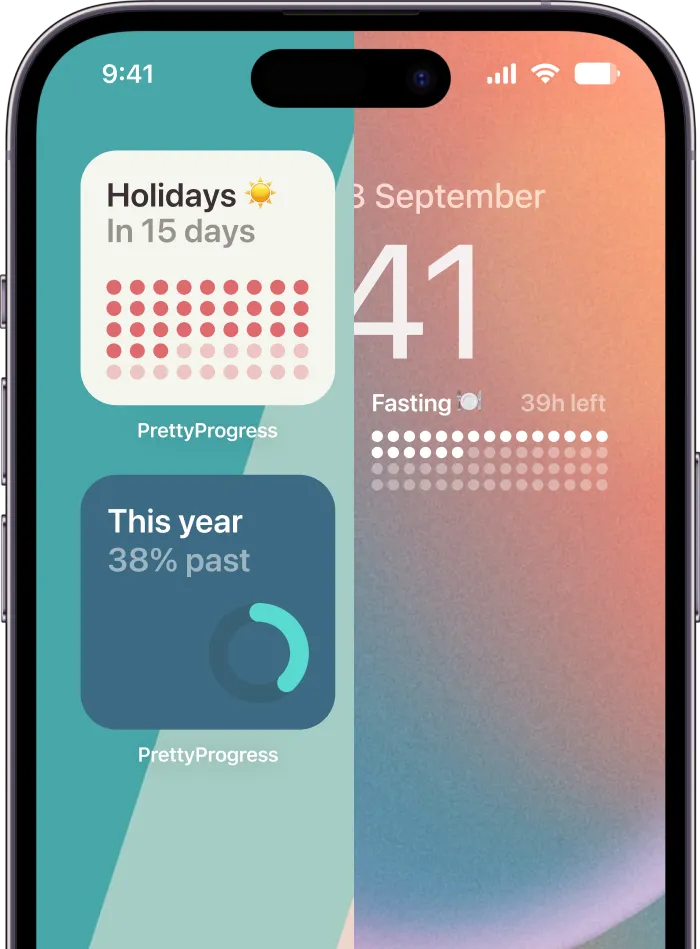
If you want a simple way to keep deadlines and goals visible all day, Pretty Progress is built for that. You can create countdowns, progress bars, and widgets for your Home Screen, Lock Screen, Apple Watch, Mac, or Android device, so your next milestone stays in view without extra noise. For people working on how to stop procrastinating, that kind of glanceable reminder can make it much easier to start, stay aware, and keep going.