July 12, 2026
10 Goals Setting Examples to Inspire You in 2026
Explore 10 powerful goals setting examples with SMART rewrites and tracking tips. From OKRs to vision boards, find a framework that works for you in 2026.
Why do so many good intentions fall apart by Wednesday? The problem usually starts before execution. A goal stays too vague, too big, or too disconnected from real life to survive a tired week, a packed calendar, or an attention shift.
A useful goal-setting method does more than clarify what you want. It turns a fuzzy wish into a version you can act on, review, and adjust. That is the standard to use throughout this guide.
These 10 goal setting examples are built as mini-playbooks, not definitions. You will see how to rewrite a vague goal into something usable, which frameworks tend to work better for different personalities and work styles, and how to track progress in a way that stays visible. For readers who want a stronger foundation before choosing a method, this guide to SMART objectives and goals is a good starting point.
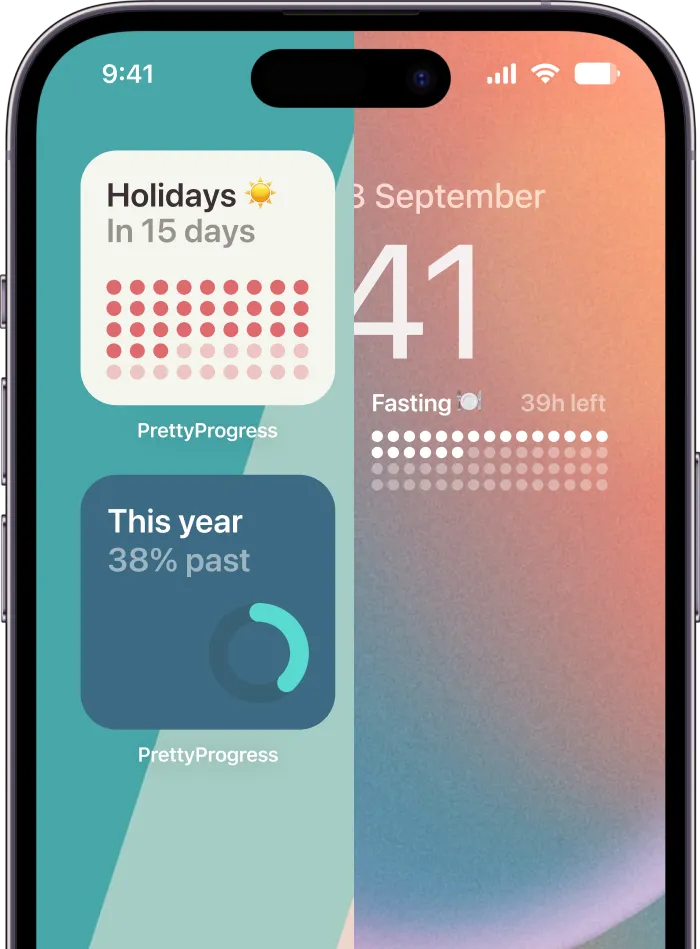
Visibility matters because forgotten goals rarely become finished goals. A tracker in Pretty Progress can keep the target in view with widgets that show streaks, milestones, countdowns, or completion percentages right where you will see them. That helps with follow-through, but there is a trade-off. A beautiful dashboard will not save a goal that is poorly scoped. The method comes first. The visual system works best once the goal is written clearly enough to measure.
Table of Contents
- 1. SMART Goals
- 1. SMART Goals
- 2. OKR Method
- 3. Habit Stacking
- 4. Vision Board Goals
- 6. S.O.A.R. Goals
- 6. S.O.A.R. Goals
- 8. Accountability Goals
- 8. Accountability Goals
- 10. Values-Based Goals
- 10. Values-Based Goals
- 10 Goal-Setting Methods Compared
- Your Next Step Choose a Framework and Start Tracking
1. SMART Goals
What changes when a goal is written clearly enough that you can tell, in one glance, whether you are on track?
That is what SMART does well. It turns a broad intention into a working target. Specific, measurable, achievable, relevant, and time-bound is not flashy, but it is reliable. I still start here with clients who say they want to get healthier, be more productive, or finally learn a skill they have postponed for months.
SMART is a strong first framework for people who need structure fast. It is especially useful for busy professionals, students, and anyone who tends to overestimate what will fit into a week. The trade-off is real. If you write SMART goals too tightly, they can feel rigid or sterile, which is why creative professionals sometimes prefer to pair them with a more visual or values-based method later.
A practical version looks like this. Replace “learn coding” with “complete 30 Python lessons by March 31.” Replace “read more” with “finish 2 books per month for the next 6 months.” Replace “get healthier” with “walk 8,000 steps 5 days a week for 8 weeks.”
If you want a fuller breakdown of how to write each part well, this guide to SMART objectives and goals covers the framework in more detail.
Rewrite the vague version
The biggest benefit of SMART shows up before the work starts. A vague goal creates hesitation because the next step is unclear. A clear goal reduces decision fatigue. You know what counts, what does not, and when the deadline arrives.
A few stronger rewrites:
- Fitness goal: Change “get fit” to “run 3 miles, 4 times per week, for 12 weeks.”
- Learning goal: Change “learn Python” to “complete 30 Python lessons by March 31.”
- Reading goal: Change “read more” to “finish 2 books each month for the next 6 months.”
- Career goal: Change “improve networking” to “schedule 2 coffee chats each month with people in my field through June.”
The right rewrite depends on personality too.
If you have ADHD, keep the target concrete and the measurement visible. “Write every day” is easy to forget and hard to score. “Write 200 words before checking email on weekdays” works better because it anchors the action to a cue and defines done. If you are a creative professional, keep the outcome specific but leave some room in the method. “Publish 12 illustrations this quarter” gives direction without forcing every session into the same shape.
Tracking matters here because SMART goals can disappear once life gets busy. In Pretty Progress, the cleanest setup is usually one main progress bar for the full goal, plus smaller widgets for weekly targets or countdowns. A Lock Screen widget works well for deadlines. A Home Screen percentage widget works well for longer projects where momentum drops in the middle.
One caution. Do not confuse measurable with meaningful. I have seen people build perfect SMART goals around tasks that never mattered much to them in the first place. Use SMART to sharpen the goal, not to decorate a weak one.
1. SMART Goals
SMART still works because it solves the most common failure point. Vagueness. If your goal is blurry, your effort will be blurry too.
This is the framework I give people first when they say things like “get healthier,” “be more productive,” or “finally learn design.” SMART forces a better sentence. Specific, measurable, achievable, relevant, and time-bound is less exciting than vision-board language, but it’s much easier to execute.
A practical version might look like this. Instead of “learn coding,” write “complete 30 Python lessons on Codecademy by March 31.” Instead of “read more,” write “read 2 books each month for the next year.” If you use a visual tracker, put the end date on a Lock Screen widget and break the full goal into smaller countdowns so you’re not staring at a distant finish line.
Rewrite the vague version
Research summarized by Zippia notes that people who set specific, measurable goals are 10 times more likely to succeed than people who set vague ones. That tracks with what I see in practice. The biggest improvement usually happens before the work starts, when the goal finally becomes clear enough to act on.
A few strong rewrites:
- Fitness goal: Change “get fit” to “run 3 miles, 4 times per week, for 12 weeks.”
- Learning goal: Change “learn Python” to “complete 30 Codecademy Python lessons by March 31.”
- Reading goal: Change “read more” to “finish 2 books per month.”
- Savings goal: Change “save money” to “build an emergency fund by setting a fixed target and a year-end deadline.”
Practical rule: If someone else can’t tell whether you did it, the goal still isn’t specific enough.
For deeper examples, Pretty Progress has a useful guide to SMART objectives and goals. The app works well here because SMART goals depend on visible deadlines and clear endpoints, not just good intentions.
2. OKR Method
Some goals are too broad for one sentence. That’s where OKRs help. You keep the big direction in the Objective, then define proof in the Key Results.
An Objective sounds like “build a consistent fitness habit.” The Key Results are what make it real: exercise five times a week, log each week for the quarter, and complete a set training cycle. The Objective gives meaning. The Key Results stop you from drifting.
This method is especially good for ambitious people who juggle several areas of life at once. Career, health, side project, family, learning. If you try to manage all that with one giant to-do list, you’ll feel busy and still miss the point.
Where OKRs shine
A large analysis of 1.2 million goals in MyFitnessPal found that users who set goals with explicit numerical baselines and target values had a 37% higher completion rate than users with vague goals. That’s the heart of a good Key Result. It gives the goal a baseline, a target, and a finish line.
A clean personal OKR might look like this:
- Objective: Launch a side project
- Key Result 1: Finish the core skill learning phase in month one
- Key Result 2: Build a simple MVP in month two
- Key Result 3: Get first users in month three
Use one widget per Key Result if you can. That keeps each result visible without mixing everything into one generic “work on project” reminder. Minimal and Swiss Style themes fit well for professional goals because they keep the signal clear.
What doesn’t work is writing poetic Objectives with fuzzy Key Results. “Become my best self” isn’t an Objective. It’s a mood.
3. Habit Stacking
Some goals don’t fail because they’re hard. They fail because they never get attached to real life. Habit stacking fixes that by linking a new behavior to one that already happens.
Instead of saying “I should meditate daily,” attach it to something stable. “After I pour my morning coffee, I sit for five minutes.” Instead of “I want to write more,” use “when I open my laptop for work, I write 250 words first.” The old habit becomes the trigger.

This approach is especially helpful for people with ADHD, executive dysfunction, or inconsistent schedules. Traditional goal advice often assumes you can hold an abstract plan in your head and follow through later. In practice, many people need an external cue and a tiny starting action, especially when the reward is delayed, a gap discussed in Tommy Thompson’s piece on goal setting for the non-goal setter.
Build around what already happens
Good habit stacks are small and boring on purpose:
- Morning stack: After coffee, do five minutes of meditation.
- Desk stack: After sitting down, write 250 words.
- Lunch stack: After lunch, do a short bodyweight set.
- Shutdown stack: After closing work, review tomorrow’s top task.
Start with one stack. If you add four at once, you’re not building a system. You’re creating a guilt machine.
If you want a setup that’s friendly for neurodivergent users, Pretty Progress has practical ideas in this guide to a habit tracker for ADHD. A widget helps because the trigger stays visible. You don’t have to remember the whole plan from scratch each day.
4. Vision Board Goals
Vision boards get dismissed because people confuse inspiration with execution. The problem isn’t the visual part. The problem is stopping there.
A strong vision-based goal uses imagery to keep the goal emotionally alive, then pairs that image with a deadline, a progress bar, or a milestone. That’s where digital widgets are useful. They turn a static aspiration into something you keep seeing and measuring.

A few examples work well here. A trip countdown for a dream vacation. A promotion timeline for a review cycle. A year-long art challenge with a progress bar. An anniversary countdown with a design that feels personal enough to matter.
Turn aesthetic motivation into action
The mistake is making the widget pretty but nonfunctional. You still need an action layer under the mood board.
Try this structure:
- Emotional image: What future are you moving toward?
- Visible deadline: When does this happen?
- Weekly action: What repeated action moves it forward?
- Progress marker: What can you glance at in two seconds?
Pretty Progress leans into this style well because it’s built around visual goals rather than generic task management. Use the theme to match the feeling of the goal, but keep the wording concrete.
If you want inspiration for how visual progress can feel more tangible, this short video is worth a look.
6. S.O.A.R. Goals

What if your next goal started with what already works?
S.O.A.R. stands for strengths, opportunities, aspirations, and results. It is a strong fit for people who resist deficit-based goal setting, especially creative professionals, career changers, and anyone rebuilding confidence after burnout. Instead of asking, “What is wrong with me?” it asks, “What strength can I use on purpose?”
That shift matters. Some people need pressure. Others do better when the goal feels aligned with their identity. S.O.A.R. gives you stretch without the self-criticism that can stall progress.
A strengths-first rewrite
Here is a practical rewrite.
A vague goal sounds like this: “I need to get better at networking.”
A S.O.A.R. version sounds like this: “I explain ideas clearly, I enjoy helping people, and I have opportunities to share useful insight publicly. I want to become known for thoughtful teaching in my field. I will publish four strong LinkedIn posts and lead one workshop by October.”
That goal has a different energy. It still asks for visible output, but it is built on strengths you already trust.
Use the framework in four steps:
- Strengths: What do you do well without forcing it?
- Opportunities: Where could that strength create momentum?
- Aspirations: Who are you trying to become, not just what are you trying to finish?
- Results: What specific output proves progress?
I use S.O.A.R. when a client has talent but keeps writing goals that sound like punishment. The trade-off is that this method can get too abstract if you stop at identity language. “Be known for my ideas” is inspiring, but it is not trackable. The results piece fixes that.
A few examples show how this works in real life:
- Natural communicator: Turn “I should network more” into “Publish one short insight each week and pitch two speaking opportunities this quarter.”
- Detail-oriented operator: Turn “I want a leadership role” into “Lead one cross-functional project and document the outcome by the end of Q3.”
- Reliable finisher: Turn “I need more discipline” into “Follow a 16-week training plan and complete the race in November.”
- Strong problem-solver: Turn “I should build my reputation” into “Write three case studies that show how you solve expensive problems.”
Pretty Progress works well here because S.O.A.R. goals benefit from visible identity cues and concrete result tracking. Use one widget for the aspiration, such as “Become known for clear teaching,” and a second for the result, such as “4 posts published” or “1 workshop delivered.” That split keeps the goal motivating and measurable.
If you have ADHD or a highly creative work style, keep the aspiration stable and rotate the weekly actions. The identity anchor stays the same. The path can change. That gives you structure without making the system feel tight or stale.
6. S.O.A.R. Goals
Some people shut down when goals start with deficits. Fix your weakness. Close the gap. Improve your flaws. If that language drains you, S.O.A.R. is often a better fit.
S.O.A.R. starts from strengths, opportunities, aspirations, and results. It asks what you already do well, where that strength can lead, who you want to become, and what result would prove movement. This is useful for creative professionals, career changers, and people rebuilding confidence after burnout.
A strengths-first rewrite
Here’s a practical rewrite. Instead of “I’m bad at networking and need to become visible,” try this: “I communicate clearly, I enjoy teaching, and there’s an opportunity to speak or share ideas publicly.” The aspiration might be to become known for thoughtful insight in your field. The result might be a defined set of talks, workshops, or published pieces by a chosen deadline.
This approach works because relevant and challenging goals tend to improve performance. Zippia’s summary notes that 90% of people perform better when goals are relevant and challenging. S.O.A.R. naturally pushes you toward that combination. The goal stretches you, but it still sounds like you.
A few examples:
- Natural communicator: Build toward speaking opportunities.
- Detail-oriented operator: Move into project leadership.
- Reliable finisher: Train for a long-distance race or a major exam.
- Strong problem-solver: Turn a side skill into consulting work.
What doesn’t work is using S.O.A.R. to avoid reality. Strengths-based planning still needs hard results and deadlines. Otherwise it becomes flattering self-description.
8. Accountability Goals
What changes when someone else can see whether you followed through?
Accountability goals work because they add a deadline, a witness, and a reason to report truthfully. That matters for people who can plan well but struggle to stay consistent once the initial motivation wears off. I see this often with solo founders, remote workers, students, and creative professionals. They do not need better intentions. They need a check-in that is hard to ignore.
The format matters. Casual updates usually fade. A useful accountability system answers three questions in advance. Who will review your progress, what proof will you send, and when will you send it?
Turn a vague goal into a reporting system
Start with a goal like, “I want to work out more.” That is too loose for accountability. Rewrite it as: “I will complete three strength workouts each week for the next eight weeks and send my workout summary every Monday at 8 a.m.”
Now the other person knows what success looks like. So do you.
That same rewrite works across different goals:
- Writing: “Draft 1,000 words four days per week and send the weekly total every Friday.”
- Career: “Complete one leadership task each month and review evidence of progress with my manager on the last Thursday.”
- Study: “Finish two practice sets per week and send scores to my study partner every Sunday.”
- Habits: “Track my bedtime routine five nights per week and share the streak view each Monday.”
Pretty Progress is useful here because it gives you something concrete to report. A lock screen widget, weekly streak view, or progress bar reduces fuzzy updates like “I did okay this week.” Send the snapshot. Discuss what happened. Adjust the target if the plan was unrealistic.
Different personalities need different accountability structures. Someone with ADHD often does better with short reporting cycles and visible cues, such as a daily widget they know another person will ask about. A creative professional may prefer a weekly review focused on output, not hours worked. A highly independent person may resist supervision but still respond well to a peer check-in built around mutual progress.
There is a trade-off. External accountability can keep momentum high, but it can also reward performance theater if you choose the wrong metric. Reporting “hours spent” is easy to fake, even to yourself. Reporting finished workouts, submitted pages, shipped client work, or completed applications is harder to hide behind.
If friends are too inconsistent, some people hire an accountability coach. That works best when the reporting standard is clear and the consequence of missing a check-in is more than mild embarrassment.
Keep the system light enough to maintain. One person. One proof format. One recurring time. Accountability fails when tracking becomes a second project.
8. Accountability Goals
Private goals feel safe. They’re also easy to postpone. Accountability adds friction in the right place.
The strongest version isn’t public posting for applause. It’s regular reporting to someone who will notice if you’ve disappeared. A friend, manager, coach, writer’s group, training partner, or study partner can all work if the check-in is specific and recurring.
Use social pressure well
ASTD research summarized by Zippia found that committing to a goal with a specific person raises completion probability to 65%, and that regular accountability appointments raise it to 95% in that summary. The practical lesson is simple. Don’t just tell someone once. Set the next check-in immediately.
That might look like this:
- Fitness: Send your weekly workout widget screenshot every Monday.
- Writing: Report manuscript progress to a small group on the first of each month.
- Career: Review quarterly Key Results with your manager.
- Habits: Share a Lock Screen progress view with a friend each Friday.
If you want outside help, some people do better when they hire an accountability coach rather than relying on friends. The trade-off is obvious. External accountability is powerful, but it can create performative progress if the metric is badly chosen. Report outcomes that matter, not just activity that looks impressive.
10. Values-Based Goals
Why do some goals look sensible on paper and still get ignored by week three?
Usually, the goal is disconnected from what the person cares about. Values-based goals solve that problem by starting with the principle first, then turning it into behavior you can see on a calendar. Family. Health. Creativity. Service. Stability. Freedom. The result is a goal that feels less like an obligation you inherited and more like a choice you can keep making.
This method works especially well for people who are overcommitted, recovering from burnout, or split between several attractive options. It also helps creative professionals and ADHD brains that resist goals chosen only because they sound impressive. If the goal has no personal weight, structure alone rarely saves it.
Rewrite the goal so it matches the value
Start with the vague goal. Then ask what value is underneath it.
A few examples:
-
Vague: Get a promotion
Values-based rewrite: Build a role that increases income without losing dinner with my family three nights a week -
Vague: Get healthier
Values-based rewrite: Have enough energy and mobility to play with my kids on weekends -
Vague: Be more creative
Values-based rewrite: Protect two hours a week for writing so creative work stays part of my identity -
Vague: Give back more
Values-based rewrite: Mentor one junior colleague each month and volunteer once per quarter
That rewrite matters. It changes the target from status to meaning, which makes trade-offs easier to judge. A bigger title may still fit. It just stops being the default if it clashes with the value you named.
Deadlines still matter. Values give direction. A schedule turns that direction into action.
Pick a tracking style that fits your personality
Values-based goals can get fuzzy fast, so the tracking method has to be concrete.
For reflective people, one monthly check-in is often enough: Did my calendar match my stated values this month?
For ADHD users or anyone who forgets long-term intentions, shorter visual cues work better. A small Pretty Progress widget for “Phone-free dinner this week” or “Writing sessions completed” keeps the value visible before the day gets away from you. Creative professionals usually do better with output and ritual tracked side by side. For example, one widget for “2 studio sessions this week” and another for “submit 1 piece this month.”
Use categories that are easy to review:
- Family: shared meals, device-free time, planned trips, attendance at key events
- Health: sleep targets, walks, strength sessions, appointments
- Creativity: practice hours, finished pieces, class dates, submission deadlines
- Impact: mentoring sessions, volunteer hours, community commitments
- Freedom or stability: savings targets, debt reduction, buffer-building habits
One warning from experience. Values-based goals can become so personal and flexible that they dodge accountability. “Be present for my family” sounds meaningful, but it is hard to track. “Three phone-free dinners each week” is still values-based, and now you can measure it.
If a goal keeps slipping, the fix is usually not more ambition. It is a better translation from value to visible action.
10. Values-Based Goals
Some goals are perfectly structured and still don’t stick. Usually that means the goal is borrowed. It sounds respectable, but it doesn’t belong to your actual values.
Values-based goals start with the principle first. Family. Health. Creativity. Service. Stability. Freedom. Then the goal becomes a concrete expression of that value. This is useful when you’re overcommitted, burned out, or trying to choose between several “good” options.
When the goal looks good on paper but feels wrong
A values-based rewrite might go like this. If you say you value family, the goal probably shouldn’t only be “earn a bigger title.” It might include a weekly phone-free dinner, planned time off, or a visible reminder for an annual trip. If you value creativity, the goal might be a writing practice, a class enrollment date, or a public sharing deadline.
Deadlines still matter here. ASTD research summarized in the Jake and Gino article found that consciously deciding to work toward a goal increases completion probability by 25%. Values provide meaning. Decisions and deadlines create movement.
Use simple categories when you set these up:
- Family: recurring rituals, trips, attendance, presence
- Health: movement, sleep routines, medical appointments
- Creativity: classes, projects, publication deadlines
- Impact: mentoring, volunteering, community initiatives
This method won’t satisfy people who only want efficiency. It asks a harder question. Not just “Can I achieve this?” but “Do I want my life to look like this when I do?”
10 Goal-Setting Methods Compared
| Method | Implementation Complexity 🔄 | Resource Requirements ⚡ | Expected Outcomes 📊⭐ | Ideal Use Cases 💡 | Key Advantages ⭐ |
|---|---|---|---|---|---|
| SMART Goals (Specific, Measurable, Achievable, Relevant, Time-bound) | 🔄 Moderate, five clear criteria to define | ⚡ Low, time to specify and track metrics | 📊 Clear, measurable progress; higher completion rates ⭐⭐⭐ | Personal and professional short-to-mid term goals needing specificity | Increases clarity and trackability; works well with progress widgets |
| OKR Method (Objectives and Key Results) | 🔄 High, separates objectives from multiple KRs, quarterly cycles | ⚡ Moderate, coordination, regular reviews | 📊 Ambitious directional progress; encourages stretch targets ⭐⭐⭐ | Teams and individuals managing multiple, linked goals over quarters | Scales across teams; promotes ambition and transparent priorities |
| Habit Stacking (Goal Bundling) | 🔄 Low, link new habit to existing routine | ⚡ Very low, relies on existing anchors | 📊 Consistent daily behavior change; strong habit formation over time ⭐⭐ | Daily routines, habit adoption, ADHD support | Low friction adoption; leverages environmental triggers for consistency |
| Vision Board Goals (Visual Goal Manifestation) | 🔄 Low, create visual representations and themes | ⚡ Low–Moderate, design/time to craft visuals | 📊 High motivation and emotional resonance but less procedural specificity ⭐⭐ | Creative, aspirational, and image-driven goals | Inspires sustained motivation; pairs well with aesthetically pleasing widgets |
| Time-Blocking Goals (Schedule-Based Achievement) | 🔄 Moderate, calendar discipline and fixed slots | ⚡ Moderate, calendar management and reminders | 📊 Improved execution and realistic time allocation ⭐⭐⭐ | Busy professionals, students, goal activities requiring regular focus | Converts intentions into appointments; reduces procrastination |
| S.O.A.R. Goals (Strengths, Opportunities, Aspirations, Results) | 🔄 Moderate, requires reflective assessment | ⚡ Low, introspection and periodic updates | 📊 Intrinsically motivated, confidence-building outcomes ⭐⭐⭐ | Personal development, leadership growth, confidence rebuilding | Strengths-based alignment that boosts sustainable motivation |
| Backwards Planning / Reverse Goal Setting | 🔄 High, map end-state to intermediate milestones | ⚡ Moderate–High, time to analyze dependencies | 📊 Realistic roadmaps and clear prerequisites; reduces surprises ⭐⭐⭐ | Complex multi-phase projects, launches, long-term plans | Reveals hidden dependencies and realistic pacing; ideal for sequencing |
| Accountability Goals (Public Commitment & Tracking) | 🔄 Low–Moderate, social systems and check-ins | ⚡ Moderate, partners, groups, sharing tools | 📊 Large increase in follow-through with public commitment ⭐⭐⭐ | Habit formation, group challenges, high-stakes goals | Social reinforcement and transparency greatly boost adherence |
| Milestone-Based Goals (Staged Achievement) | 🔄 Moderate, design meaningful intermediate stages | ⚡ Moderate, planning + milestone rewards | 📊 Regular motivation and momentum through repeated wins ⭐⭐⭐ | Long-term projects, multi-year ambitions, product launches | Provides frequent psychological wins; reduces abandonment risk |
| Values-Based Goals (Alignment with Personal Principles) | 🔄 Moderate, requires values clarification | ⚡ Low, reflection time and categorization | 📊 Higher meaning and sustained engagement; stronger wellbeing alignment ⭐⭐⭐ | Life-direction decisions, career alignment, value-driven planning | Ensures intrinsic motivation and coherent priority-setting |
Your Next Step Choose a Framework and Start Tracking
The best method isn’t the smartest one on paper. It’s the one you’ll still use after a stressful week, a missed deadline, or a dip in motivation. That’s why I rarely tell people to adopt every framework at once. Pick one that matches both the goal and your personality.
If you’re vague, start with SMART. If you’re ambitious and managing multiple moving parts, use OKRs. If consistency is your problem, try habit stacking or time-blocking. If you lose motivation on long goals, use milestones or reverse planning. If standard productivity advice has always felt slightly hostile to your brain, especially with ADHD or executive dysfunction, lean harder on visible cues, tiny actions, and always-on reminders rather than more abstract planning.
A few patterns show up again and again. Writing the goal down matters. Giving it a deadline matters. Making it specific matters. Accountability matters. Visibility matters. The strongest systems usually combine several of those at once, but they don’t need to be complicated. A simple sentence, one milestone, and one visible reminder can do more than an elaborate planning ritual you abandon by next week.
If you’re unsure where to begin, choose one live goal you already care about. Rewrite it in one sentence. Add a date. Break it into the next milestone only. Then put that milestone somewhere you’ll see it without opening another app or hunting through notes. That’s why visual tools help. They reduce the gap between intention and attention.
Pretty Progress is one option if you want a countdown or progress widget that stays visible on your devices. That makes it easier to keep a goal present in daily life instead of burying it inside a planner you only review occasionally. If you want more planning support before you build your tracker, these structured goal setting templates can help you shape the goal first.
Don’t try to fix your entire life this week. Set one goal. Choose one framework. Track one milestone. Then keep the next step where your eyes can find it fast.
If you want a simple way to turn these goals setting examples into something visible, try Pretty Progress. Create one countdown or progress widget for a single goal, put it on your Lock Screen or Home Screen, and let that visual cue keep the goal in sight while you build momentum.