
August 18, 2026
Best Goal-Setting App Free
Best goal setting app free: compare 10 apps for widgets, habits, planning, and accountability so you can pick the right fit fast.
Most goal apps fail for a boring reason: they ask you to remember the goal before they help you act on it. On a busy Tuesday, that is a losing setup.
The better approach is to match the app to the point where you usually break down. If your goal fades into the background, you need visibility. If you keep ideas in your head and miss the next step, you need structure. If solo tracking never lasts, you need accountability or a social layer.
That is the lens I used here. I kept the focus on how these apps feel in real daily use, not just how many features they list. The category is also much bigger than it used to be: one 2026 market roundup says habit-tracking apps now reach more than 298 million active users, which helps explain why so many tools are competing to become your daily system habit-tracking report.
Table of Contents
- How I Picked These Free Goal-Setting Apps
- 1. Pretty Progress
- 2. Coach.me
- 3. Habitica
- 4. Habitify
- 5. Strides
- 6. Way of Life
- 7. TickTick
- 8. Todoist
- 9. Microsoft To Do
- 10. Loop Habit Tracker
- Top 10 Free Goal-Setting Apps Comparison
- Your Perfect Goal-Setting Partner Awaits
- Frequently Asked Questions
How I Picked These Free Goal-Setting Apps
I judged these apps by a simple standard: could a real person set up a useful goal for free and still want to open the app next week? In my review, the best tools were not always the ones with the most options. They were the ones that made the next action obvious.
I looked at seven things: how usable the free plan is, how fast setup feels, how visible progress stays after setup, whether the app supports repeating habits, whether it can handle one-off tasks or projects, how well it works across devices, and whether the interface creates friction. I also paid attention to what kind of user each app suits. A widget-first tool, a habit-first tool, and a task-first planner can all be good, but not for the same person.
I ruled out apps that hide the useful parts behind a paywall too early, make setup confusing, feel annoying to check every day, or offer so little tracking visibility that the goal disappears once the app is closed. I also marked down apps with narrow platform support unless they were unusually strong for a specific audience.
One practical note: free does not mean equal. Some apps are generous, while others are free only for light use. That matters because the wider productivity category keeps growing fast. Business of Apps reports that productivity apps generated USD 32.5 billion in 2024, which is a good reminder that many “free” tools are really trying to convert power users later productivity app market data.
1. Pretty Progress
Monday morning. You access your phone to check a message, and the goal you promised yourself you would focus on is already on the screen. Days until finals. Savings progress for a trip. Hours left in a fasting window. That small bit of visibility matters more than another packed dashboard for a lot of people.
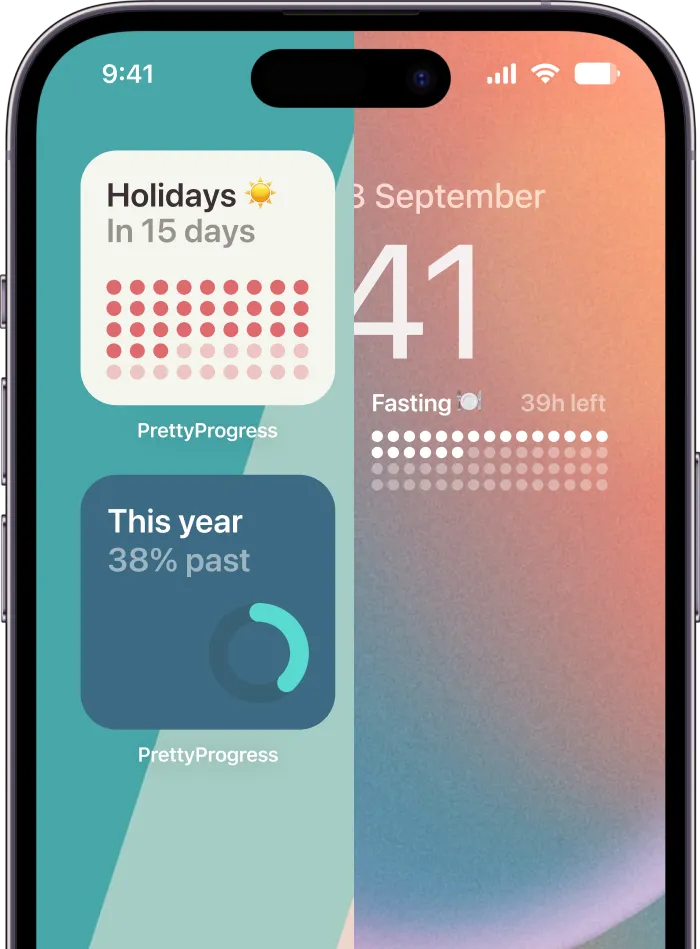
Pretty Progress stands out because the workflow starts with seeing the goal, not opening an app to hunt for it. You set up a countdown, progress bar, or widget once, then let your phone, tablet, watch, or desktop keep the goal in view. In practice, that creates a different rhythm. The app nudges attention before procrastination gets a head start.
Why Pretty Progress feels different
I recommend this style of app to people who already know what they want to do but keep losing contact with it during the day. Students, visual thinkers, and busy professionals often do better with glanceable cues than with a full planning system they have to reopen and maintain.
The part that stood out to me most was setup speed. You can go from idea to visible widget quickly, and that matters because many people abandon goal systems during the fiddly setup stage, not during the goal itself. I also like that the app changes your environment rather than asking you to build a whole productivity routine around it.
The design also helps retention. Themes look polished, customization is detailed without feeling fiddly, and setup stays quick. You can choose a style like Swiss Style, Minimal, Aqua, or Retro OS, then adjust colors, gradients, layout, icons, and bar styling in a few minutes.
If you want ideas for structuring visible goals, these goal-setting best practices for daily motivation and follow-through pair well with this kind of widget-first setup.
There is also a real limit here. Pretty Progress is strongest when your main problem is keeping a goal present and emotionally visible. If you need collaboration, deep project breakdowns, or a task database with lots of dependencies, this is not the app I would pick as a standalone system.
Best for visual thinkers and deadline-driven goals
This is the strongest fit for people who respond to visual progress and deadlines. It also works well for many users with ADHD who benefit from low-friction reminders instead of buried lists and extra taps. If you already manage tasks in another tool, Pretty Progress can sit on top as the part that keeps the goal emotionally present.
In daily use, it feels different from list-based tools because the reminder comes to you first. I have found that this matters more than feature depth for people who do not forget what the goal is, but do forget to reconnect with it at the right moment.
A few things stand out in daily use:
- Best for visible momentum: Home and Lock Screen widgets keep progress and deadlines easy to notice.
- Best for visual personalization: Themes and styling options make the tracker feel personal enough that people keep it on screen.
- Best for quick setup: Creating a goal takes little time, which lowers the chance of abandoning it during setup.
- Best for calm tracking: The zero-ad experience keeps the app quiet and focused.
The free version is enough to test whether this workflow clicks for you, and the optional Pro upgrade adds more styling control. Best for visual thinkers, students, deadline-based goals, and anyone who wants a goal-setting app that feels light, visible, and easy to return to.
2. Coach.me
Coach.me has been around long enough to know what it is. It’s not trying to wow you with visual polish. It’s trying to keep you accountable.
The workflow is simple. You choose a habit, check in, build streaks, and optionally plug into a community around that goal. If you later decide you need more pressure or support, you can hire a coach inside the same ecosystem. That makes Coach.me a smart choice for people who want a free tracker now and the option to add human accountability later.
Best for people who need accountability
Some apps feel private and self-directed. Coach.me feels social, even when you’re just using the free tracker. That can be useful if you struggle to follow through when nobody else knows what you planned.
Its biggest strength is that the core habit tracker is free, while coaching stays optional. It also pairs nicely with practical goal-setting best practices if you want a better structure for the habits you log.
What doesn’t work as well is the interface. Compared with newer apps, it can feel dated. If aesthetics heavily influence whether you’ll keep opening an app, Coach.me may not stick. But if accountability matters more than polish, it still earns a spot.
- Best for external motivation: Community and coaching options create pressure in a good way.
- Best for habit consistency: Daily check-ins are straightforward and easy to repeat.
- Best for flexible commitment: Start free, upgrade only if you want real coaching.
Best for: people who know they do better when someone else is involved.
3. Habitica
Habitica works best for a specific kind of user. You open a plain habit tracker, log one task, and forget it by lunch. You open Habitica, and there is a character to level, gold to earn, and a party counting on you not to miss your dailies.
That change in feeling is the whole product.
Instead of treating goals like a clean checklist, Habitica treats them like a game loop. Habits, dailies, and to-dos all feed rewards such as experience, gear, pets, and quest progress. For users who need novelty to stay engaged, that extra stimulation can keep the app in rotation longer than a minimalist tracker would.
Best for people who need motivation to feel fun
Habitica is one of the few free goal-setting apps that still gives a lot away without making the core experience feel restricted. You can build routines, track repeated behaviors, manage one-off tasks, and join social features without hitting a paywall right away. That makes it a strong fit for students, gamers, and ADHD users who want a system with energy, not just structure.
The social layer changes the workflow too. Guilds, parties, and challenges create light accountability, but the tone stays playful rather than intense. If Coach.me feels like someone is watching your progress, Habitica feels like you are part of a co-op mission.
I recommend it most to people who get bored fast. Visual thinkers often respond well to the constant feedback, and users who like apps such as Pretty Progress for their motivating visual style may appreciate Habitica for a different reason. It is less polished and more chaotic, but the sense of movement is strong.
There are trade-offs. The interface can feel cluttered, especially if you want a calm screen and a quick check-in flow. Some users also end up paying more attention to streaks, loot, or avatar progress than to whether the underlying goal still matters.
Habitica works well when motivation is the problem. It works less well when simplicity is the requirement.
- Best for gamified tracking: Rewards, avatars, and quests make routine tasks feel active.
- Best for novelty-driven users: Frequent feedback helps repeated goals feel less flat.
- Best for social follow-through: Group quests add accountability without making the app feel formal.
Best for: people who stay consistent when goals feel interactive, visual, and a little playful.
4. Habitify
Habitify sits in the middle ground between minimalist habit trackers and more advanced progress tools. It feels clean, organized, and modern without becoming too stripped down.
That balance makes it easy to recommend to people who want daily routines to feel tidy. You open it, log the habit, check the streak, and move on.
Best for clean daily routines
Habitify works best for users who want a polished habit tracker across devices. It supports Apple, Android, and web use, and it’s good at the everyday basics: routines, check-ins, streaks, and charts.
The design helps. Some habit apps are technically capable but visually cold. Habitify feels calmer. That matters because habit tracking is repetitive, and repetitive tools need to feel pleasant enough that you don’t avoid them.
Its main limitation is common in this category. The free plan is enough for lighter use, but power users will run into limits that push them toward Premium. If you want lots of habits, deeper stats, or broader analytics, you may outgrow the free version.
- Best for tidy routine builders: Great fit for sleep, water, reading, exercise, and study habits.
- Best for cross-device users: Useful if you switch between phone and desktop often.
- Best for design-conscious planners: Clean visuals lower friction.
Best for: people who want habit tracking to feel organized, simple, and polished.
5. Strides
Strides fits a specific kind of user. You set a target, open the app a few days later, and want to see more than a streak. You want trend lines, milestones, and a clear sense of whether the goal is on track.
That is why Strides appeals to people who like measurable progress. The app feels closer to a personal dashboard than a simple habit checklist, which changes the experience of using it day to day.
Best for Apple users who want progress charts
Strides works well for goals with numbers attached. Saving toward a travel budget, hitting a reading target, lowering screen time, or building a workout average all make more sense here than in apps built around basic yes-or-no habit checkoffs.
Flexibility is its strength. Strides supports different tracker formats for habits, projects, averages, and target goals, so you can match the tool to the type of goal instead of forcing every goal into the same template. For visual thinkers, that makes the app feel more informative than many free habit trackers. If Pretty Progress wins on visual motivation, Strides is stronger on visual measurement.
There is a trade-off. Strides is best inside the Apple ecosystem, so it is easy to recommend for iPhone, iPad, and Apple Watch users, but much harder to recommend if you need Android access or broad cross-platform support.
- Best for metric-driven users: Strong choice if numbers, milestones, and charts keep you engaged.
- Best for structured goal planners: Useful for savings goals, project deadlines, and performance targets.
- Best for Apple-first workflows: A better fit for people already using Apple devices daily.
Best for: Apple users who want free goal tracking to feel analytical, visual, and structured.
6. Way of Life
Way of Life does one thing very well. It makes daily habit check-ins fast.
The red-and-green visual system gives you instant feedback. You don’t have to study a dashboard to know whether a habit is slipping. You can feel it right away.
Best for ultra-fast check-ins
This app is ideal if you want almost no friction. Open it, tap yes or no, move on. That’s the appeal. People who hate elaborate logging often stick with Way of Life longer than more feature-rich tools because it never asks for much.
The flip side is that binary tracking can feel too blunt for goals that need nuance. If you want to log minutes studied, distance run, or a flexible target with multiple layers, this app can feel restrictive.
The more often you skip logging because the app feels like work, the worse your system is. Way of Life avoids that problem better than most.
- Best for low-friction habits: Very quick to use.
- Best for visual pattern spotting: The color system makes bad weeks easy to notice.
- Best for simple routines: Works well for “did it or didn’t do it” goals.
Best for: minimalists and anyone who wants habit tracking to take seconds, not minutes.
7. TickTick
TickTick fits a very specific kind of person. You set goals, but your day is still full of classes, meetings, errands, and loose tasks that have to get done. If your goals keep getting buried under daily admin, TickTick handles that overlap better than many free apps.
The appeal is the workflow. Habits, one-off tasks, reminders, calendar views, and Pomodoro timers live in the same system, so you spend less time switching tools. For a student balancing study blocks and assignment deadlines, or a professional trying to build better routines without losing track of real work, that matters.
Best for people who want tasks and habits together
TickTick works well for goals that need both repetition and execution. “Exercise three times a week” is a habit. “Book the class, pack gym clothes, reschedule Thursday session” is task management. TickTick keeps both parts close enough that the goal feels connected to real life instead of stuck in a separate tracker you forget to open.
It is less visual than something like Pretty Progress, so it may not give visual thinkers the same motivational pull. Its strength is structure. You open the app and immediately see what needs doing today, what repeats, and what is coming up next.
There is a trade-off. Some of the more detailed features sit behind Premium, and the interface can feel busy if you only want a simple streak tracker. Still, the free version is useful enough to test whether an all-in-one setup helps you stay consistent.
- Best for hybrid planning: Combines habits, tasks, reminders, and focus sessions in one place.
- Best for students and busy professionals: Good for goals that compete with deadlines and calendar commitments.
- Best for structured users: Tags, lists, and views reward people who like organizing their week.
Best for: people who want one app for goals that have to survive a busy schedule.
8. Todoist
Todoist fits a specific kind of goal setter. You open the app, capture what needs doing, sort it into projects, and get on with the work. The experience is calm and orderly, which is a big reason people stick with it.
Best for people who naturally think in lists
Todoist works best when a goal can be broken into clear actions and deadlines. Preparing for exams, planning a move, managing a job search, or building a side project all feel natural here because projects, sections, and recurring tasks mirror how those goals already live in your head.
I recommend it most to list lovers, planners, and busy professionals who want low friction more than motivation mechanics. If colorful visuals, streaks, or progress bars keep you engaged, Todoist can feel emotionally flat next to a more visual tool like Pretty Progress. If you want a cleaner task-first setup, that plainness becomes a strength.
It also rewards people who capture ideas quickly. A task pops into your head, you add it, give it a date or label, and trust it will be there later. That workflow matters for students and anyone with ADHD traits who loses momentum when an app asks for too much setup, though some users in that group may still prefer more visual feedback. If you are comparing Android-friendly options with different visual styles and planning approaches, this guide to goal tracking apps for Android is a useful next reference.
The limitation is simple. Todoist is a task manager first, not a dedicated goal experience. You can absolutely run goals in it, but you need to create the structure yourself.
- Best for project-minded users: Projects and sections make multi-step goals easy to organize.
- Best for fast capture: Strong for people who need to get tasks out of their head quickly.
- Best for clean workflows: The interface stays focused on execution instead of motivation features or analytics.
Best for: people who want a reliable, low-clutter app for goals that behave like organized task lists.
9. Microsoft To Do
Microsoft To Do is what I recommend to people who don’t want to think much about the app itself. They just want lists, repeating tasks, reminders, and simple daily focus.
That sounds basic, but basic is often exactly right.
Best for straightforward planning inside Microsoft
If you already use Outlook or Microsoft 365, this app fits neatly into your existing setup. The “My Day” feature is especially useful for turning a long backlog into a shorter, more realistic daily focus list.
What it doesn’t do is act like a dedicated goal system. There aren’t rich goal abstractions, habit mechanics, or deeper analytics. But for straightforward execution, it works.
This is one of those tools that succeeds by staying out of the way. If feature-heavy apps make you procrastinate, Microsoft To Do can be refreshingly plain.
- Best for Microsoft users: Outlook integration is the main reason to choose it.
- Best for no-cost simplicity: Easy to adopt with almost no learning curve.
- Best for checklist-style goals: Strong for routines, errands, deadlines, and personal admin.
Best for: users who want a free, dependable checklist app that lives comfortably inside the Microsoft ecosystem.
10. Loop Habit Tracker
Loop Habit Tracker is one of the easiest apps to recommend to Android users who care about privacy, simplicity, and zero cost. It doesn’t try to become a lifestyle platform. It tracks habits well and stays lightweight.
That clarity gives it a loyal following.
Best for Android users who want privacy and simplicity
Loop is open-source, Android-only, and designed for people who want habit tracking without an account requirement or a noisy business model. It handles reminders, streaks, graphs, and flexible frequencies well, especially for long-term routines.
For Android users comparing lighter options, this guide to the best goal tracking apps for Android is also useful because it highlights the difference between planning-heavy tools and visibility-first tools.
The main trade-off is ecosystem depth. There’s no built-in community, coaching, or official iOS version. But if your goal is to track habits consistently without distractions, Loop is excellent.
- Best for privacy-minded users: No account-heavy workflow to manage.
- Best for Android minimalists: Lightweight and reliable.
- Best for long-term habit tracking: Flexible scheduling suits real life better than rigid daily-only systems.
Best for: Android users who want a free habit tracker that stays fast, private, and focused.
Top 10 Free Goal-Setting Apps Comparison
Need the short version first?
- Visual thinkers or deadline goals: start with Pretty Progress.
- Accountability seekers: pick Coach.me.
- Gamified motivation: Habitica is the strongest fit.
- Tasks and habits in one place: go with TickTick.
- Privacy-focused Android users: choose Loop Habit Tracker.
A quick way to choose: widget-first apps help when the core problem is forgetting the goal; habit-first apps help when consistency is the issue; task-first apps help when goals fall apart because they were never turned into actions. In my experience, choosing by failure point leads to better results than choosing by feature count.
| App | Core features | UX & Quality | Price & Value | Best for | Unique selling points |
|---|---|---|---|---|---|
| 🏆 Pretty Progress | Countdown & progress widgets, themes, date/fasting calculators | ★★★★★ polished, ad‑free | 💰 Free + PRO upgrade | 👥 Visual thinkers, students, habit builders | ✨ Gorgeous customizable widgets across iOS/Android, always‑on glanceables |
| Coach.me | Habit check‑ins, communities, paid 1:1 coaches | ★★★★ dependable, slightly dated | 💰 Free core; paid coaching | 👥 Users wanting community + optional coaching | ✨ Community Q&A + certified coaches on demand |
| Habitica | Gamified habits (XP, rewards), parties, challenges | ★★★ fun but busy | 💰 Free; paid Group Plans | 👥 Gamers, ADHD users, extrinsic motivators | ✨ RPG-style rewards, social quests & party accountability |
| Habitify | Multi-device sync, charts, routines, integrations | ★★★★ clean, easy daily logging | 💰 Free limited; Premium for full features | 👥 Minimalists who use multiple devices | ✨ Polished cross‑platform UX and solid analytics |
| Strides | 4 tracker types, 150+ templates, Shortcuts support | ★★★★ data-driven dashboards | 💰 Free + Pro subscription | 👥 Apple users tracking varied goal types | ✨ Flexible tracker types (Habit/Target/Average/Milestone) |
| Way of Life | Binary red/green logging, streaks, charts | ★★★★ extremely fast check‑ins | 💰 Free limited; premium unlocks | 👥 People wanting fastest yes/no logging | ✨ Low-friction daily logging with instant visual feedback |
| TickTick | Tasks, calendar, Pomodoro, habit tracker, widgets | ★★★★ versatile, productive | 💰 Free; Premium at competitive price | 👥 Users wanting all‑in‑one tasks + habits | ✨ Combines robust task management with habit views |
| Todoist | Projects, labels, natural‑language dates, automations | ★★★★ mature & reliable | 💰 Free core; paid tiers for power users | 👥 GTD fans and project-focused users | ✨ Powerful scheduling, wide integrations & ecosystem |
| Microsoft To Do | Lists, subtasks, My Day, Outlook sync | ★★★ straightforward & reliable | 💰 Free with Microsoft account | 👥 Microsoft/Outlook ecosystem users | ✨ Deep Outlook/365 integration for work workflows |
| Loop Habit Tracker | Offline habits, streaks, graphs, flexible scheduling | ★★★★ privacy-first, lightweight | 💰 Completely free & open‑source | 👥 Privacy-focused Android users | ✨ Open‑source, local data (no account), F‑Droid support |
Your Perfect Goal-Setting Partner Awaits
For the clearest overall recommendation, Pretty Progress is the best pick for visibility. It is the one I would choose when a goal keeps slipping because it drops out of sight. Coach.me is the best option for accountability, TickTick is the strongest all-in-one planner when goals and daily tasks need to live together, and Loop Habit Tracker is the best Android privacy choice.
The trade-offs matter. Pretty Progress is easier to live with than a heavy planner, but it is not trying to replace project management software. TickTick is more complete, yet that same depth can feel busy if all you want is a simple daily prompt. Coach.me adds social pressure in a useful way, though the interface feels older than the top visual apps.
For people deciding between the finalists, my simple advice is this: choose the tool you can imagine using when you are tired, late, and not especially motivated. That is often where the winner shows up. If you want another perspective on the category before you decide, see Boss as a Service for a separate roundup.
If you want help beyond apps, these effective goal setting strategies are worth exploring too.
Frequently Asked Questions
What is the best app to set and achieve goals?
The best choice depends on what usually breaks the goal. Pretty Progress is strongest when you need the goal to stay visible all day, while TickTick is better when success hinges on turning goals into scheduled tasks. If you mainly need outside pressure, Coach.me is the better fit.
What is the best free app to track my goals?
If you want a clean free option for tracking progress visually, Pretty Progress is the standout here. If your goals are more routine-based, Loop Habit Tracker and Way of Life are excellent low-friction options. For list-driven planning, Microsoft To Do and Todoist are easier to stick with than many specialized trackers.
What app can I use to set goals with friends?
Habitica is the best choice in this list for friend-based goal tracking because parties, quests, and challenges make progress feel shared. Coach.me also works well if you want community support and optional coaching, though it feels more accountability-focused than social.
What is the best planner for goal-setting?
TickTick is the best planner in this group if you want goals, reminders, habits, and calendar structure in one place. Todoist is a close second for people who naturally think in projects and task lists. If you already live in Microsoft tools, Microsoft To Do is the simplest practical choice.
Which app is best for Android users?
Loop Habit Tracker is the best Android-first option if privacy and simplicity matter most. Pretty Progress is also a strong Android pick for widget-based visibility, especially if you want your goal on screen instead of buried in a menu. For broader comparisons, this guide to the best goal tracking apps for Android is useful.
Are free goal-setting apps enough, or do I need paid features?
For many people, free is enough if the goal system is simple and you only track a few priorities at once. I usually suggest testing the free version until you know your bottleneck. If you run into device limits, advanced analytics caps, or blocked features that affect daily use, then an upgrade may be worth it.