
June 7, 2026
6 Common Mistakes in Goal Setting and How to Fix Them
Learn to avoid common mistakes in goal setting, like vague targets and no tracking. Discover actionable tips & how visual tools can keep you motivated.
You start the year with a clear vision. By March, the notebook is closed, the habit tracker is abandoned, and the goal that felt exciting now feels strangely heavy. This scenario is frequently interpreted as a motivation problem. It usually isn’t.
The gap is simpler than that. Good intentions fade when the goal is too fuzzy, too crowded, too detached from daily life, or too rigid to survive real-world friction. A goal can sound inspiring and still fail on contact with your calendar, energy, and attention.
That’s why so many common mistakes in goal setting repeat year after year. Teams lose clarity. Individuals chase goals they never fully defined. People set targets without building any system to see progress, adjust course, or stay accountable. One research roundup on goal-setting pitfalls notes that only 16% of employees clearly understand their company’s priorities and goals, which tells you how quickly vague intentions can collapse into confusion.
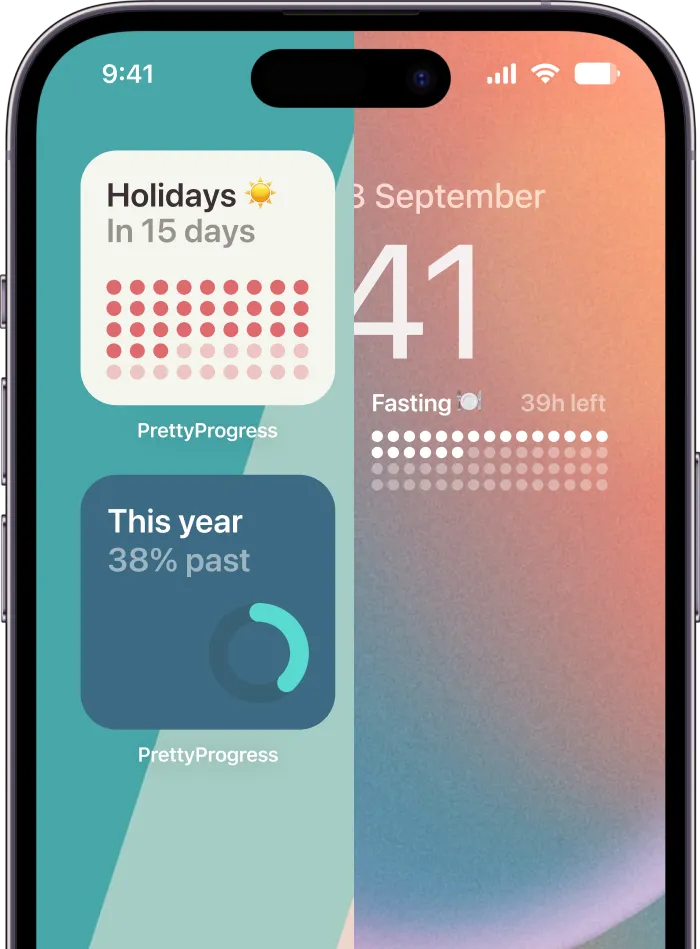
This article keeps it practical. For each mistake, you’ll get two fixes: one psychological shift that helps you behave differently, and one digital fix using visible tools like widgets, countdowns, and calculators so your goal doesn’t disappear the moment life gets busy.
Table of Contents
- 1. Setting Vague or Unmeasurable Goals
- 2. Setting Too Many Goals Simultaneously
- 3. Ignoring Accountability and Progress Tracking
- 4. Setting Goals Based on Others’ Expectations
- 5. Failing to Set Realistic Timelines
- 6. Lacking Flexibility and Adaptation
- 6-Point Comparison of Goal-Setting Mistakes
- From Mistakes to Milestones Your New Goal System
1. Setting Vague or Unmeasurable Goals
“Aim to get healthier” sounds positive. It’s also hard to execute. You can’t tell what to do today, how to measure progress next week, or when to say you’re done.
That’s one of the oldest and most common mistakes in goal setting. Management guidance has emphasized SMART goals for years because goals need to be specific, measurable, attainable, relevant, and time-bound. Broad intentions create drift. They don’t tell you what action counts, what progress looks like, or what deadline matters.
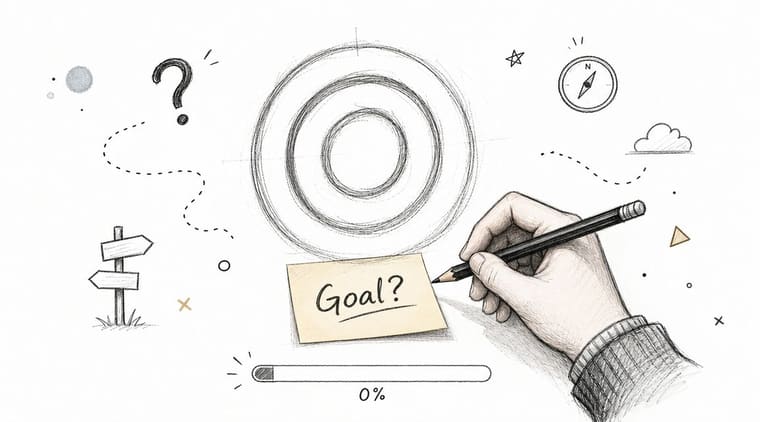
A vague goal sounds like “save money” or “exercise more.” A usable goal sounds like “save for a moving deposit by the end of the year” or “walk after dinner on weekdays for the next month.” The difference is not motivation. It’s definition.
Define done before you begin
The psychological fix is to stop asking, “What do I want?” and start asking, “What will count as done?” That question forces clarity. It also lowers anxiety because your brain stops treating the goal like a foggy obligation and starts treating it like a concrete target.
The digital fix is to make the goal visible in a form your eyes can process quickly. A countdown widget works well when the goal has a deadline. A progress bar works well when the goal has milestones. If the target is “finish the certification by June,” put the deadline on your phone screen. If the target includes sub-goals, create separate visual markers for each stage so progress is visible before the final result.
Practical rule: If you can’t tell whether you’re on track in under ten seconds, the goal is still too vague.
A few examples make this easier:
- Health goal: Replace “get fitter” with “complete scheduled workouts each week and track them against a visible timeline.”
- Study goal: Replace “study more” with “finish the reading plan before the exam date and review progress weekly.”
- Work goal: Replace “finish the project soon” with a dated deliverable plus milestone checkpoints.
ProperExpression also recommends using SMART-style goals and judging attainability with historical data instead of intuition in its guidance on common marketing goal mistakes. That same logic works for personal goals. Don’t guess what “reasonable” means. Look at what your past weeks support.
2. Setting Too Many Goals Simultaneously
A lot of people fail because they aren’t aiming too low. They’re aiming in too many directions at once.
This usually shows up in January as ambition disguised as planning. Someone wants to improve sleep, train for a race, learn a language, save aggressively, fix their diet, and launch a side project. Each goal might be valid. Together, they compete for the same time and attention.
OKR guidance cited by Spinach recommends limiting focus to 3–5 goals per time period. That advice matters because goals need measurable key results, review time, and actual execution space. Once the list gets too long, everything becomes half-started.

Narrow the field on purpose
The psychological fix is to treat focus as a commitment, not a sacrifice. People often resist dropping goals because they think fewer goals means less growth. In practice, fewer goals usually means better follow-through. You’re not saying “never.” You’re saying “not all at once.”
Try sorting your goals into three buckets: active, parked, and someday. Active goals get your current attention. Parked goals matter, but they wait. Someday goals are ideas, not obligations.
The digital fix is to make only your live priorities visible. Don’t crowd your Home Screen with every dream you have. Put the current few where you’ll see them. Keep the rest archived or grouped elsewhere. Pretty Progress is useful here because you can keep a small set of active countdowns or progress widgets in front of you instead of staring at a giant list that creates guilt before action.
A student might choose just three visible priorities for the semester: exam date, thesis deadline, and savings goal. A working parent might choose only health, debt payoff, and one work milestone. The point is not minimalism for its own sake. The point is reducing competition.
Too many goals don’t make you ambitious. They make your priorities unreadable.
One more trade-off matters here. Stretch goals can be energizing, but overload is not the same as challenge. A video summary on ambitious goal setting warns against entering the “delusional zone” in its discussion of when bigger goals backfire. Good pressure sharpens focus. Too much pressure scatters it.
3. Ignoring Accountability and Progress Tracking
A goal that lives only in your head usually fades there too. You mean to revisit it. Weeks pass. Then months. By the time you notice, you haven’t “failed” in one dramatic moment. You’ve just drifted.
Many common mistakes in goal setting become system problems. One independent source makes the point clearly: goals are not the operating system. Daily processes are. If your goal never turns into a review rhythm, a visible reminder, or a repeatable action, it won’t survive ordinary distraction. That’s why advice focused on systems rather than goals is so useful.

A professional with an exam deadline might study hard for a few days, then stop checking the plan. A manager might set a project target but never review milestone completion. In both cases, the issue isn’t intent. It’s missing feedback.
Make review unavoidable
The psychological fix is to stop relying on memory and mood. Accountability works when it becomes routine, not when it depends on whether you “feel focused” that week. Put a recurring review session on the calendar. Use the same day and same time. Keep it short enough that you’ll follow through.
The digital fix is persistent visibility. A countdown on your lock screen can create gentle pressure. A progress widget can make slow movement visible, which matters on long goals where daily effort feels invisible. If you use an accountability partner, send a screenshot of your current progress view rather than a vague “I’m working on it” message.
A simple review can cover three questions:
- What moved: Name the concrete step you completed.
- What stalled: Identify the point of friction, not the excuse.
- What changes next: Adjust the next step, deadline, or workload.
For people who struggle with attention and follow-through, visible cues matter even more. That’s one reason many readers exploring productivity challenges also look at issues like ADHD workplace challenges. The practical lesson is straightforward. If the goal isn’t visible, it’s easier to lose it.
4. Setting Goals Based on Others’ Expectations
Some goals fail because they were never really yours.
They came from family pressure, workplace culture, comparison, or the constant stream of “better habits” online. The goal looks respectable, but your effort feels flat. You procrastinate, avoid, or resent the work. That’s often a sign of misalignment, not laziness.
A common version is the person who picks a career milestone because it sounds impressive, then can’t sustain the effort required. Another is the person who adopts a fitness or productivity target because friends are doing it, even though the goal doesn’t fit their values, schedule, or interests.
Find the goal underneath the goal
The psychological fix is to interrogate the motive. Ask “Why do I want this?” more than once. The first answer is often social. The later answers are usually more honest. You may discover that “I want a promotion” is really “I want more autonomy,” or that “I should run a marathon” is really “I want to feel strong again.”
Once you know the underlying need, the goal often changes shape. That’s good. Goals should reflect your values, not your audience.
The digital fix is personalization and privacy. Use reminders, names, and visuals that mean something to you, not what would look impressive if someone else saw your screen. If a goal feels sensitive or personal, keep the tracking private and visible only to you. A private widget can still do its job without turning your goal into public performance.
If a goal only works when other people are watching, it probably isn’t anchored deeply enough.
Many people experience rapid improvement. They stop chasing “should goals” and start building “want goals.” The energy feels different. You don’t have yourself up as much because the target fits your life.
5. Failing to Set Realistic Timelines
You set a deadline that feels motivating on Monday. By Thursday, it already looks shaky. By the second missed checkpoint, the goal starts to feel like proof that you lack discipline, when the actual problem was the schedule.
Bad timelines ruin good goals because they assume ideal conditions. No interruptions. No slow starts. No extra work. No family demands. Real life does not cooperate with that kind of planning, and people often treat predictable delays like personal failure instead of bad forecasting.
MindTools’ execution guidance makes a practical point here: goals work better when you allow for delays, break work into smaller parts, and review progress at regular intervals. That is less exciting than a bold deadline, but it is how goals survive contact with real life.
Build for your normal week
The psychological fix is simple. Plan from your average week, not your best week.
If you usually have 4 focused hours available, do not build a timeline that requires 10. If your energy drops after work, do not schedule all the important work for evenings. Realistic timelines protect motivation because they create earned wins. Unrealistic timelines create repeated misses, and repeated misses make people disengage.
I see this often with ambitious clients. They are not lazy. They are using fantasy math. They estimate based on how fast they can work under perfect conditions, then feel blindsided when ordinary life slows them down.
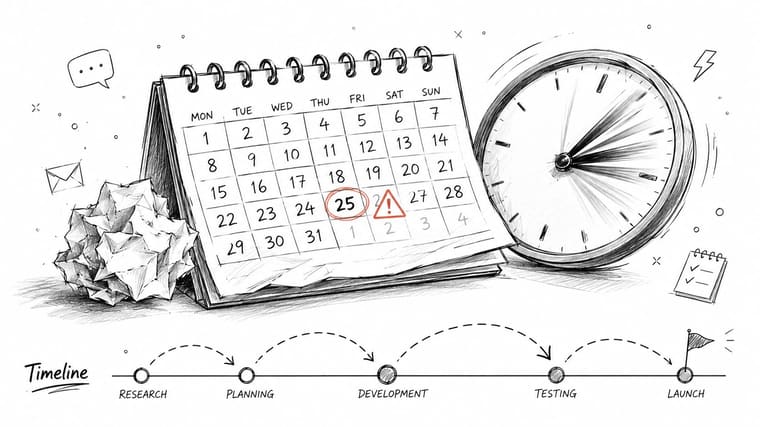
The digital fix is to reverse-plan the goal inside Pretty Progress. Start with the finish date, then map the milestones that have to happen before it. Use a countdown widget for the final deadline so the date stays visible. Use date and business-day calculators to work backward and see whether the plan fits the calendar you have.
That gives you two advantages. You can spot compression early, and you can adjust before you miss three deadlines in a row.
A few examples make the difference clear:
- Academic goal: Split the thesis into research, outline, first draft, revisions, and submission dates.
- Fitness goal: Set timelines for base training, intensity blocks, recovery weeks, and event prep.
- Savings goal: Translate the yearly target into monthly contributions and check whether the numbers match your income and expenses.
Good timelines still ask a lot of you. They just ask for work at a pace you can repeat.
That is the standard. A deadline should create direction, not panic.
6. Lacking Flexibility and Adaptation
You set a goal in January, build a plan around it, and then life changes in March. The mistake is not the disruption. The mistake is treating the original plan like a contract instead of a draft.
Rigid goals fail in a different way than vague goals or unrealistic timelines. You may still be working hard, but the work no longer matches your resources, priorities, or constraints. A schedule change cuts your available hours. A health issue reduces capacity. A family expense forces you to slow a savings target. If the plan stays frozen while reality shifts, the goal starts costing more than it gives back.
I see this with disciplined people all the time. They keep pushing because they do not want to feel inconsistent. What they need is not more grit. They need a better review habit.
Protect the purpose, adjust the method
Start by separating the outcome you care about from the method you picked first. Financial stability can survive a change in savings pace. Career growth can survive a shift in role or industry. Better health can survive a temporary drop in training volume.
That distinction matters because it keeps people from making one of two bad calls. They either cling to a broken plan for too long, or they abandon the whole goal when one tactic stops working.
The psychological fix is a scheduled reset. Review the goal every month or quarter and ask a few direct questions: Does this target still fit current conditions? What changed? Am I adjusting because the facts changed, or because the work got uncomfortable? Discomfort usually calls for better execution. Changed conditions call for a revised plan.
The digital fix is to make revision easy inside Pretty Progress. Edit the goal title if the target changed. Update the countdown if the timeline moved. Use the calculators to check what the new pace looks like in weekly or monthly terms. If a goal is paused or no longer relevant, archive its widget instead of leaving it on your home screen as guilt wallpaper.
That last step helps more than people expect. Visual clutter keeps old commitments emotionally active. A clean widget view shows what matters now.
A few examples make this practical:
- Career goal: You started aiming for a management track, then realized a specialist role gives you better pay, more flexibility, and stronger long-term fit. Keep the growth goal. Change the route.
- Money goal: An emergency expense hits. Reduce the monthly target, extend the countdown, and recalculate the gap instead of quitting the plan.
- Health goal: Travel, injury, or caregiving disrupts your routine. Replace a performance target with a maintenance target for the next six weeks, then reassess.
Adaptation protects effort. It keeps you from pouring energy into a version of the goal that no longer makes sense.
Adaptation is disciplined recalibration. It keeps the goal relevant enough to keep pursuing.
6-Point Comparison of Goal-Setting Mistakes
| Common Mistake | Implementation Complexity 🔄 | Resource Requirements ⚡ | Expected Outcomes 📊⭐ | Ideal Use Cases 💡 | Key Advantages ⭐ |
|---|---|---|---|---|---|
| Setting Vague or Unmeasurable Goals | Low, clarify with SMART criteria | Minimal, time to define metrics and milestones | 📊 Enables tracking; ⭐ increases clarity and motivation | Beginner goal-setting, habit formation, small projects | ⭐ Clear success criteria, easier measurement |
| Setting Too Many Goals Simultaneously | Medium, requires prioritization and curation | Moderate, time for review and selection; may need support | 📊 Higher completion on prioritized goals; ⭐ less burnout | Busy professionals, students, multi-project contexts | ⭐ Improved focus and resource allocation |
| Ignoring Accountability and Progress Tracking | Medium, set up systems and routines | Moderate, tracking tools, regular review time, accountability partner | 📊 Better consistency and early corrections; ⭐ sustained follow‑through | Long-term behavior change, team projects, ADHD-prone workflows | ⭐ Persistent awareness and measurable feedback |
| Setting Goals Based on Others’ Expectations | Low, involves introspection and value checks | Low, self-reflection exercises or coaching | 📊 Greater intrinsic motivation and satisfaction; ⭐ better alignment | Career choices, social-influenced decisions, lifestyle shifts | ⭐ Increased ownership and lasting commitment |
| Failing to Set Realistic Timelines | Medium, needs research and buffer planning | Moderate, time for estimates, historical data, timeline tools | 📊 Fewer missed deadlines; ⭐ reduced burnout and better credibility | Project planning, training, multi-step objectives | ⭐ Sustainable pacing and predictable outcomes |
| Lacking Flexibility and Adaptation | Medium, establish review cadence and contingencies | Moderate, periodic reviews and editable plans | 📊 Greater resilience and alignment with change; ⭐ preserved core values | Dynamic environments, long-term goals, life transitions | ⭐ Allows pivots, prevents wasted effort and frustration |
From Mistakes to Milestones Your New Goal System
Avoiding these common mistakes in goal setting isn’t about becoming perfectly disciplined. It’s about building a system that keeps a goal clear, visible, and adjustable when life gets messy. That’s what makes follow-through possible.
Start smaller than you think. Pick one goal, not six. Define what done looks like. Put a real deadline on it if the goal needs one. Break it into milestones that can be reviewed in a few minutes each week. If the goal still feels abstract, it’s not ready yet.
The bigger shift is this. Stop treating goals as declarations and start treating them as operating routines. A well-written target matters, but process matters more. You need something that helps you see progress when motivation dips, friction rises, or the finish line still feels far away. That’s where visible tools earn their place. A countdown, widget, or calculator won’t do the work for you, but it can keep the work from slipping out of sight.
There’s also a human side to this. People don’t fail goals because they’re weak. They fail because they overloaded themselves, chose the wrong target, underestimated the timeline, or built no review system at all. Those are design problems. Design can be fixed.
If you want support beyond a notebook and memory, a coaching platform can help you think through priorities and accountability. If you specifically want visible reminders and progress cues on your devices, Pretty Progress is one option that fits this kind of system because it offers countdowns, progress bars, widgets, and calculators that make a goal easier to keep in view.
Pick one goal today. Put it somewhere visible. Track one small win this week. Then repeat.
If you want a simple way to keep your goals in sight, try Pretty Progress. Use its widgets, countdowns, and calculators to turn one clear goal into something you see every day.